
25 eggs at true relative size, from the 15.6 mm egg of the Narrow-billed Tody to the 43.72 mm egg of the Ringed Kingfisher.
About this collection. 4,422 eggs, covering nearly every bird that nests in the Americas, from Canada and the United States through Mexico, Central America and the Caribbean to South America, plus a few famous eggs from elsewhere, like the Ostrich and the extinct Elephant Bird. Sizes come from published measurements wherever we found them; shapes and colours are our best estimates (how accurate these eggs are).
2,116 of them are marked Speculative: we haven't found documented descriptions or measurements of these eggs yet (for 129 of them, a source we checked reports the egg as undescribed), so they are estimated from their closest relatives. They are hidden unless you untick Hide speculative eggs. We keep adding sources and update the eggs as we go. Have you seen one of these eggs, or know a source? Message us.
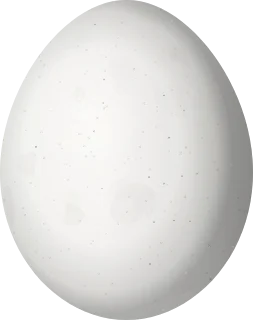

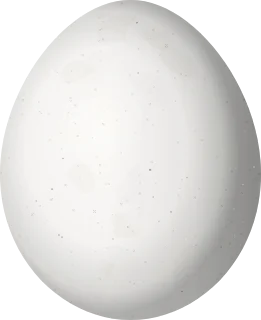
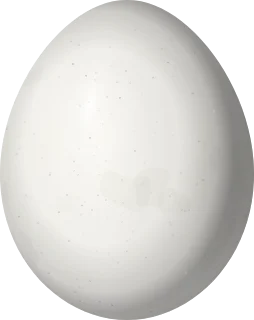


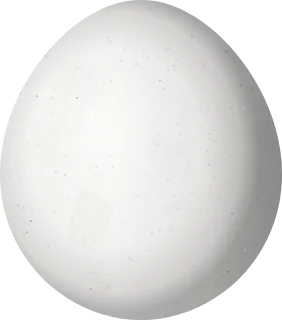

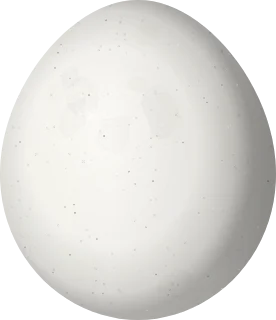
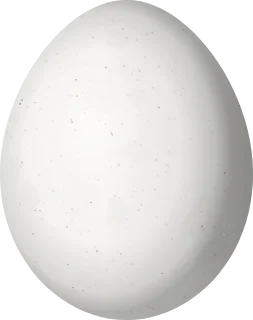
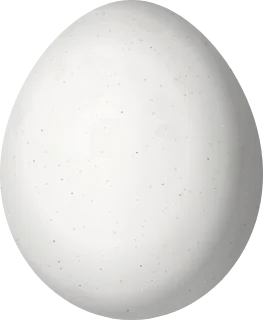


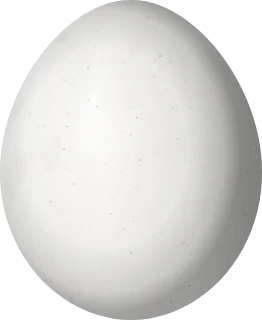
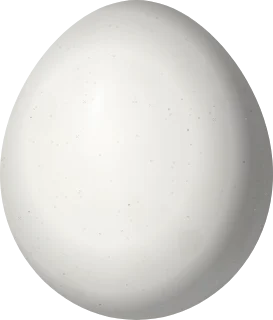


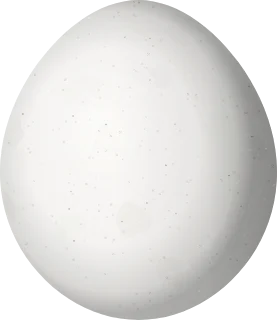
Amazon Kingfisher
Chloroceryle amazona
- 31.5 × 27.1 mm
- Clutch: 3–4 eggs
show all 20
Mexico: MexicoCentral America: Belize, Costa Rica, El Salvador, Guatemala, Honduras, Nicaragua, Panama
South America: Argentina, Bolivia, Brazil, Colombia, Ecuador, French Guiana, Guyana, Paraguay, Peru, Suriname, Uruguay, Venezuela
Pure white or slightly buff-tinged, unmarked; short ovate.
Sources of information
- Size
- Average of 7 eggs: Skutch, A. F. 1957. Life history of the Amazon Kingfisher. Condor 59: 217-229., p. 221.
Agrees with: Skutch, A. F. 1945. Incubation and nestling periods of Central American birds. Auk 62: 8-37., p. 15; Wetmore, A. 1968. The birds of the Republic of Panamá. Part 2. Columbidae (pigeons) to Picidae (woodpeckers). Smithsonian Miscellaneous Collections 150(2)., p. 428 (printed page inferred from scan position, i.e. search-index leaf minus 12; read via archive.org page OCR). - Description
- Skutch 1957 (Amazon Kingfisher nesting, Guatemala).
- Shape
- Drawn from the length and width, with the taper estimated from the typical eggs of its group (how these eggs are drawn).
Know something more about this egg, or spotted a mistake? Message us.
Amazonian Motmot
Momotus momota
- 29 × 26 mm (approx.)
- Clutch: 3–4 eggs
show all 11
South America: Argentina, Bolivia, Brazil, Colombia, Ecuador, French Guiana, Guyana, Paraguay, Peru, Suriname, VenezuelaImmaculate white, unmarked, rounded, with little gloss.
Sources of information
- Size
- Hauber, M. E. (ed.), J. Bates & B. Becker 2014. The Book of Eggs: A Life-Size Guide to the Eggs of Six Hundred of the World's Bird Species. University of Chicago Press., p. 346.
- Description
- Hauber, M.E. (ed.) 2014. The Book of Eggs. University of Chicago Press, p. 346.
- Shape
- Drawn from the length and width, with the taper estimated from the typical eggs of its group (how these eggs are drawn).
Know something more about this egg, or spotted a mistake? Message us.
Make a 3D-printable copy of this eggSee posters with this egg →
American Pygmy Kingfisher
Chloroceryle aenea
- 18.6 × 15.6 mm
- Clutch: 4 eggs
show all 20
Mexico: MexicoCentral America: Belize, Costa Rica, El Salvador, Guatemala, Honduras, Nicaragua, Panama
The Caribbean: Trinidad and Tobago
South America: Argentina, Bolivia, Brazil, Colombia, Ecuador, French Guiana, Guyana, Paraguay, Peru, Suriname, Venezuela
White, smooth and glossy, nearly spherical.
Sources of information
- Size
- Hellebrekers, W. P. J. 1942. Revision of the Penard oölogical collection from Surinam. Zoologische Mededelingen 24: 240–275., p. 253.
Agrees with: Wetmore, A. 1968. The birds of the Republic of Panamá, part 2. Smithsonian Miscellaneous Collections 150(2)., p. 435. - Description
- Hellebrekers 1942, Revision of the Penard oölogical collection from Surinam (Zool. Meded. 24).
- Shape
- Drawn from the length and width, with the taper estimated from the typical eggs of its group (how these eggs are drawn).
Know something more about this egg, or spotted a mistake? Message us.
Make a 3D-printable copy of this eggSee posters with this egg →
Andean Motmot
Momotus aequatorialis
- 38.1 × 30.3 mm
Plain white, very smooth and highly glossy; blunt oval to nearly round.
Sources of information
- Size
- Average of 8 eggs: Schönwetter, M. 1960–1992. Handbuch der Oologie (ed. W. Meise), Lieferung 12. Akademie-Verlag, Berlin., p. 706.
- Description
- Oates & Reid 1903 (BM Egg Catalogue vol 3).
- Shape
- Drawn from the length and width, with the taper estimated from the typical eggs of its group (how these eggs are drawn).
Know something more about this egg, or spotted a mistake? Message us.
Belted Kingfisher
Megaceryle alcyon
- 33.9 × 26.7 mm
- Clutch: 5–8 eggs
Pure white, smooth, and glossy.
Sources of information
- Size
- Average of 54 eggs: Bent, Life Histories of North American Cuckoos, Goatsuckers, Hummingbirds and Their Allies (U.S. National Museum Bulletin 176, 1940), p. 115.
Agrees with: Cornell Lab of Ornithology, All About Birds: Belted Kingfisher, Life History. - Description
- Cornell Lab of Ornithology, All About Birds: Belted Kingfisher, Life History.
Drawing checked against a photo: Bird Eggs of Canada photo (Royal Saskatchewan Museum). - Clutch
- Cornell Lab of Ornithology, All About Birds.
- Shape
- Drawn from the length and width, with the taper estimated from the typical eggs of its group (how these eggs are drawn).
Know something more about this egg, or spotted a mistake? Message us.
Make a 3D-printable copy of this eggSee posters with this egg →
Blue-capped Motmot
Momotus coeruliceps
- 31.5 × 27.2 mm
- Its colour follows its family (the eggs of all its relatives are alike); we haven't found a description of this species' own egg yet.
Plain white, as in all motmot eggs (we haven't found a description of this species' own egg yet).
Sources of information
- Size
- Average of 6 eggs: Schönwetter, M. 1960–1992. Handbuch der Oologie (ed. W. Meise), Lieferung 12. Akademie-Verlag, Berlin., p. 706.
- Description
- Oates, E. W. & S. G. Reid 1903. Catalogue of the Collection of Birds' Eggs in the British Museum, vol. 3. London.
- Shape
- Drawn from the length and width, with the taper estimated from the typical eggs of its group (how these eggs are drawn).
Know something more about this egg, or spotted a mistake? Message us.
Blue-throated Motmot
Aspatha gularis
- 28.8 × 22.8 mm
- Its colour follows its family (the eggs of all its relatives are alike); we haven't found a description of this species' own egg yet.
Plain white, as in all motmot eggs (we haven't found a description of this species' own egg yet).
Sources of information
- Size
- Average of 11 eggs: Schönwetter, M. 1960–1992. Handbuch der Oologie (ed. W. Meise), Lieferung 12. Akademie-Verlag, Berlin., p. 706.
- Description
- Oates, E. W. & S. G. Reid 1903. Catalogue of the Collection of Birds' Eggs in the British Museum, vol. 3. London.
- Shape
- Drawn from the length and width, with the taper estimated from the typical eggs of its group (how these eggs are drawn).
Know something more about this egg, or spotted a mistake? Message us.
Broad-billed Motmot
Electron platyrhynchum
- 28 × 23 mm (approx.)
- Its colour follows its family (the eggs of all its relatives are alike); we haven't found a description of this species' own egg yet.
show all 10
Central America: Costa Rica, Guatemala, Honduras, Nicaragua, PanamaSouth America: Bolivia, Brazil, Colombia, Ecuador, Peru
Plain white, as in all motmot eggs (we haven't found a description of this species' own egg yet).
Sources of information
- Size
- Schönwetter, M. 1960–1992. Handbuch der Oologie (ed. W. Meise), Lieferung 12. Akademie-Verlag, Berlin., p. 706.
- Description
- Oates, E. W. & S. G. Reid 1903. Catalogue of the Collection of Birds' Eggs in the British Museum, vol. 3. London.
- Shape
- Drawn from the length and width, with the taper estimated from the typical eggs of its group (how these eggs are drawn).
Know something more about this egg, or spotted a mistake? Message us.
Broad-billed Tody
Todus subulatus
- 17 × 13 mm (approx.)
- Clutch: 3–4 eggs
Clear glossy white, becoming stained rusty from the soil of the nest chamber.
Sources of information
- Size
- Hauber, M. E. (ed.), J. Bates & B. Becker 2014. The Book of Eggs: A Life-Size Guide to the Eggs of Six Hundred of the World's Bird Species. University of Chicago Press., p. 345.
- Description
- Hauber, M.E. (ed.) 2014. The Book of Eggs. University of Chicago Press, p. 345.
- Shape
- Drawn from the length and width, with the taper estimated from the typical eggs of its group (how these eggs are drawn).
Know something more about this egg, or spotted a mistake? Message us.
Cuban Tody
Todus multicolor
- 17.3 × 13.1 mm (approx.)
Plain white, glossy, roundish (like motmot eggs).
Sources of information
- Size
- Oates, E. W. & S. G. Reid 1903. Catalogue of the Collection of Birds' Eggs in the British Museum, vol. 3. London.
- Description
- Oates & Reid 1903 (BM Egg Catalogue vol 3).
- Shape
- Drawn from the length and width, with the taper estimated from the typical eggs of its group (how these eggs are drawn).
Know something more about this egg, or spotted a mistake? Message us.
Green Kingfisher
Chloroceryle americana
- 24.36 × 19.23 mm
- Clutch: 3–6 eggs
show all 22
Canada & United States: United StatesMexico: Mexico
Central America: Belize, Costa Rica, El Salvador, Guatemala, Honduras, Nicaragua, Panama
The Caribbean: Trinidad and Tobago
South America: Argentina, Bolivia, Brazil, Colombia, Ecuador, French Guiana, Guyana, Paraguay, Peru, Suriname, Uruguay, Venezuela
White or cream-colored.
Sources of information
- Size
- Average of 64 eggs: Bent, Life Histories of North American Cuckoos, Goatsuckers, Hummingbirds and Their Allies (U.S. National Museum Bulletin 176, 1940), p. 144.
- Description
- Cornell Lab of Ornithology, All About Birds: Green Kingfisher, Life History.
- Clutch
- Cornell Lab of Ornithology, All About Birds.
- Shape
- Drawn from the length and width, with the taper estimated from the typical eggs of its group (how these eggs are drawn).
Know something more about this egg, or spotted a mistake? Message us.
Make a 3D-printable copy of this eggSee posters with this egg →
Green-and-rufous Kingfisher
Chloroceryle inda
- 27.35 × 22.4 mm (approx.)
- Clutch: 3–5 eggs
show all 14
Central America: Costa Rica, Honduras, Nicaragua, PanamaSouth America: Bolivia, Brazil, Colombia, Ecuador, French Guiana, Guyana, Paraguay, Peru, Suriname, Venezuela
White, unmarked, glossy (kingfisher type).
Sources of information
- Size
- Schönwetter, M. 1966 (Handb. Ool. 11: 694), quoted in Wetmore, A. 1968. The birds of the Republic of Panamá, part 2. Smithsonian Miscellaneous Collections 150(2)., p. 434.
- Description
- Birds Colombia blog, Martin-pescador Selvatico / Chloroceryle inda (2020).
- Shape
- Drawn from the length and width, with the taper estimated from the typical eggs of its group (how these eggs are drawn).
Know something more about this egg, or spotted a mistake? Message us.
Jamaican Tody
Todus todus
- 15.9 × 13.6 mm (approx.)
- Its colour follows its family (the eggs of all its relatives are alike); we haven't found a description of this species' own egg yet.
Plain white, as in all tody eggs (we haven't found a description of this species' own egg yet).
Sources of information
- Size
- Oates, E. W. & S. G. Reid 1903. Catalogue of the Collection of Birds' Eggs in the British Museum, vol. 3. London.
- Description
- Oates, E. W. & S. G. Reid 1903. Catalogue of the Collection of Birds' Eggs in the British Museum, vol. 3. London.
- Shape
- Drawn from the length and width, with the taper estimated from the typical eggs of its group (how these eggs are drawn).
Know something more about this egg, or spotted a mistake? Message us.
Keel-billed Motmot
Electron carinatum
- 28 × 23 mm (estimated)
- Its colour follows its family (the eggs of all its relatives are alike); we haven't found a description of this species' own egg yet. Speculative: we haven't found documented measurements of this egg yet, so we estimated its size from related birds.
Plain white, as in all motmot eggs (we haven't found a description of this species' own egg yet).
Sources of information
- Size
- Estimated, no measurements found: the median length and width of measured eggs of the same genus: Electron platyrhynchum.
- Description
- Oates, E. W. & S. G. Reid 1903. Catalogue of the Collection of Birds' Eggs in the British Museum, vol. 3. London.
- Shape
- Drawn from the length and width, with the taper estimated from the typical eggs of its group (how these eggs are drawn).
Have you seen this egg, or know a description or measurements of it? Message us.
Lesson's Motmot
Momotus lessonii
- 27 × 23 mm (approx.)
Plain white, very smooth and highly glossy; blunt oval to nearly round.
Sources of information
- Size
- Nehrkorn, A. 1899. Katalog der Eiersammlung nebst Beschreibungen der aussereuropäischen Eier. Braunschweig.
- Description
- Oates & Reid 1903 (BM Egg Catalogue vol 3).
- Shape
- Drawn from the length and width, with the taper estimated from the typical eggs of its group (how these eggs are drawn).
Know something more about this egg, or spotted a mistake? Message us.
Narrow-billed Tody
Todus angustirostris
- 15.6 × 13.5 mm
- Its colour follows its family (the eggs of all its relatives are alike); we haven't found a description of this species' own egg yet.
Plain white, as in all tody eggs (we haven't found a description of this species' own egg yet).
Sources of information
- Size
- Average of 2 eggs: Wetmore, A. & B. H. Swales 1931. The birds of Haiti and the Dominican Republic. United States National Museum Bulletin 155., p. 289.
- Description
- Oates, E. W. & S. G. Reid 1903. Catalogue of the Collection of Birds' Eggs in the British Museum, vol. 3. London.
- Shape
- Drawn from the length and width, with the taper estimated from the typical eggs of its group (how these eggs are drawn).
Know something more about this egg, or spotted a mistake? Message us.
Puerto Rican Tody
Todus mexicanus
- 16.4 × 13.3 mm (estimated)
- Its colour follows its family (the eggs of all its relatives are alike); we haven't found a description of this species' own egg yet. Speculative: we haven't found documented measurements of this egg yet, so we estimated its size from related birds.
Plain white, as in all tody eggs (we haven't found a description of this species' own egg yet).
Sources of information
- Size
- Estimated, no measurements found: the median length and width of measured eggs of the same genus: Todus angustirostris, Todus multicolor, Todus subulatus, Todus todus.
- Description
- Oates, E. W. & S. G. Reid 1903. Catalogue of the Collection of Birds' Eggs in the British Museum, vol. 3. London.
- Shape
- Drawn from the length and width, with the taper estimated from the typical eggs of its group (how these eggs are drawn).
Have you seen this egg, or know a description or measurements of it? Message us.
Ringed Kingfisher
Megaceryle torquata
- 43.72 × 34.52 mm
show all 24
Canada & United States: United StatesMexico: Mexico
Central America: Belize, Costa Rica, El Salvador, Guatemala, Honduras, Nicaragua, Panama
The Caribbean: Trinidad and Tobago, Caribbean islands
South America: Argentina, Bolivia, Brazil, Chile, Colombia, Ecuador, French Guiana, Guyana, Paraguay, Peru, Suriname, Uruguay, Venezuela
White.
Sources of information
- Size
- Average of 19 eggs: Bent, Life Histories of North American Cuckoos, Goatsuckers, Hummingbirds and Their Allies (U.S. National Museum Bulletin 176, 1940), p. 135.
- Description
- Cornell Lab of Ornithology, All About Birds: Ringed Kingfisher, Life History.
- Shape
- Drawn from the length and width, with the taper estimated from the typical eggs of its group (how these eggs are drawn).
Know something more about this egg, or spotted a mistake? Message us.
Make a 3D-printable copy of this eggSee posters with this egg →
Rufous Motmot
Baryphthengus martii
- 40.5 × 33 mm (estimated)
- Speculative: we haven't found a description of this egg (a source we checked reports it as undescribed), so we estimated its colours and markings and its size from related birds.
show all 9
Central America: Costa Rica, Honduras, Nicaragua, PanamaSouth America: Bolivia, Brazil, Colombia, Ecuador, Peru
Plain white, as in all motmot eggs (we haven't found a description of this species' own egg yet).
Sources of information
- Size
- Estimated, no measurements found: the median length and width of measured eggs of the same genus: Baryphthengus ruficapillus.
- Description
- Oates, E. W. & S. G. Reid 1903. Catalogue of the Collection of Birds' Eggs in the British Museum, vol. 3. London.
- Shape
- Drawn from the length and width, with the taper estimated from the typical eggs of its group (how these eggs are drawn).
Have you seen this egg, or know a description or measurements of it? Message us.
Rufous-capped Motmot
Baryphthengus ruficapillus
- 40.5 × 33 mm (approx.)
- Its colour follows its family (the eggs of all its relatives are alike); we haven't found a description of this species' own egg yet.
Plain white, as in all motmot eggs (we haven't found a description of this species' own egg yet).
Sources of information
- Size
- Ihering, H. von 1900. Catalogo critico-comparativo dos ninhos e ovos das aves do Brazil. Revista do Museu Paulista 4: 191-300., p. 276.
- Description
- Oates, E. W. & S. G. Reid 1903. Catalogue of the Collection of Birds' Eggs in the British Museum, vol. 3. London.
- Shape
- Drawn from the length and width, with the taper estimated from the typical eggs of its group (how these eggs are drawn).
Know something more about this egg, or spotted a mistake? Message us.
Make a 3D-printable copy of this eggSee posters with this egg →
Russet-crowned Motmot
Momotus mexicanus
- 27.6 × 23.7 mm
Plain white, very smooth and highly glossy; blunt oval to nearly round.
Sources of information
- Size
- Average of 9 eggs: Schönwetter, M. 1960–1992. Handbuch der Oologie (ed. W. Meise), Lieferung 12. Akademie-Verlag, Berlin., p. 706.
- Description
- Oates & Reid 1903 (BM Egg Catalogue vol 3).
- Shape
- Drawn from the length and width, with the taper estimated from the typical eggs of its group (how these eggs are drawn).
Know something more about this egg, or spotted a mistake? Message us.
Tody Motmot
Hylomanes momotula
- 28.9 × 24.9 mm (estimated)
- Its colour follows its family (the eggs of all its relatives are alike); we haven't found a description of this species' own egg yet. Speculative: we haven't found documented measurements of this egg yet, so we estimated its size from related birds.
show all 9
Mexico: MexicoCentral America: Belize, Costa Rica, El Salvador, Guatemala, Honduras, Nicaragua, Panama
South America: Colombia
Plain white, as in all motmot eggs (we haven't found a description of this species' own egg yet).
Sources of information
- Size
- Estimated, no measurements found: the median length and width of measured eggs of the same family: Aspatha gularis, Baryphthengus ruficapillus, Electron platyrhynchum, Eumomota superciliosa, Momotus aequatorialis ….
- Description
- Oates, E. W. & S. G. Reid 1903. Catalogue of the Collection of Birds' Eggs in the British Museum, vol. 3. London.
- Shape
- Drawn from the length and width, with the taper estimated from the typical eggs of its group (how these eggs are drawn).
Have you seen this egg, or know a description or measurements of it? Message us.
Make a 3D-printable copy of this eggSee posters with this egg →
Trinidad Motmot
Momotus bahamensis
- 33 × 27.4 mm (approx.)
- Clutch: 3 eggs
Pure glossy white, roundish, smooth and hard-shelled.
Sources of information
- Size
- Belcher & Smooker 1936 (Ibis), quoted in Wetmore, A. 1968. The birds of the Republic of Panamá, part 2. Smithsonian Miscellaneous Collections 150(2)., p. 454.
- Description
- Wetmore, A. 1968. The Birds of the Republic of Panama, part 2 (quoting Belcher & Smooker 1936, Trinidad).
- Shape
- Drawn from the length and width, with the taper estimated from the typical eggs of its group (how these eggs are drawn).
Know something more about this egg, or spotted a mistake? Message us.
Turquoise-browed Motmot
Eumomota superciliosa
- 26.5 × 22.5 mm
- Clutch: 3–5 eggs
Pure white, unmarked, short-ovate (kingfisher-like).
Sources of information
- Size
- Average of 15 eggs: Skutch, A. F. 1947. Life history of the Turquoise-browed Motmot. The Auk 64(2): 201-217., p. 209.
- Description
- Skutch, A. F. 1947. Life history of the Turquoise-browed Motmot. The Auk 64(2): 201-217., pp. 205, 209, 216.
Agrees with: Scott, P. E. & Martin, R. F. 1986. Clutch size and fledging success in the Turquoise-browed Motmot. The Auk 103(1): 8-13. [clutch; egg weights only], pp. 8-9. - Shape
- Drawn from the length and width, with the taper estimated from the typical eggs of its group (how these eggs are drawn).
Know something more about this egg, or spotted a mistake? Message us.
Make a 3D-printable copy of this eggSee posters with this egg →
Whooping Motmot
Momotus subrufescens
- 30.2 × 26.6 mm (estimated)
- Its colour follows its family (the eggs of all its relatives are alike); we haven't found a description of this species' own egg yet. Speculative: we haven't found documented measurements of this egg yet, so we estimated its size from related birds.
Plain white, as in all motmot eggs (we haven't found a description of this species' own egg yet).
Sources of information
- Size
- Estimated, no measurements found: the median length and width of measured eggs of the same genus: Momotus aequatorialis, Momotus bahamensis, Momotus coeruliceps, Momotus lessonii, Momotus mexicanus ….
- Description
- Oates, E. W. & S. G. Reid 1903. Catalogue of the Collection of Birds' Eggs in the British Museum, vol. 3. London.
- Shape
- Drawn from the length and width, with the taper estimated from the typical eggs of its group (how these eggs are drawn).
Have you seen this egg, or know a description or measurements of it? Message us.
Tell us about this egg
A description, measurements, a photo or a source (a book, paper, museum record or website) all help. We check every message and update the egg.