
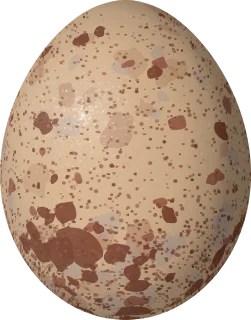
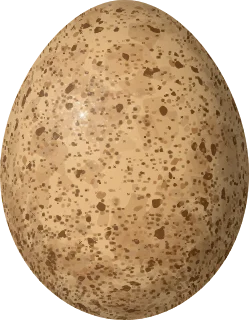
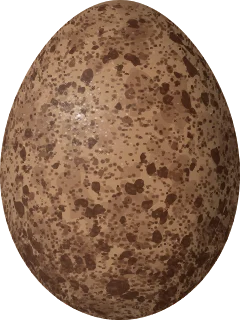
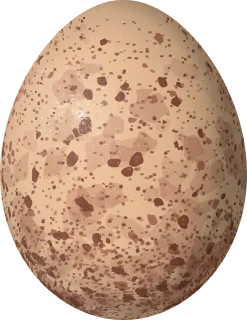
26 eggs at true relative size, from the 35 mm egg of the American Kestrel to the 63.4 mm egg of the Striated Caracara.
About this collection. 4,422 eggs, covering nearly every bird that nests in the Americas, from Canada and the United States through Mexico, Central America and the Caribbean to South America, plus a few famous eggs from elsewhere, like the Ostrich and the extinct Elephant Bird. Sizes come from published measurements wherever we found them; shapes and colours are our best estimates (how accurate these eggs are).
2,116 of them are marked Speculative: we haven't found documented descriptions or measurements of these eggs yet (for 129 of them, a source we checked reports the egg as undescribed), so they are estimated from their closest relatives. They are hidden unless you untick Hide speculative eggs. We keep adding sources and update the eggs as we go. Have you seen one of these eggs, or know a source? Message us.


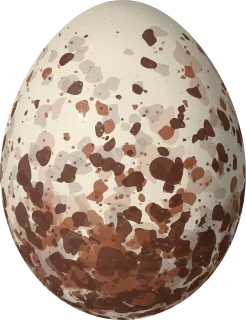
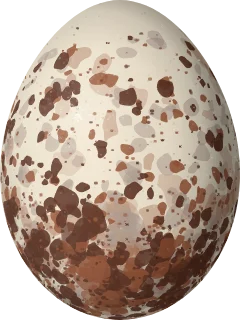
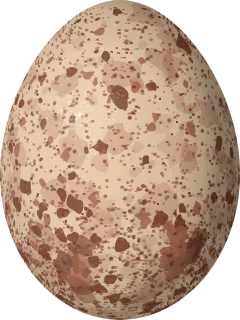


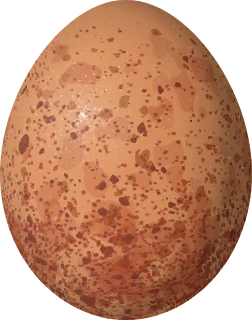
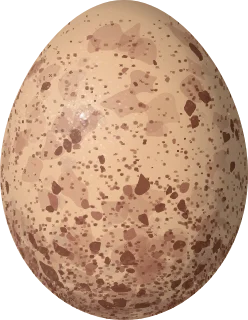




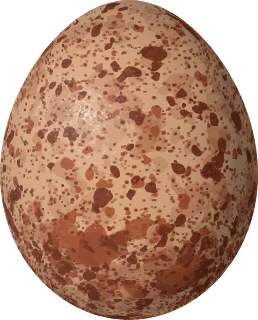
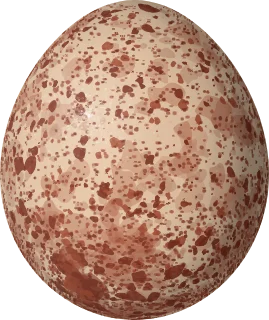
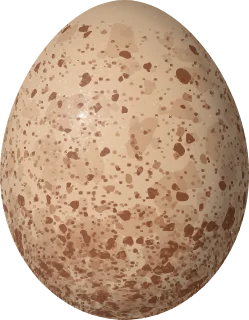
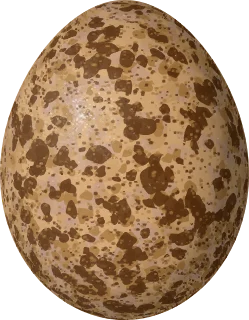

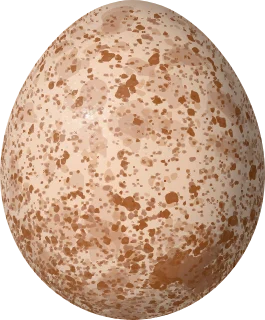
American Kestrel
Falco sparverius
- 35 × 29 mm
- Clutch: 4–5 eggs
show all 24
Canada & United States: Canada, United StatesMexico: Mexico
Central America: Belize, Costa Rica, El Salvador, Guatemala, Honduras, Nicaragua, Panama
The Caribbean: Aruba, Curaçao, Caribbean islands
South America: Argentina, Bolivia, Brazil, Chile, Colombia, Ecuador, Guyana, Paraguay, Peru, Uruguay, Venezuela
White to yellowish or light reddish-brown, mottled with violet-magenta, gray, or brown.
Sources of information
- Size
- Average of 169 eggs: Bent, Life Histories of North American Birds of Prey, Part 2 (U.S. National Museum Bulletin 170, 1938), p. 110.
- Description
- Cornell Lab of Ornithology, All About Birds: American Kestrel, Life History.
Drawing checked against a photo: Wikimedia Commons photo; Bird Eggs of Canada photo (Royal Saskatchewan Museum). - Clutch
- Cornell Lab of Ornithology, All About Birds.
- Shape
- Drawn from the length and width, with the taper estimated from the typical eggs of its group (how these eggs are drawn).
Know something more about this egg, or spotted a mistake? Message us.
Make a 3D-printable copy of this eggSee posters with this egg →
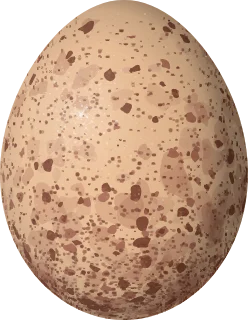
Aplomado Falcon
Falco femoralis
- 44.5 × 34.5 mm
- Clutch: 2–4 eggs
show all 21
Canada & United States: United StatesMexico: Mexico
Central America: Belize, Costa Rica, El Salvador, Guatemala, Honduras, Nicaragua, Panama
South America: Argentina, Bolivia, Brazil, Chile, Colombia, Ecuador, Guyana, Paraguay, Peru, Suriname, Uruguay, Venezuela
Whitish with scattered brownish spots.
Sources of information
- Size
- Average of 56 eggs: Bent, Life Histories of North American Birds of Prey, Part 2 (U.S. National Museum Bulletin 170, 1938), p. 97.
Agrees with: Cornell Lab of Ornithology, All About Birds: Aplomado Falcon, Life History. - Description
- Cornell Lab of Ornithology, All About Birds: Aplomado Falcon, Life History.
- Clutch
- Cornell Lab of Ornithology, All About Birds.
- Shape
- Drawn from the length and width, with the taper estimated from the typical eggs of its group (how these eggs are drawn).
Know something more about this egg, or spotted a mistake? Message us.
Make a 3D-printable copy of this eggSee posters with this egg →
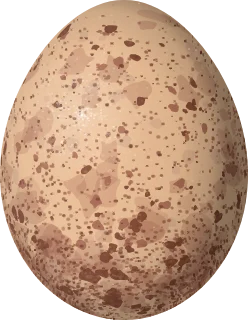
Barred Forest Falcon
Micrastur ruficollis
- 43.8 × 34.2 mm
- Speculative: we haven't found a documented description of this egg yet, so we estimated its colours and markings from related birds.
show all 19
Mexico: MexicoCentral America: Belize, Costa Rica, El Salvador, Guatemala, Honduras, Nicaragua, Panama
South America: Argentina, Bolivia, Brazil, Colombia, Ecuador, French Guiana, Guyana, Paraguay, Peru, Suriname, Venezuela
No documented description found yet; drawn like the Aplomado Falcon egg (same family).
Sources of information
- Size
- Average of 31 eggs: Thorstrom, R., J. D. Ramos & C. M. Morales 2000, Breeding biology of Barred Forest-Falcons (Micrastur ruficollis) in northeastern Guatemala, Auk 117(3): 781–786.
- Description
- Estimated, no description found: drawn like a related egg (Aplomado Falcon).
- Shape
- Drawn from the length and width, with the taper estimated from the typical eggs of its group (how these eggs are drawn).
Have you seen this egg, or know a description or measurements of it? Message us.
Make a 3D-printable copy of this eggSee posters with this egg →
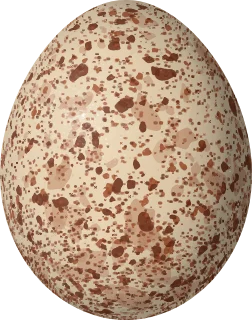
Bat Falcon
Falco rufigularis
- 40.8 × 31.81 mm
- Clutch: 3 eggs
show all 20
Mexico: MexicoCentral America: Belize, Costa Rica, El Salvador, Guatemala, Honduras, Nicaragua, Panama
The Caribbean: Trinidad and Tobago
South America: Argentina, Bolivia, Brazil, Colombia, Ecuador, French Guiana, Guyana, Paraguay, Peru, Suriname, Venezuela
Pinkish white almost wholly covered by a blotchy clay-coloured wash, deeper brown around the larger end.
Sources of information
- Size
- Average of 20 eggs: Boyce, D.A. Jr. & Kiff, L.F. 1981. Have the eggs of the Orange-breasted Falcon (Falco deiroleucus) been described? Raptor Research 15(3): 89-93, p. 90 (Table 1).
- Description
- Wetmore, A. 1965. The birds of the Republic of Panamá, part 1. Smithsonian Miscellaneous Collections 150(1)., p. 286.
- Shape
- Drawn from the length and width, with the taper estimated from the typical eggs of its group (how these eggs are drawn).
Know something more about this egg, or spotted a mistake? Message us.
Make a 3D-printable copy of this eggSee posters with this egg →
Black Caracara
Daptrius ater
- 53.5 × 40.2 mm
show all 9
South America: Bolivia, Brazil, Colombia, Ecuador, French Guiana, Guyana, Peru, Suriname, VenezuelaLight cream, almost wholly covered with large and small chocolate and red-brown spots, running together at the blunt end; nearly lustreless, short oval.
Sources of information
- Size
- Average of 3 eggs: Schönwetter, M. 1960–1992. Handbuch der Oologie (ed. W. Meise), Lieferung 3. Akademie-Verlag, Berlin., p. 186.
- Description
- Penard, F. P. & A. P. Penard 1908. De vogels van Guyana (Suriname, Cayenne en Demerara), deel 1. Paramaribo., p. 373.
- Shape
- Drawn from the length and width, with the taper estimated from the typical eggs of its group (how these eggs are drawn).
Know something more about this egg, or spotted a mistake? Message us.
Buckley's Forest Falcon
Micrastur buckleyi
- 50.1 × 38.9 mm (estimated)
- Speculative: we haven't found a documented description of this egg yet, so we estimated its colours and markings and its size from related birds.
No documented description found yet; drawn like the Aplomado Falcon egg (same family).
Sources of information
- Size
- Estimated, no measurements found: the median length and width of measured eggs of the same genus: Micrastur ruficollis, Micrastur semitorquatus.
- Description
- Estimated, no description found: drawn like a related egg (Aplomado Falcon).
- Shape
- Drawn from the length and width, with the taper estimated from the typical eggs of its group (how these eggs are drawn).
Have you seen this egg, or know a description or measurements of it? Message us.
Carunculated Caracara
Daptrius carunculatus
- 53.5 × 40.2 mm (estimated)
- Speculative: we haven't found a documented description of this egg yet, so we estimated its colours and markings and its size from related birds.
Buff to pale cinnamon, blotched and mottled with reddish-brown and lilac-grey, little gloss.
Sources of information
- Size
- Estimated, no measurements found: the median length and width of measured eggs of the same genus: Daptrius albogularis, Daptrius ater, Daptrius australis, Daptrius chimachima, Daptrius chimango.
- Description
- Oates 1901 (BM Egg Catalogue vol 1).
- Shape
- Drawn from the length and width, with the taper estimated from the typical eggs of its group (how these eggs are drawn).
Have you seen this egg, or know a description or measurements of it? Message us.
Chimango Caracara
Daptrius chimango
- 43.36 × 34.14 mm
- Clutch: 3 eggs
Ochre to cream, speckled and spotted chestnut and reddish all over, sometimes heavily blotched rufous; little gloss.
Sources of information
- Size
- Average of 58 eggs: de la Peña, M. R. 2025. Aves Argentinas: descripción, comportamiento, reproducción y distribución. Comunicaciones del Museo Provincial de Ciencias Naturales "Florentino Ameghino" (Nueva Serie). Santa Fe., tomo 7, p. 413.
- Description
- Oates 1902 (BM Egg Catalogue vol 2); de la Peña 2025 (Aves Argentinas tomo 7).
- Shape
- Drawn from the length and width, with the taper estimated from the typical eggs of its group (how these eggs are drawn).
Know something more about this egg, or spotted a mistake? Message us.
Collared Forest Falcon
Micrastur semitorquatus
- 56.4 × 43.6 mm
- Speculative: we haven't found a documented description of this egg yet, so we estimated its colours and markings from related birds.
show all 19
Mexico: MexicoCentral America: Belize, Costa Rica, El Salvador, Guatemala, Honduras, Nicaragua, Panama
South America: Argentina, Bolivia, Brazil, Colombia, Ecuador, French Guiana, Guyana, Paraguay, Peru, Suriname, Venezuela
No documented description found yet; drawn like the Aplomado Falcon egg (same family).
Sources of information
- Size
- Average of 9 eggs: Thorstrom, R., J. D. Ramos & J. M. Castillo 2000, Breeding biology and behavior of the Collared Forest-Falcon (Micrastur semitorquatus) in Guatemala, Ornitología Neotropical 11: 1–12.
- Description
- Estimated, no description found: drawn like a related egg (Aplomado Falcon).
- Shape
- Drawn from the length and width, with the taper estimated from the typical eggs of its group (how these eggs are drawn).
Have you seen this egg, or know a description or measurements of it? Message us.
Make a 3D-printable copy of this eggSee posters with this egg →
Crested Caracara
Caracara plancus
- 59.4 × 46.5 mm
- Clutch: 1–4 eggs
show all 28
Canada & United States: United StatesMexico: Mexico
Central America: Belize, Costa Rica, El Salvador, Guatemala, Honduras, Nicaragua, Panama
The Caribbean: Aruba, Bonaire, Sint Eustatius and Saba, Curaçao, Trinidad and Tobago, Caribbean islands
South America: Argentina, Bolivia, Brazil, Chile, Colombia, Ecuador, Falkland Islands, French Guiana, Guyana, Paraguay, Peru, Suriname, Uruguay, Venezuela
Cinnamon-colored with heavy brown spotting.
Sources of information
- Size
- Average of 57 eggs: Bent, Life Histories of North American Birds of Prey, Part 2 (U.S. National Museum Bulletin 170, 1938), p. 130.
Agrees with: Cornell Lab of Ornithology, All About Birds: Crested Caracara, Life History. - Description
- Cornell Lab of Ornithology, All About Birds: Crested Caracara, Life History.
- Clutch
- Cornell Lab of Ornithology, All About Birds.
- Shape
- Drawn from the length and width, with the taper estimated from the typical eggs of its group (how these eggs are drawn).
Know something more about this egg, or spotted a mistake? Message us.
Make a 3D-printable copy of this eggSee posters with this egg →
Cryptic Forest Falcon
Micrastur mintoni
- 50.1 × 38.9 mm (estimated)
- Speculative: we haven't found a documented description of this egg yet, so we estimated its colours and markings and its size from related birds.
No documented description found yet; drawn like the Aplomado Falcon egg (same family).
Sources of information
- Size
- Estimated, no measurements found: the median length and width of measured eggs of the same genus: Micrastur ruficollis, Micrastur semitorquatus.
- Description
- Estimated, no description found: drawn like a related egg (Aplomado Falcon).
- Shape
- Drawn from the length and width, with the taper estimated from the typical eggs of its group (how these eggs are drawn).
Have you seen this egg, or know a description or measurements of it? Message us.
Gyrfalcon
Falco rusticolus
- 58.7 × 45.7 mm
- Clutch: 1–5 eggs
Ranging from white to reddish brown, with variable cinnamon spots.
Sources of information
- Size
- Average of 90 eggs: Bent, Life Histories of North American Birds of Prey, Part 2 (U.S. National Museum Bulletin 170, 1938), p. 5.
Agrees with: Cornell Lab of Ornithology, All About Birds: Gyrfalcon, Life History. - Description
- Cornell Lab of Ornithology, All About Birds: Gyrfalcon, Life History.
Drawing checked against a photo: Wikimedia Commons photo; Bird Eggs of Canada photo (University of Saskatchewan Department of Biology Natural History Collection). - Clutch
- Cornell Lab of Ornithology, All About Birds.
- Shape
- Drawn from the length and width, with the taper estimated from the typical eggs of its group (how these eggs are drawn).
Know something more about this egg, or spotted a mistake? Message us.
Make a 3D-printable copy of this eggSee posters with this egg →
Laughing Falcon
Herpetotheres cachinnans
- 58.6 × 43.95 mm
- Clutch: 1 egg
show all 19
Mexico: MexicoCentral America: Belize, Costa Rica, El Salvador, Guatemala, Honduras, Nicaragua, Panama
South America: Argentina, Bolivia, Brazil, Colombia, Ecuador, French Guiana, Guyana, Paraguay, Peru, Suriname, Venezuela
Ground almost hidden by a dark chocolate-brown wash with burnt-umber splashes, or cinnamon-buff to clay heavily blotched chestnut-brown.
Sources of information
- Size
- Wetmore, A. 1965. The birds of the Republic of Panamá, part 1 (Tinamidae to Rynchopidae). Smithsonian Miscellaneous Collections 150(1)., p. 263.
- Description
- Wetmore, A. 1965. The Birds of the Republic of Panamá, Part 1. Smithsonian Misc. Coll. 150(1).
- Shape
- Drawn from the length and width, with the taper estimated from the typical eggs of its group (how these eggs are drawn).
Know something more about this egg, or spotted a mistake? Message us.
Make a 3D-printable copy of this eggSee posters with this egg →
Lined Forest Falcon
Micrastur gilvicollis
- 50.1 × 38.9 mm (estimated)
- Speculative: we haven't found a documented description of this egg yet, so we estimated its colours and markings and its size from related birds.
show all 9
South America: Bolivia, Brazil, Colombia, Ecuador, French Guiana, Guyana, Peru, Suriname, VenezuelaNo documented description found yet; drawn like the Aplomado Falcon egg (same family).
Sources of information
- Size
- Estimated, no measurements found: the median length and width of measured eggs of the same genus: Micrastur ruficollis, Micrastur semitorquatus.
- Description
- Estimated, no description found: drawn like a related egg (Aplomado Falcon).
- Shape
- Drawn from the length and width, with the taper estimated from the typical eggs of its group (how these eggs are drawn).
Have you seen this egg, or know a description or measurements of it? Message us.
Merlin
Falco columbarius
- 40.2 × 31.3 mm
- Clutch: 4–5 eggs
Rusty brown marked with brown or chestnut.
Sources of information
- Size
- Average of 55 eggs: Bent, A. C. 1938. Life histories of North American birds of prey, part 2. U.S. National Museum Bulletin 170, p. 73 (scan leaf 85).
Agrees with: Bent, A. C. 1938. Life histories of North American birds of prey, part 2. U.S. National Museum Bulletin 170 — Richardson's pigeon hawk F. c. richardsonii, p. 88 (scan leaf 100). - Description
- Cornell Lab of Ornithology, All About Birds: Merlin, Life History.
Drawing checked against a photo: Bird Eggs of Canada photo (Royal Saskatchewan Museum). - Clutch
- Cornell Lab of Ornithology, All About Birds.
- Shape
- Drawn from the length and width, with the taper estimated from the typical eggs of its group (how these eggs are drawn).
Know something more about this egg, or spotted a mistake? Message us.
Make a 3D-printable copy of this eggSee posters with this egg →
Mountain Caracara
Daptrius megalopterus
- 53.5 × 40.2 mm (estimated)
- Speculative: we haven't found a documented description of this egg yet, so we estimated its colours and markings and its size from related birds.
No documented description found yet; drawn like the Black Caracara egg (same genus).
Sources of information
- Size
- Estimated, no measurements found: the median length and width of measured eggs of the same genus: Daptrius albogularis, Daptrius ater, Daptrius australis, Daptrius chimachima, Daptrius chimango.
- Description
- Estimated, no description found: drawn like a related egg (Black Caracara).
- Shape
- Drawn from the length and width, with the taper estimated from the typical eggs of its group (how these eggs are drawn).
Have you seen this egg, or know a description or measurements of it? Message us.
Orange-breasted Falcon
Falco deiroleucus
- 41.42 × 34.8 mm
- Clutch: 2–3 eggs
show all 15
Mexico: MexicoCentral America: Belize, Guatemala, Panama
South America: Argentina, Bolivia, Brazil, Colombia, Ecuador, French Guiana, Guyana, Paraguay, Peru, Suriname, Venezuela
Whitish or yellowish ground largely obscured by smears and blotches of browny-red and dark red.
Sources of information
- Size
- Average of 5 eggs: Wetmore, A. 1965. The birds of the Republic of Panamá, part 1 (Tinamidae to Rynchopidae). Smithsonian Miscellaneous Collections 150(1)., p. 283.
- Description
- Wetmore 1965, The Birds of the Republic of Panamá, Part 1 (Smithsonian Misc. Coll. 150).
- Shape
- Drawn from the length and width, with the taper estimated from the typical eggs of its group (how these eggs are drawn).
Know something more about this egg, or spotted a mistake? Message us.
Make a 3D-printable copy of this eggSee posters with this egg →
Peregrine Falcon
Falco peregrinus
- 52 × 41 mm
- Clutch: 2–5 eggs
show all 16
Canada & United States: Canada, United StatesMexico: Mexico
Central America: Belize, Costa Rica, El Salvador, Guatemala, Honduras, Nicaragua, Panama
South America: Argentina, Bolivia, Chile, Ecuador, Falkland Islands, Peru
Pale creamy to brownish, dotted or blotched with brown, red, or purple.
Sources of information
- Size
- Average of 61 eggs: Bent, A. C. 1938. Life histories of North American birds of prey, part 2. U.S. National Museum Bulletin 170, p. 50 (scan leaf 62).
Agrees with: Bent, A. C. 1938. Life histories of North American birds of prey, part 2. U.S. National Museum Bulletin 170 — Peale's falcon F. p. pealei, p. 69 (scan leaf 81). - Description
- Cornell Lab of Ornithology, All About Birds: Peregrine Falcon, Life History.
Drawing checked against a photo: Wikimedia Commons photo; Bird Eggs of Canada photo (Royal Alberta Museum). - Clutch
- Cornell Lab of Ornithology, All About Birds.
- Shape
- Drawn from the length and width, with the taper estimated from the typical eggs of its group (how these eggs are drawn).
Know something more about this egg, or spotted a mistake? Message us.
Make a 3D-printable copy of this eggSee posters with this egg →
Plumbeous Forest Falcon
Micrastur plumbeus
- 50.1 × 38.9 mm (estimated)
- Speculative: we haven't found a documented description of this egg yet, so we estimated its colours and markings and its size from related birds.
No documented description found yet; drawn like the Aplomado Falcon egg (same family).
Sources of information
- Size
- Estimated, no measurements found: the median length and width of measured eggs of the same genus: Micrastur ruficollis, Micrastur semitorquatus.
- Description
- Estimated, no description found: drawn like a related egg (Aplomado Falcon).
- Shape
- Drawn from the length and width, with the taper estimated from the typical eggs of its group (how these eggs are drawn).
Have you seen this egg, or know a description or measurements of it? Message us.
Prairie Falcon
Falco mexicanus
- 52.3 × 40.5 mm
- Clutch: 2–6 eggs
Creamy white to pink or russet, spotted with brown or cinnamon.
Sources of information
- Size
- Average of 331 eggs: Bent, Life Histories of North American Birds of Prey, Part 2 (U.S. National Museum Bulletin 170, 1938), p. 24.
Agrees with: Cornell Lab of Ornithology, All About Birds: Prairie Falcon, Life History. - Description
- Cornell Lab of Ornithology, All About Birds: Prairie Falcon, Life History.
Drawing checked against a photo: Bird Eggs of Canada photo (Royal Saskatchewan Museum). - Clutch
- Cornell Lab of Ornithology, All About Birds.
- Shape
- Drawn from the length and width, with the taper estimated from the typical eggs of its group (how these eggs are drawn).
Know something more about this egg, or spotted a mistake? Message us.
Make a 3D-printable copy of this eggSee posters with this egg →
Red-throated Caracara
Ibycter americanus
- 56 × 43 mm (approx.)
show all 14
Mexico: MexicoCentral America: Costa Rica, Honduras, Nicaragua, Panama
South America: Bolivia, Brazil, Colombia, Ecuador, French Guiana, Guyana, Peru, Suriname, Venezuela
Light cream, almost wholly covered with large and small chocolate and red-brown spots, running together at the blunt end; nearly lustreless.
Sources of information
- Size
- Penard, F. P. & A. P. Penard 1908. De vogels van Guyana (Suriname, Cayenne en Demerara), deel 1. Paramaribo., p. 374.
- Description
- Penard, F. P. & A. P. Penard 1908. De vogels van Guyana (Suriname, Cayenne en Demerara), deel 1. Paramaribo., p. 374.
- Shape
- Drawn from the length and width, with the taper estimated from the typical eggs of its group (how these eggs are drawn).
Know something more about this egg, or spotted a mistake? Message us.
Slaty-backed Forest Falcon
Micrastur mirandollei
- 50.1 × 38.9 mm (estimated)
- Speculative: we haven't found a documented description of this egg yet, so we estimated its colours and markings and its size from related birds.
show all 13
Central America: Costa Rica, Honduras, Nicaragua, PanamaSouth America: Bolivia, Brazil, Colombia, Ecuador, French Guiana, Guyana, Peru, Suriname, Venezuela
No documented description found yet; drawn like the Aplomado Falcon egg (same family).
Sources of information
- Size
- Estimated, no measurements found: the median length and width of measured eggs of the same genus: Micrastur ruficollis, Micrastur semitorquatus.
- Description
- Estimated, no description found: drawn like a related egg (Aplomado Falcon).
- Shape
- Drawn from the length and width, with the taper estimated from the typical eggs of its group (how these eggs are drawn).
Have you seen this egg, or know a description or measurements of it? Message us.
Spot-winged Falconet
Spiziapteryx circumcincta
- 39.7 × 31.3 mm
- Clutch: 3–4 eggs
Ochre with reddish-brown speckles all over.
Sources of information
- Size
- Average of 3 eggs: de la Peña, M. R. 2025. Aves Argentinas: descripción, comportamiento, reproducción y distribución. Comunicaciones del Museo Provincial de Ciencias Naturales "Florentino Ameghino" (Nueva Serie). Santa Fe., tomo 7, p. 387.
- Description
- de la Peña 2025 (Aves Argentinas tomo 7).
- Shape
- Drawn from the length and width, with the taper estimated from the typical eggs of its group (how these eggs are drawn).
Know something more about this egg, or spotted a mistake? Message us.
Striated Caracara
Daptrius australis
- 63.4 × 48.1 mm
- Speculative: we haven't found a documented description of this egg yet, so we estimated its colours and markings from related birds.
No documented description found yet; drawn like the Black Caracara egg (same genus).
Sources of information
- Size
- Average of 22 eggs: Schönwetter, M. 1960–1992. Handbuch der Oologie (ed. W. Meise), Lieferung 3. Akademie-Verlag, Berlin., p. 186.
- Description
- Estimated, no description found: drawn like a related egg (Black Caracara).
- Shape
- Drawn from the length and width, with the taper estimated from the typical eggs of its group (how these eggs are drawn).
Have you seen this egg, or know a description or measurements of it? Message us.
White-throated Caracara
Daptrius albogularis
- 61.6 × 47.3 mm
- Speculative: we haven't found a documented description of this egg yet, so we estimated its colours and markings from related birds.
No documented description found yet; drawn like the Black Caracara egg (same genus).
Sources of information
- Size
- Average of 15 eggs: Schönwetter, M. 1960–1992. Handbuch der Oologie (ed. W. Meise), Lieferung 3. Akademie-Verlag, Berlin., p. 186.
- Description
- Estimated, no description found: drawn like a related egg (Black Caracara).
- Shape
- Drawn from the length and width, with the taper estimated from the typical eggs of its group (how these eggs are drawn).
Have you seen this egg, or know a description or measurements of it? Message us.
Yellow-headed Caracara
Daptrius chimachima
- 43.2 × 34.8 mm
- Clutch: 2 eggs
show all 18
Central America: Costa Rica, Honduras, Nicaragua, PanamaThe Caribbean: Aruba, Trinidad and Tobago
South America: Argentina, Bolivia, Brazil, Colombia, Ecuador, French Guiana, Guyana, Paraguay, Peru, Suriname, Uruguay, Venezuela
Buff to yellowish brown, heavily blotched and smeared with deep red and dark mahogany, often almost wholly red-brown.
Sources of information
- Size
- Average of 24 eggs: Schönwetter, M. 1960–1992. Handbuch der Oologie (ed. W. Meise), Lieferung 3. Akademie-Verlag, Berlin., p. 186.
- Description
- Wetmore 1965, Birds of the Republic of Panama pt 1 (after Wolfe 1938), pp. 274–276.
- Shape
- Drawn from the length and width, with the taper estimated from the typical eggs of its group (how these eggs are drawn).
Know something more about this egg, or spotted a mistake? Message us.
Tell us about this egg
A description, measurements, a photo or a source (a book, paper, museum record or website) all help. We check every message and update the egg.