
65 eggs at true relative size, from the 24.6 mm egg of the Ocellated Crake to the 98.4 mm egg of the Whooping Crane.
About this collection. 4,422 eggs, covering nearly every bird that nests in the Americas, from Canada and the United States through Mexico, Central America and the Caribbean to South America, plus a few famous eggs from elsewhere, like the Ostrich and the extinct Elephant Bird. Sizes come from published measurements wherever we found them; shapes and colours are our best estimates (how accurate these eggs are).
2,118 of them are marked Speculative: we haven't found documented descriptions or measurements of these eggs yet (for 129 of them, a source we checked reports the egg as undescribed), so they are estimated from their closest relatives. They are hidden unless you untick Hide speculative eggs. We keep adding sources and update the eggs as we go. Have you seen one of these eggs, or know a source? Message us.


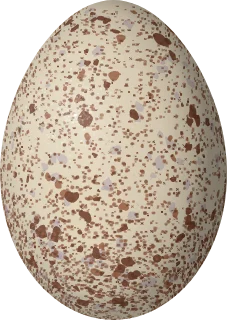
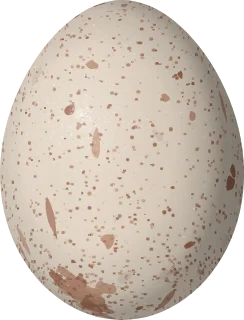


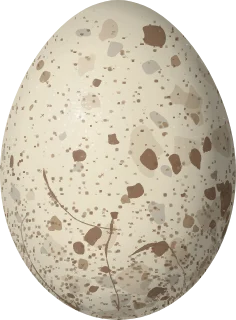
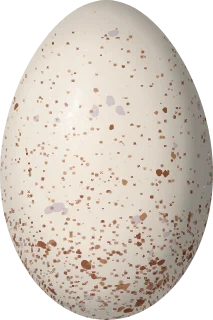
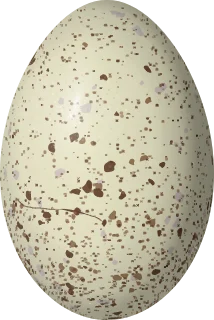


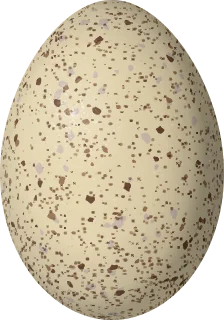
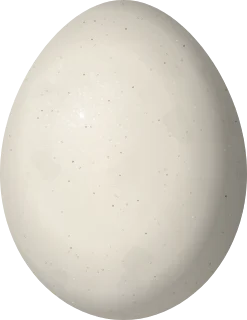

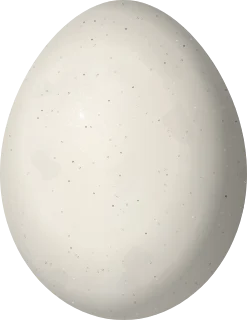
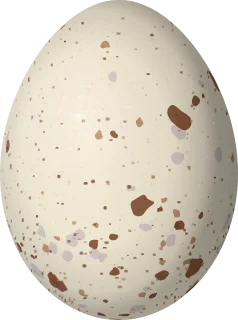
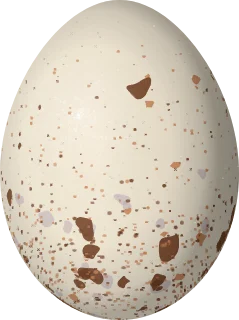


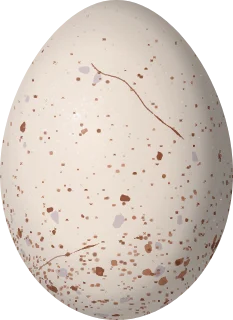


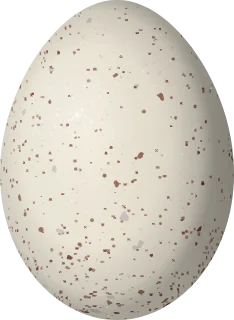
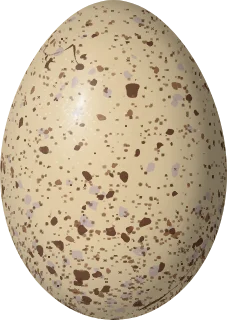


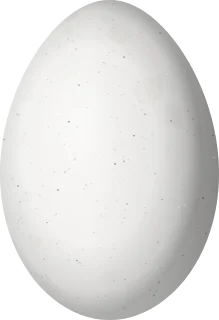

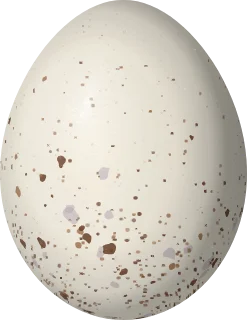
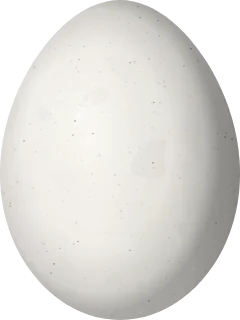
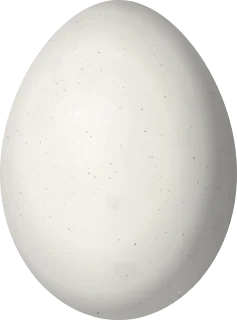
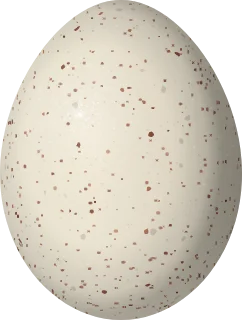
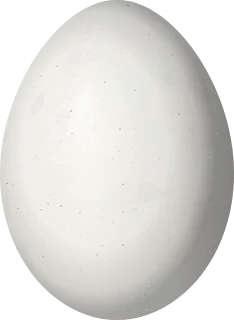


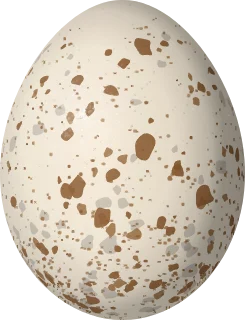

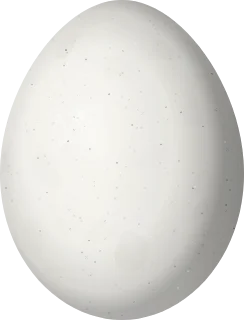

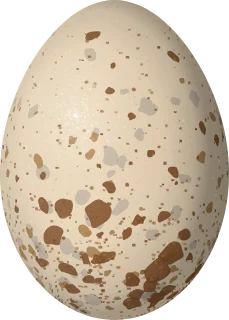


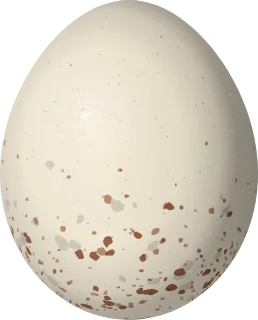
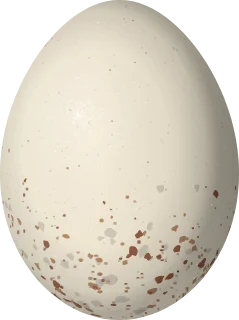

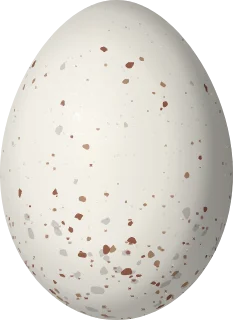


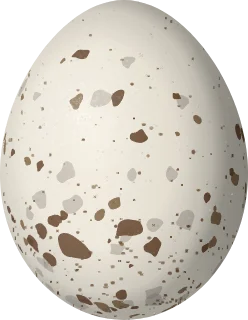
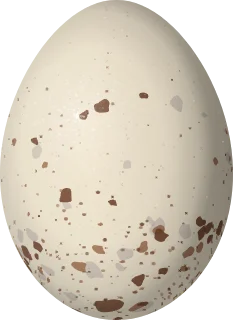

American Coot
Fulica americana
- 49 × 33.5 mm
- Clutch: 8–12 eggs
show all 15
Canada & United States: Canada, United StatesMexico: Mexico
Central America: Belize, Costa Rica, El Salvador, Guatemala, Honduras, Nicaragua
The Caribbean: Aruba, Bonaire, Sint Eustatius and Saba, Curaçao, Caribbean islands
South America: Colombia, Venezuela
Buff, pinkish buff or buff-gray speckled with dark brown, purplish brown, or black.
Sources of information
- Size
- Average of 122 eggs: Bent, Life Histories of North American Marsh Birds (U.S. National Museum Bulletin 135, 1927), p. 361.
- Description
- Cornell Lab of Ornithology, All About Birds: American Coot, Life History.
Drawing checked against a photo: Bird Eggs of Canada photo (Royal Saskatchewan Museum). - Clutch
- Cornell Lab of Ornithology, All About Birds.
- Shape
- Drawn from the length and width, with the taper estimated from the typical eggs of its group (how these eggs are drawn).
Know something more about this egg, or spotted a mistake? Message us.
Make a 3D-printable copy of this eggSee posters with this egg →
Andean Coot
Fulica ardesiaca
- 62 × 40 mm (approx.)
Stone-buff, with fine, fairly sparse dark brown and grey specks evenly all over.
Sources of information
- Size
- Nehrkorn, A. 1899. Katalog der Eiersammlung nebst Beschreibungen der aussereuropäischen Eier. Braunschweig.
- Description
- Nehrkorn 1899 (Katalog der Eiersammlung).
Drawing checked against a photo: de la Peña 2025, Aves Argentinas tomo 4, p. 82. - Shape
- Drawn from the length and width, with the taper estimated from the typical eggs of its group (how these eggs are drawn).
Know something more about this egg, or spotted a mistake? Message us.
Ash-throated Crake
Mustelirallus albicollis
- 33.17 × 25.62 mm
- Clutch: 1–5 eggs
show all 12
South America: Argentina, Bolivia, Brazil, Colombia, Ecuador, French Guiana, Guyana, Paraguay, Peru, Suriname, Uruguay, VenezuelaWhitish to light creamy, rather sparingly marked with small light and dark brown spots, mostly at the large end, purplish undermarks; moderately glossy.
Sources of information
- Size
- Average of 50 eggs: Hellebrekers, W. P. J. 1942. Revision of the Penard oölogical collection from Surinam. Zoologische Mededelingen 24: 240–275., p. 244.
- Description
- Hellebrekers, W.Ph.J. 1942. Revision of the Penard oölogical collection from Surinam. Zoologische Mededelingen 24.
- Shape
- Drawn from the length and width, with the taper estimated from the typical eggs of its group (how these eggs are drawn).
Know something more about this egg, or spotted a mistake? Message us.
Austral Rail
Rallus antarcticus
- 42.8 × 31.1 mm (approx.)
Pinkish cream, sparsely spotted rufous and pale purple, denser at the large end, some with twisted rufous lines; little gloss.
Sources of information
- Size
- Oates, E. W. 1901. Catalogue of the Collection of Birds' Eggs in the British Museum, vol. 1. London., p. 110.
- Description
- Oates 1901 (BM Egg Catalogue vol 1).
- Shape
- Drawn from the length and width, with the taper estimated from the typical eggs of its group (how these eggs are drawn).
Know something more about this egg, or spotted a mistake? Message us.
Aztec Rail
Rallus tenuirostris
- 42.5 × 30 mm (estimated)
- Speculative: we haven't found documented measurements of this egg yet, so we estimated its size from related birds.
Whitish with brown spots; oval.
Sources of information
- Size
- Estimated, no measurements found: the median length and width of measured eggs of the same genus: Rallus antarcticus, Rallus crepitans, Rallus elegans, Rallus limicola, Rallus longirostris ….
- Description
- Williams, S. O. III 1989. Notes on the rail Rallus longirostris tenuirostris in the highlands of central Mexico. Wilson Bull. 101(1): 117-120.
- Shape
- Drawn from the length and width, with the taper estimated from the typical eggs of its group (how these eggs are drawn).
Have you seen this egg, or know a description or measurements of it? Message us.
Azure Gallinule
Porphyrio flavirostris
- 32.4 × 24.7 mm
show all 10
The Caribbean: Trinidad and TobagoSouth America: Argentina, Bolivia, Brazil, Ecuador, French Guiana, Guyana, Paraguay, Suriname, Venezuela
Creamy, with a great many small reddish-brown spots all over.
Sources of information
- Size
- Average of 3 eggs: Schönwetter, M. 1960–1992. Handbuch der Oologie (ed. W. Meise), Lieferung 6. Akademie-Verlag, Berlin., p. 351.
- Description
- Haverschmidt, F. 1968. Birds of Surinam. Oliver & Boyd, Edinburgh and London., p. 92.
- Shape
- Drawn from the length and width, with the taper estimated from the typical eggs of its group (how these eggs are drawn).
Know something more about this egg, or spotted a mistake? Message us.
Make a 3D-printable copy of this eggSee posters with this egg →
Black Rail
Laterallus jamaicensis
- 25.6 × 19.8 mm
- Clutch: 4–13 eggs
show all 9
Canada & United States: United StatesMexico: Mexico
Central America: Belize, Costa Rica, Honduras
The Caribbean: Caribbean islands
South America: Brazil, Chile, Peru
Creamy white with fine brown spots.
Sources of information
- Size
- Average of 92 eggs: Bent, Life Histories of North American Marsh Birds (U.S. National Museum Bulletin 135, 1927), p. 329.
Agrees with: Cornell Lab of Ornithology, All About Birds: Black Rail, Life History. - Description
- Cornell Lab of Ornithology, All About Birds: Black Rail, Life History.
- Clutch
- Cornell Lab of Ornithology, All About Birds.
- Shape
- Drawn from the length and width, with the taper estimated from the typical eggs of its group (how these eggs are drawn).
Know something more about this egg, or spotted a mistake? Message us.
Black-banded Crake
Rufirallus fasciatus
- 37.33 × 25.52 mm
- Clutch: 2 eggs
Immaculate white (older descriptions of cream eggs marked with lavender and brown, and their sizes, belong to another species).
Sources of information
- Size
- Greeney 2022, Bull. B.O.C. 142(4): 404–409, p. 406.
- Description
- Greeney 2022, Bull. B.O.C. 142(4): 404–409, p. 406.
- Shape
- Drawn from the length and width, with the taper estimated from the typical eggs of its group (how these eggs are drawn).
Know something more about this egg, or spotted a mistake? Message us.
Black-legged Seriema
Chunga burmeisteri
- 60.5 × 44.7 mm
- Clutch: 2 eggs
Cream with sparse chestnut and grey speckles and blotches.
Sources of information
- Size
- Average of 3 eggs: de la Peña, M. R. 2025. Aves Argentinas: descripción, comportamiento, reproducción y distribución. Comunicaciones del Museo Provincial de Ciencias Naturales "Florentino Ameghino" (Nueva Serie). Santa Fe., tomo 7, p. 376.
- Description
- de la Peña 2025 (Aves Argentinas tomo 7).
- Shape
- Drawn from the length and width, with the taper estimated from the typical eggs of its group (how these eggs are drawn).
Know something more about this egg, or spotted a mistake? Message us.
Blackish Rail
Pardirallus nigricans
- 40.3 × 30.7 mm
Reddish grey with fine violet, dark brown and light red spots and dots.
Sources of information
- Size
- Average of 40 eggs: Schönwetter, M. 1960–1992. Handbuch der Oologie (ed. W. Meise), Lieferung 6. Akademie-Verlag, Berlin., p. 342.
- Description
- Nehrkorn 1899 (Katalog der Eiersammlung).
- Shape
- Drawn from the length and width, with the taper estimated from the typical eggs of its group (how these eggs are drawn).
Know something more about this egg, or spotted a mistake? Message us.
Bogota Rail
Rallus semiplumbeus
- 42.5 × 30 mm (estimated)
- Speculative: we haven't found a documented description of this egg yet, so we estimated its colours and markings and its size from related birds.
No documented description found yet; drawn like the Aztec Rail egg (same genus).
Sources of information
- Size
- Estimated, no measurements found: the median length and width of measured eggs of the same genus: Rallus antarcticus, Rallus crepitans, Rallus elegans, Rallus limicola, Rallus longirostris ….
- Description
- Estimated, no description found: drawn like a related egg (Aztec Rail).
- Shape
- Drawn from the length and width, with the taper estimated from the typical eggs of its group (how these eggs are drawn).
Have you seen this egg, or know a description or measurements of it? Message us.
Brown Wood Rail
Aramides wolfi
- 47 × 35 mm (approx.)
Cream, spotted with brown at both ends; oval.
Sources of information
- Size
- Karubian, J., L. Carrasco, P. Mena et al. 2011. Nesting biology, home range, and habitat use of the Brown Wood Rail (Aramides wolfi) in northwest Ecuador. Wilson J. Ornithol. 123: 137-141.
- Description
- Karubian et al. 2011, Wilson J. Ornithol. 123: 137-141.
- Shape
- Drawn from the length and width, with the taper estimated from the typical eggs of its group (how these eggs are drawn).
Know something more about this egg, or spotted a mistake? Message us.
Chestnut-headed Crake
Anurolimnas castaneiceps
- 40.3 × 29.1 mm (estimated)
- Speculative: we haven't found documented measurements of this egg yet, so we estimated its size from related birds.
Pinkish white with scattered brown spots.
Sources of information
- Size
- Estimated, no measurements found: the median length and width of measured eggs of the same family: Amaurolimnas concolor, Aramides albiventris, Aramides axillaris, Aramides cajaneus, Aramides mangle ….
- Description
- Galarza, J., D. Guarderas & G. Buitron-Jurado 2011. First description of nests and eggs of Chestnut-headed Crake (Anurolimnas castaneiceps) from Ecuador. Wilson J. Ornithol. 123(1) (doi 10.1676/10-089.1).
- Shape
- Drawn from the length and width, with the taper estimated from the typical eggs of its group (how these eggs are drawn).
Have you seen this egg, or know a description or measurements of it? Message us.
Clapper Rail
Rallus crepitans
- 42.5 × 30 mm
- Clutch: 2–16 eggs
Creamy white to buff, with irregular brown to lilac blotches.
Sources of information
- Size
- Average of 50 eggs: Bent, Life Histories of North American Marsh Birds (U.S. National Museum Bulletin 135, 1927), p. 279.
- Description
- Cornell Lab of Ornithology, All About Birds: Clapper Rail, Life History.
- Clutch
- Cornell Lab of Ornithology, All About Birds.
- Shape
- Drawn from the length and width, with the taper estimated from the typical eggs of its group (how these eggs are drawn).
Know something more about this egg, or spotted a mistake? Message us.
Make a 3D-printable copy of this eggSee posters with this egg →
Colombian Crake
Mustelirallus colombianus
- 31.6 × 24.1 mm (estimated)
- Speculative: we haven't found a description of this egg (a source we checked reports it as undescribed), so we estimated its colours and markings and its size from related birds.
No documented description found yet; drawn like the Ash-throated Crake egg (same genus).
Sources of information
- Size
- Estimated, no measurements found: the median length and width of measured eggs of the same genus: Mustelirallus albicollis, Mustelirallus erythrops.
- Description
- Estimated, no description found: drawn like a related egg (Ash-throated Crake).
- Shape
- Drawn from the length and width, with the taper estimated from the typical eggs of its group (how these eggs are drawn).
Have you seen this egg, or know a description or measurements of it? Message us.
Common Gallinule
Gallinula galeata
- 44 × 31 mm
- Clutch: 3–15 eggs
show all 28
Canada & United States: Canada, United StatesMexico: Mexico
Central America: Belize, Costa Rica, El Salvador, Guatemala, Honduras, Nicaragua, Panama
The Caribbean: Aruba, Bonaire, Sint Eustatius and Saba, Curaçao, Trinidad and Tobago, Caribbean islands
South America: Argentina, Bolivia, Brazil, Chile, Colombia, Ecuador, French Guiana, Guyana, Paraguay, Peru, Suriname, Uruguay, Venezuela
Pale greenish buff, spotted and speckled light and dark chestnut all over.
Sources of information
- Size
- Average of 105 eggs: Bent, Life Histories of North American Marsh Birds (U.S. National Museum Bulletin 135, 1927), p. 350.
Agrees with: Cornell Lab of Ornithology, All About Birds: Common Gallinule, Life History. - Description
- Cornell Lab of Ornithology, All About Birds: Common Gallinule, Life History.
Drawing checked against a photo: Bird Eggs of Canada photo (Royal Alberta Museum); de la Peña 2025, Aves Argentinas tomo 4, p. 41. - Clutch
- Cornell Lab of Ornithology, All About Birds.
- Shape
- Drawn from the length and width, with the taper estimated from the typical eggs of its group (how these eggs are drawn).
Know something more about this egg, or spotted a mistake? Message us.
Make a 3D-printable copy of this eggSee posters with this egg →
Dark-winged Trumpeter
Psophia viridis
- 48 × 37 mm (estimated)
- Speculative: we haven't found a documented description of this egg yet, so we estimated its colours and markings and its size from related birds.
No documented description found yet; drawn like the Grey-winged Trumpeter egg (same genus).
Sources of information
- Size
- Estimated, no measurements found: the median length and width of measured eggs of the same genus: Psophia crepitans.
- Description
- Estimated, no description found: drawn like a related egg (Grey-winged Trumpeter).
- Shape
- Drawn from the length and width, with the taper estimated from the typical eggs of its group (how these eggs are drawn).
Have you seen this egg, or know a description or measurements of it? Message us.
Dot-winged Crake
Laterallus spiloptera
- 27 × 19.7 mm
Whitish, with scattered small reddish, brown and grey dots, more at the blunt end; small end only slightly pointed.
Sources of information
- Size
- Average of 3 eggs: Larracoechea, G. A. 2017. Nidificacion del Burrito Negruzco (Porzana spiloptera) en Villa del Mar, Buenos Aires, Argentina. Nuestras Aves 62: 24-27.
- Description
- Larracoechea 2017, Nuestras Aves 62: 24-27.
- Shape
- Drawn from the length and width, with the taper estimated from the typical eggs of its group (how these eggs are drawn).
Know something more about this egg, or spotted a mistake? Message us.
Galapagos Crake
Laterallus spilonota
- 29.4 × 21.8 mm
Beige, sprinkled with fine red-brown and some grey speckles over most of the surface, especially at the wide end.
Sources of information
- Size
- Average of 3 eggs: Franklin, A. B., D. A. Clark & D. B. Clark 1979. Ecology and behavior of the Galapagos Rail. Wilson Bull. 91(2): 202-221.
- Description
- Franklin, Clark & Clark 1979, Wilson Bull. 91: 202-221.
- Shape
- Drawn from the length and width, with the taper estimated from the typical eggs of its group (how these eggs are drawn).
Know something more about this egg, or spotted a mistake? Message us.
Make a 3D-printable copy of this eggSee posters with this egg →
Giant Coot
Fulica gigantea
- 66.7 × 44.4 mm (approx.)
Pale cream, sparsely spotted and blotched reddish-brown with a few pale purple shell marks; coarse, glossless shell.
Sources of information
- Size
- Oates, E. W. 1901. Catalogue of the Collection of Birds' Eggs in the British Museum, vol. 1. London., p. 131.
- Description
- Oates 1901 (BM Egg Catalogue vol 1).
- Shape
- Drawn from the length and width, with the taper estimated from the typical eggs of its group (how these eggs are drawn).
Know something more about this egg, or spotted a mistake? Message us.
Giant Wood Rail
Aramides ypecaha
- 57 × 38 mm
Pale ochre-cream, sparsely spotted chestnut and lilac all over, more at the large end.
Sources of information
- Size
- Average of 30 eggs: Schönwetter, M. 1960–1992. Handbuch der Oologie (ed. W. Meise), Lieferung 6. Akademie-Verlag, Berlin., p. 343.
- Description
- Oates 1901 (BM Egg Catalogue vol 1); supporting: Nehrkorn 1899 (Katalog der Eiersammlung).
Drawing checked against a photo: de la Peña 2025, Aves Argentinas tomo 4, p. 15. - Shape
- Drawn from the length and width, with the taper estimated from the typical eggs of its group (how these eggs are drawn).
Know something more about this egg, or spotted a mistake? Message us.
Make a 3D-printable copy of this eggSee posters with this egg →
Grey-breasted Crake
Laterallus exilis
- 31.15 × 23.25 mm (approx.)
- Clutch: 3 eggs
show all 19
Mexico: MexicoCentral America: Belize, Costa Rica, Guatemala, Honduras, Nicaragua, Panama
The Caribbean: Trinidad and Tobago
South America: Argentina, Bolivia, Brazil, Colombia, Ecuador, French Guiana, Guyana, Paraguay, Peru, Suriname, Venezuela
Cream, smooth, little gloss, with dark brown spots and pale grey underlying marks, thickest at the large end.
Sources of information
- Size
- Schönwetter, M. 1962. Handbuch der Oologie, pt 6 (p. 346), quoted in Wetmore, A. 1965. The birds of the Republic of Panamá, part 1 (Tinamidae to Rynchopidae). Smithsonian Miscellaneous Collections 150(1)., p. 357.
Agrees with: Belcher, C. & G. D. Smooker 1935. Ibis (p. 284), quoted in Wetmore, A. 1965. The birds of the Republic of Panamá, part 1 (Tinamidae to Rynchopidae). Smithsonian Miscellaneous Collections 150(1)., pp. 356-357. - Description
- Wetmore 1965, The Birds of the Republic of Panama, pt 1 (Smithsonian Misc. Coll. 150) (quoting Schönwetter 1962).
- Shape
- Drawn from the length and width, with the taper estimated from the typical eggs of its group (how these eggs are drawn).
Know something more about this egg, or spotted a mistake? Message us.
Grey-cowled Wood Rail
Aramides cajaneus
- 51.8 × 36 mm
- Clutch: 3–5 eggs
show all 15
Central America: Costa Rica, PanamaThe Caribbean: Trinidad and Tobago
South America: Argentina, Bolivia, Brazil, Colombia, Ecuador, French Guiana, Guyana, Paraguay, Peru, Suriname, Uruguay, Venezuela
Whitish to pale cream or buff, strongly ovate, blotched and spotted with bright brown/chestnut, cinnamon and pale lilac, densest at the thick end.
Sources of information
- Size
- Average of 6 eggs: Skutch, A. F. 1994. The Gray-necked Wood-Rail: habits, food, nesting, and voice. Auk 111: 200–204., p. 201.
Agrees with: Wetmore, A. 1965. The Birds of the Republic of Panamá. Part 1. Tinamidae to Rynchopidae. Smithsonian Miscellaneous Collections 150(1)., p. 344. - Description
- Skutch, A. F. 1994. The Gray-necked Wood-Rail: habits, food, nesting, and voice. Auk 111: 200–204., p. 201.
Agrees with: Wetmore, A. 1965. The Birds of the Republic of Panamá. Part 1. Smithsonian Miscellaneous Collections 150(1) (incl. Belcher & Smooker 1935, Ibis)., p. 344. - Shape
- Drawn from the length and width, with the taper estimated from the typical eggs of its group (how these eggs are drawn).
Know something more about this egg, or spotted a mistake? Message us.
Make a 3D-printable copy of this eggSee posters with this egg →
Grey-winged Trumpeter
Psophia crepitans
- 48 × 37 mm (approx.)
- Clutch: 7 eggs
Dirty white, unmarked.
Sources of information
- Size
- Penard, F. P. & A. P. Penard 1908. De vogels van Guyana (Suriname, Cayenne en Demerara), deel 1. Paramaribo., p. 224.
- Description
- Ihering 1900 (Revista do Museu Paulista 4); supporting: Euler 1900 (Revista do Museu Paulista 4).
- Shape
- Drawn from the length and width, with the taper estimated from the typical eggs of its group (how these eggs are drawn).
Know something more about this egg, or spotted a mistake? Message us.
Horned Coot
Fulica cornuta
- 64.1 × 45.4 mm
- Clutch: up to 7 eggs
Brownish cream with chestnut and lilac blotches and dots.
Sources of information
- Size
- Average of 4 eggs: de la Peña, M. R. 2025. Aves Argentinas: descripción, comportamiento, reproducción y distribución. Comunicaciones del Museo Provincial de Ciencias Naturales "Florentino Ameghino" (Nueva Serie). Santa Fe., tomo 4, p. 80.
- Description
- de la Peña 2025 (Aves Argentinas tomo 4).
- Shape
- Drawn from the length and width, with the taper estimated from the typical eggs of its group (how these eggs are drawn).
Know something more about this egg, or spotted a mistake? Message us.
King Rail
Rallus elegans
- 41 × 30 mm
- Clutch: 10–12 eggs
Pale buff with a few irregular brown spots.
Sources of information
- Size
- Average of 56 eggs: Bent, A. C. 1926. Life Histories of North American Marsh Birds. U.S. National Museum Bulletin 135, scan p. 281.
- Description
- Cornell Lab of Ornithology, All About Birds: King Rail, Life History.
Drawing checked against a photo: Flickr photo by Burke Museum; Bird Eggs of Canada photo (Royal Alberta Museum). - Clutch
- Cornell Lab of Ornithology, All About Birds.
- Shape
- Drawn from the length and width, with the taper estimated from the typical eggs of its group (how these eggs are drawn).
Know something more about this egg, or spotted a mistake? Message us.
Make a 3D-printable copy of this eggSee posters with this egg →
Limpkin
Aramus guarauna
- 59.4 × 43.8 mm
- Clutch: 4–7 eggs
show all 23
Canada & United States: United StatesMexico: Mexico
Central America: Belize, Costa Rica, El Salvador, Guatemala, Honduras, Nicaragua, Panama
The Caribbean: Trinidad and Tobago, Caribbean islands
South America: Argentina, Bolivia, Brazil, Colombia, Ecuador, French Guiana, Guyana, Paraguay, Peru, Suriname, Uruguay, Venezuela
Cream to olive-buff, with soft chestnut-brown blotches, lines and small grey marks, most at the large end.
Sources of information
- Size
- Average of 40 eggs: Bent, Life Histories of North American Marsh Birds (U.S. National Museum Bulletin 135, 1927), p. 257.
Agrees with: Cornell Lab of Ornithology, All About Birds: Limpkin, Life History. - Description
- Cornell Lab of Ornithology, All About Birds: Limpkin, Life History.
Drawing checked against a photo: de la Peña 2025, Aves Argentinas tomo 4, p. 4. - Clutch
- Cornell Lab of Ornithology, All About Birds.
- Shape
- Drawn from the length and width, with the taper estimated from the typical eggs of its group (how these eggs are drawn).
Know something more about this egg, or spotted a mistake? Message us.
Make a 3D-printable copy of this eggSee posters with this egg →
Little Wood Rail
Aramides mangle
- 51 × 35.2 mm
Cream-white, sometimes flesh- or pale grey-tinged, sparsely spotted with small round light to dark chestnut and pale violet spots, denser and coarser at the large end and fading toward the small end; moderate gloss.
Sources of information
- Size
- Average of 7 eggs: Schönwetter, M. 1960–1992. Handbuch der Oologie (ed. W. Meise), Lieferung 6. Akademie-Verlag, Berlin., p. 343.
- Description
- Schönwetter, M. 1960–1992. Handbuch der Oologie (ed. W. Meise), Lieferung 05. Akademie-Verlag, Berlin., pdf p. 63.
- Shape
- Drawn from the length and width, with the taper estimated from the typical eggs of its group (how these eggs are drawn).
Know something more about this egg, or spotted a mistake? Message us.
Mangrove Rail
Rallus longirostris
- 44 × 31 mm (approx.)
- Clutch: 3–7 eggs
show all 13
Central America: Costa Rica, El Salvador, Honduras, NicaraguaThe Caribbean: Trinidad and Tobago
South America: Brazil, Colombia, Ecuador, French Guiana, Guyana, Peru, Suriname, Venezuela
Whitish to creamy white with small brown spots and some purplish-brown speckling.
Sources of information
- Size
- Hauber et al. 2014 (The Book of Eggs), ["p. 63"].
- Description
- Pineda, L., Beltrán, L., Herrera, M. & Sorto, A. 2020. Notas de la anidación del Rascón de Manglar Rallus longirostris en El Salvador. Revista Minerva 3(1): 141-150, p. 146; supporting: Hauber, M. E. (ed.) 2014. The Book of Eggs. University of Chicago Press; supporting: Wikipedia: Mangrove rail (accessed Oct 2026).
- Shape
- Drawn from the length and width, with the taper estimated from the typical eggs of its group (how these eggs are drawn).
Know something more about this egg, or spotted a mistake? Message us.
Ocellated Crake
Rufirallus schomburgkii
- 24.6 × 19.3 mm (approx.)
show all 12
Central America: Costa RicaSouth America: Argentina, Bolivia, Brazil, Colombia, Ecuador, French Guiana, Guyana, Paraguay, Peru, Suriname, Venezuela
Dull white, unmarked; thin plain shell.
Sources of information
- Size
- Negret, A. & D. M. Teixeira 1984. The Ocellated Crake (Micropygia schomburgkii) of central Brazil. Condor 86(2): 220.
- Description
- Negret & Teixeira 1984, Condor 86: 220.
- Shape
- Drawn from the length and width, with the taper estimated from the typical eggs of its group (how these eggs are drawn).
Know something more about this egg, or spotted a mistake? Message us.
Paint-billed Crake
Mustelirallus erythrops
- 30 × 22.6 mm
- Clutch: 3–7 eggs
show all 12
Central America: Costa Rica, PanamaSouth America: Argentina, Brazil, Colombia, Ecuador, French Guiana, Guyana, Paraguay, Peru, Suriname, Venezuela
Creamy buff with large reddish speckles near the blunt end.
Sources of information
- Size
- Average of 9 eggs: Schönwetter, M. 1960–1992. Handbuch der Oologie (ed. W. Meise), Lieferung 6. Akademie-Verlag, Berlin., p. 347.
- Description
- Hauber, M. E. (ed.) et al. 2014. The Book of Eggs. University of Chicago Press.
- Shape
- Drawn from the length and width, with the taper estimated from the typical eggs of its group (how these eggs are drawn).
Know something more about this egg, or spotted a mistake? Message us.
Make a 3D-printable copy of this eggSee posters with this egg →
Pale-winged Trumpeter
Psophia leucoptera
- 48 × 37 mm (estimated)
- Speculative: we haven't found documented measurements of this egg yet, so we estimated its size from related birds.
Blunt oval, dull white with a very slight buff tinge, rough and glossless.
Sources of information
- Size
- Estimated, no measurements found: the median length and width of measured eggs of the same genus: Psophia crepitans.
- Description
- Oates 1902 (BM Egg Catalogue vol 2).
- Shape
- Drawn from the length and width, with the taper estimated from the typical eggs of its group (how these eggs are drawn).
Have you seen this egg, or know a description or measurements of it? Message us.
Plain-flanked Rail
Rallus wetmorei
- 42.1 × 29.6 mm
Buffy with dark reddish-purple spots, concentrated at the wider end.
Sources of information
- Size
- Average of 14 eggs: Rodriguez-Ferraro, A., E. Sanchez & M. Lentino 2012. First description of the nest and eggs of the Plain-flanked Rail (Rallus wetmorei). Ornitol. Neotrop. 23(3): 461-466.
- Description
- Rodriguez-Ferraro et al. 2012, Ornitol. Neotrop. 23: 461-466.
- Shape
- Drawn from the length and width, with the taper estimated from the typical eggs of its group (how these eggs are drawn).
Know something more about this egg, or spotted a mistake? Message us.
Plumbeous Rail
Pardirallus sanguinolentus
- 34 × 26.2 mm (approx.)
Creamy white, sparingly spotted reddish brown with ash-grey underlying marks, mostly towards the larger end (like Water Rail).
Sources of information
- Size
- Oates, E. W. 1901. Catalogue of the Collection of Birds' Eggs in the British Museum, vol. 1. London., p. 111.
- Description
- Oates 1901 (BM Egg Catalogue vol 1); supporting: Nehrkorn 1899 (Katalog der Eiersammlung).
Drawing checked against a photo: de la Peña 2025, Aves Argentinas tomo 4, p. 56. - Shape
- Drawn from the length and width, with the taper estimated from the typical eggs of its group (how these eggs are drawn).
Know something more about this egg, or spotted a mistake? Message us.
Purple Gallinule
Porphyrio martinica
- 39.2 × 28.8 mm
- Clutch: 6–8 eggs
show all 22
Canada & United States: United StatesMexico: Mexico
Central America: Belize, El Salvador, Guatemala, Honduras, Nicaragua
The Caribbean: Aruba, Trinidad and Tobago, Caribbean islands
South America: Argentina, Bolivia, Brazil, Colombia, Ecuador, French Guiana, Guyana, Paraguay, Peru, Suriname, Uruguay, Venezuela
Pale ochre-cream, finely spotted chestnut and grey all over.
Sources of information
- Size
- Average of 56 eggs: Bent, Life Histories of North American Marsh Birds (U.S. National Museum Bulletin 135, 1927), p. 342.
Agrees with: Cornell Lab of Ornithology, All About Birds: Purple Gallinule, Life History. - Description
- Cornell Lab of Ornithology, All About Birds: Purple Gallinule, Life History.
Drawing checked against a photo: de la Peña 2025, Aves Argentinas tomo 4, p. 61. - Clutch
- Cornell Lab of Ornithology, All About Birds.
- Shape
- Drawn from the length and width, with the taper estimated from the typical eggs of its group (how these eggs are drawn).
Know something more about this egg, or spotted a mistake? Message us.
Make a 3D-printable copy of this eggSee posters with this egg →
Purple Swamphen
Porphyrio porphyrio
- 52.61 × 38.32 mm
Long-oval, cream-yellow to stone or light yellowish brown, often with a rosy tinge, spotted with dark red-brown to blackish purple-brown and pale purple-grey, scattered or crowded at the broad end; little gloss.
Sources of information
- Size
- Average of 4 eggs: Stoddard, M. C., et al. 2017. Avian egg shape: form, function, and evolution. Science 356: 1249-1254 (Data S1, MVZ egg collection).
- Description
- Schönwetter, M. 1960–1992. Handbuch der Oologie (ed. W. Meise), Lieferung 06. Akademie-Verlag, Berlin., pdf p. 16.
- Shape
- Drawn from the length and width, with the taper estimated from the typical eggs of its group (how these eggs are drawn).
Know something more about this egg, or spotted a mistake? Message us.
Red-and-white Crake
Rufirallus leucopyrrhus
- 33 × 24.8 mm
- Clutch: up to 4 eggs
White, unmarked.
Sources of information
- Size
- Average of 25 eggs: Schönwetter, M. 1960–1992. Handbuch der Oologie (ed. W. Meise), Lieferung 6. Akademie-Verlag, Berlin., p. 347.
- Description
- de la Peña 2025 (Aves Argentinas tomo 4).
- Shape
- Drawn from the length and width, with the taper estimated from the typical eggs of its group (how these eggs are drawn).
Know something more about this egg, or spotted a mistake? Message us.
Red-fronted Coot
Fulica rufifrons
- 55.5 × 37.2 mm
Pale creamy buff tinged green, specked, spotted and blotched with rich chocolate-brown, denser at the larger end, few pale purple marks; slightly glossy.
Sources of information
- Size
- Average of 40 eggs: Schönwetter, M. 1960–1992. Handbuch der Oologie (ed. W. Meise), Lieferung 6. Akademie-Verlag, Berlin., p. 353.
- Description
- Oates 1901 (BM Egg Catalogue vol 1).
Drawing checked against a photo: de la Peña 2025, Aves Argentinas tomo 4, p. 74. - Shape
- Drawn from the length and width, with the taper estimated from the typical eggs of its group (how these eggs are drawn).
Know something more about this egg, or spotted a mistake? Message us.
Red-gartered Coot
Fulica armillata
- 62.79 × 40.36 mm
- Clutch: up to 7 eggs
Cream to olive-buff, evenly sprinkled all over with small dark brown and grey specks.
Sources of information
- Size
- Average of 4 eggs: Stoddard, M. C., et al. 2017. Avian egg shape: form, function, and evolution. Science 356: 1249-1254 (Data S1, MVZ egg collection).
- Description
- de la Peña 2025 (Aves Argentinas tomo 4); Oates 1901 (BM Egg Catalogue vol 1).
Drawing checked against a photo: de la Peña 2025, Aves Argentinas tomo 4, p. 68. - Shape
- Drawn from the length and width, with the taper estimated from the typical eggs of its group (how these eggs are drawn).
Know something more about this egg, or spotted a mistake? Message us.
Red-legged Seriema
Cariama cristata
- 63 × 48 mm (approx.)
- Clutch: 2–3 eggs
Pinkish to dull white with sparse, faint reddish-brown maculation; dull.
Sources of information
- Size
- Hauber, M. E. (ed.), J. Bates & B. Becker 2014. The Book of Eggs: A Life-Size Guide to the Eggs of Six Hundred of the World's Bird Species. University of Chicago Press., p. 284.
- Description
- Hauber, M.E. et al. (2014). The Book of Eggs. University of Chicago Press, p. 284.
- Shape
- Drawn from the length and width, with the taper estimated from the typical eggs of its group (how these eggs are drawn).
Know something more about this egg, or spotted a mistake? Message us.
Make a 3D-printable copy of this eggSee posters with this egg →
Red-winged Wood Rail
Aramides calopterus
- 50.8 × 35.6 mm (estimated)
- Speculative: we haven't found a description of this egg (a source we checked reports it as undescribed), so we estimated its colours and markings and its size from related birds.
No documented description found yet; drawn like the Grey-cowled Wood Rail egg (same genus).
Sources of information
- Size
- Estimated, no measurements found: the median length and width of measured eggs of the same genus: Aramides albiventris, Aramides axillaris, Aramides cajaneus, Aramides mangle, Aramides saracura ….
- Description
- Estimated, no description found: drawn like a related egg (Grey-cowled Wood Rail).
- Shape
- Drawn from the length and width, with the taper estimated from the typical eggs of its group (how these eggs are drawn).
Have you seen this egg, or know a description or measurements of it? Message us.
Ridgway's Rail
Rallus obsoletus
- 44.1 × 31.3 mm
- Clutch: 3–14 eggs
Creamy white to buff with brown to lilac blotches.
Sources of information
- Size
- Average of 57 eggs: Bent, Life Histories of North American Marsh Birds (U.S. National Museum Bulletin 135, 1927), p. 269.
- Description
- Cornell Lab of Ornithology, All About Birds: Ridgway's Rail, Life History.
- Clutch
- Cornell Lab of Ornithology, All About Birds.
- Shape
- Drawn from the length and width, with the taper estimated from the typical eggs of its group (how these eggs are drawn).
Know something more about this egg, or spotted a mistake? Message us.
Ruddy Crake
Laterallus ruber
- 29.2 × 23.5 mm
Cream, flecked with reddish brown at the larger end.
Sources of information
- Size
- Average of 4 eggs: Dickerman, R. W. 1968. Notes on the Red Rail (Laterallus ruber). Wilson Bull. 80(1): 94-99.
- Description
- Dickerman 1968, Wilson Bull. 80: 94-99.
- Shape
- Drawn from the length and width, with the taper estimated from the typical eggs of its group (how these eggs are drawn).
Know something more about this egg, or spotted a mistake? Message us.
Make a 3D-printable copy of this eggSee posters with this egg →
Rufous-faced Crake
Rufirallus xenopterus
- 33 × 24.4 mm (estimated)
- Speculative: we haven't found a description of this egg (a source we checked reports it as undescribed), so we estimated its colours and markings and its size from related birds.
No documented description found yet; drawn like the Red-and-white Crake egg (same genus).
Sources of information
- Size
- Estimated, no measurements found: the median length and width of measured eggs of the same genus: Rufirallus fasciatus, Rufirallus leucopyrrhus, Rufirallus schomburgkii, Rufirallus viridis.
- Description
- Estimated, no description found: drawn like a related egg (Red-and-white Crake).
- Shape
- Drawn from the length and width, with the taper estimated from the typical eggs of its group (how these eggs are drawn).
Have you seen this egg, or know a description or measurements of it? Message us.
Rufous-necked Wood Rail
Aramides axillaris
- 45 × 33.55 mm (approx.)
- Clutch: 5 eggs
show all 16
Mexico: MexicoCentral America: Belize, Costa Rica, El Salvador, Guatemala, Honduras, Nicaragua, Panama
The Caribbean: Trinidad and Tobago
South America: Colombia, Ecuador, French Guiana, Guyana, Peru, Suriname, Venezuela
Creamy buff, spotted and blotched with reddish brown and pale lilac, mostly at the larger end (as in A. cajaneus).
Sources of information
- Size
- Schönwetter, M. 1961-1962. Handbuch der Oologie, pt 5 (p. 317), pt 6 (p. 343), quoted in Wetmore, A. 1965. The birds of the Republic of Panamá, part 1 (Tinamidae to Rynchopidae). Smithsonian Miscellaneous Collections 150(1)., p. 347.
- Description
- Wetmore 1965, The Birds of the Republic of Panamá, Part 1 (Smithsonian Misc. Coll. 150).
- Shape
- Drawn from the length and width, with the taper estimated from the typical eggs of its group (how these eggs are drawn).
Know something more about this egg, or spotted a mistake? Message us.
Make a 3D-printable copy of this eggSee posters with this egg →
Rufous-sided Crake
Laterallus melanophaius
- 31.5 × 23 mm
- Clutch: up to 5 eggs
show all 12
South America: Argentina, Bolivia, Brazil, Colombia, Ecuador, French Guiana, Guyana, Paraguay, Peru, Suriname, Uruguay, VenezuelaCreamy white with reddish-brown and some violet specks and small blotches all over.
Sources of information
- Size
- Average of 7 eggs: de la Peña, M. R. 2025. Aves Argentinas: descripción, comportamiento, reproducción y distribución. Comunicaciones del Museo Provincial de Ciencias Naturales "Florentino Ameghino" (Nueva Serie). Santa Fe., tomo 4, p. 24.
- Description
- de la Peña 2025 (Aves Argentinas tomo 4).
Drawing checked against a photo: de la Peña 2025, Aves Argentinas tomo 4, p. 25. - Shape
- Drawn from the length and width, with the taper estimated from the typical eggs of its group (how these eggs are drawn).
Know something more about this egg, or spotted a mistake? Message us.
Make a 3D-printable copy of this eggSee posters with this egg →
Russet-crowned Crake
Rufirallus viridis
- 32.96 × 24.07 mm (approx.)
- Clutch: 1–3 eggs
show all 10
South America: Bolivia, Brazil, Colombia, Ecuador, French Guiana, Guyana, Paraguay, Peru, Suriname, VenezuelaWhite, unspotted, smooth and moderately glossy.
Sources of information
- Size
- Average of 50 eggs: Hellebrekers, W. P. J. 1942. Revision of the Penard oölogical collection from Surinam. Zoologische Mededelingen 24: 240–275., p. 244.
- Description
- Hellebrekers, W.Ph.J. (1942). Revision of the Penard oological collection from Surinam. Zoologische Mededelingen 24.
- Shape
- Drawn from the length and width, with the taper estimated from the typical eggs of its group (how these eggs are drawn).
Know something more about this egg, or spotted a mistake? Message us.
Russet-naped Wood Rail
Aramides albiventris
- 50.3 × 35.6 mm
Creamy white to pinkish-grey, spotted and speckled reddish-brown and dark brown over pale purple shell marks; slight gloss.
Sources of information
- Size
- Average of 8 eggs: Schönwetter, M. 1960–1992. Handbuch der Oologie (ed. W. Meise), Lieferung 6. Akademie-Verlag, Berlin., p. 343.
- Description
- Oates 1901 (BM Egg Catalogue vol 1); supporting: Nehrkorn 1899 (Katalog der Eiersammlung).
- Shape
- Drawn from the length and width, with the taper estimated from the typical eggs of its group (how these eggs are drawn).
Know something more about this egg, or spotted a mistake? Message us.
Make a 3D-printable copy of this eggSee posters with this egg →
Rusty-flanked Crake
Laterallus levraudi
- 29.2 × 21.8 mm (estimated)
- Speculative: we haven't found a description of this egg (a source we checked reports it as undescribed), so we estimated its colours and markings and its size from related birds.
No documented description found yet; drawn like the Ruddy Crake egg (same genus).
Sources of information
- Size
- Estimated, no measurements found: the median length and width of measured eggs of the same genus: Laterallus albigularis, Laterallus exilis, Laterallus flaviventer, Laterallus jamaicensis, Laterallus melanophaius ….
- Description
- Estimated, no description found: drawn like a related egg (Ruddy Crake).
- Shape
- Drawn from the length and width, with the taper estimated from the typical eggs of its group (how these eggs are drawn).
Have you seen this egg, or know a description or measurements of it? Message us.
Sandhill Crane
Antigone canadensis
- 96.2 × 61.4 mm
- Clutch: 1–3 eggs
Pale brownish yellow to olive, with irregular brown or gray markings.
Sources of information
- Size
- Average of 43 eggs: Bent, Life Histories of North American Marsh Birds (U.S. National Museum Bulletin 135, 1927), p. 245.
- Description
- Cornell Lab of Ornithology, All About Birds: Sandhill Crane, Life History.
Drawing checked against a photo: Bird Eggs of Canada photo (Royal Alberta Museum). - Clutch
- Cornell Lab of Ornithology, All About Birds.
- Shape
- Drawn from the length and width, with the taper estimated from the typical eggs of its group (how these eggs are drawn).
Know something more about this egg, or spotted a mistake? Message us.
Make a 3D-printable copy of this eggSee posters with this egg →
Slaty-breasted Wood Rail
Aramides saracura
- 50.8 × 36.2 mm
Pinkish cream, spotted reddish-brown over pale purple (as A. albiventris).
Sources of information
- Size
- Average of 20 eggs: Schönwetter, M. 1960–1992. Handbuch der Oologie (ed. W. Meise), Lieferung 6. Akademie-Verlag, Berlin., p. 343.
- Description
- Oates 1901 (BM Egg Catalogue vol 1); supporting: Nehrkorn 1899 (Katalog der Eiersammlung).
- Shape
- Drawn from the length and width, with the taper estimated from the typical eggs of its group (how these eggs are drawn).
Know something more about this egg, or spotted a mistake? Message us.
Sora
Porzana carolina
- 31.5 × 22.5 mm
Cream to cinnamon-colored with irregular brown spots.
Sources of information
- Size
- Average of 96 eggs: Bent, Life Histories of North American Marsh Birds (U.S. National Museum Bulletin 135, 1927), p. 305.
- Description
- Cornell Lab of Ornithology, All About Birds: Sora, Life History.
Drawing checked against a photo: Bird Eggs of Canada photo (Royal Saskatchewan Museum). - Shape
- Drawn from the length and width, with the taper estimated from the typical eggs of its group (how these eggs are drawn).
Know something more about this egg, or spotted a mistake? Message us.
Make a 3D-printable copy of this eggSee posters with this egg →
Speckled Rail
Laterallus notatus
- 25.7 × 19.8 mm
- Speculative: we haven't found a documented description of this egg yet, so we estimated its colours and markings from related birds.
No documented description found yet; drawn like the Yellow-breasted Crake egg (same genus).
Sources of information
- Size
- Average of 10 eggs: Schönwetter, M. 1960–1992. Handbuch der Oologie (ed. W. Meise), Lieferung 6. Akademie-Verlag, Berlin., p. 347.
- Description
- Estimated, no description found: drawn like a related egg (Yellow-breasted Crake).
- Shape
- Drawn from the length and width, with the taper estimated from the typical eggs of its group (how these eggs are drawn).
Have you seen this egg, or know a description or measurements of it? Message us.
Spot-flanked Gallinule
Porphyriops melanops
- 41 × 29.1 mm
Brownish buff, many chocolate-brown spots, specks and small blotches densest at the large end, few pale purple blotches, some twisted lines; glossy.
Sources of information
- Size
- Average of 82 eggs: Schönwetter, M. 1960–1992. Handbuch der Oologie (ed. W. Meise), Lieferung 6. Akademie-Verlag, Berlin., pp. 348, 349.
- Description
- Oates 1901 (BM Egg Catalogue vol 1); supporting: Nehrkorn 1899 (Katalog der Eiersammlung).
Drawing checked against a photo: de la Peña 2025, Aves Argentinas tomo 4, p. 36. - Shape
- Drawn from the length and width, with the taper estimated from the typical eggs of its group (how these eggs are drawn).
Know something more about this egg, or spotted a mistake? Message us.
Make a 3D-printable copy of this eggSee posters with this egg →
Spotted Rail
Pardirallus maculatus
- 33 × 25 mm
- Clutch: up to 6–7 eggs
show all 19
Mexico: MexicoCentral America: Belize, Costa Rica, El Salvador, Guatemala, Honduras, Nicaragua, Panama
The Caribbean: Caribbean islands
South America: Argentina, Bolivia, Brazil, Colombia, Ecuador, Paraguay, Peru, Suriname, Uruguay, Venezuela
Cream with fine reddish specks sparsely over the whole surface.
Sources of information
- Size
- Average of 3 eggs: de la Peña, M. R. 2025. Aves Argentinas: descripción, comportamiento, reproducción y distribución. Comunicaciones del Museo Provincial de Ciencias Naturales "Florentino Ameghino" (Nueva Serie). Santa Fe., tomo 4, p. 50.
- Description
- de la Peña 2025 (Aves Argentinas tomo 4).
Drawing checked against a photo: de la Peña 2025, Aves Argentinas tomo 4, p. 50. - Shape
- Drawn from the length and width, with the taper estimated from the typical eggs of its group (how these eggs are drawn).
Know something more about this egg, or spotted a mistake? Message us.
Sunbittern
Eurypyga helias
- 42.8 × 34.2 mm
show all 14
Mexico: MexicoCentral America: Costa Rica, Honduras, Nicaragua, Panama
South America: Bolivia, Brazil, Colombia, Ecuador, French Guiana, Guyana, Peru, Suriname, Venezuela
Light pinkish cinnamon, slightly glossy, boldly blotched reddish brown with purplish underlying marks.
Sources of information
- Size
- Hellebrekers, W. P. J. 1942. Revision of the Penard oölogical collection from Surinam. Zoologische Mededelingen 24: 240–275., p. 244 (PDF p. 5).
- Description
- Hellebrekers 1942 (Zool. Meded. 24).
- Shape
- Drawn from the length and width, with the taper estimated from the typical eggs of its group (how these eggs are drawn).
Know something more about this egg, or spotted a mistake? Message us.
Sungrebe
Heliornis fulica
- 26.73 × 20.57 mm
- Clutch: 3–4 eggs
show all 19
Mexico: MexicoCentral America: Belize, Costa Rica, El Salvador, Guatemala, Honduras, Nicaragua, Panama
South America: Argentina, Bolivia, Brazil, Colombia, Ecuador, French Guiana, Guyana, Paraguay, Peru, Suriname, Venezuela
Buffy white, finely spotted all over with cinnamon and pale purple.
Sources of information
- Size
- Wetmore, A. 1965. The birds of the Republic of Panamá, part 1 (Tinamidae to Rynchopidae). Smithsonian Miscellaneous Collections 150(1)., p. 368.
- Description
- Wetmore 1965, The Birds of the Republic of Panamá, Part 1 (Smithsonian Misc. Coll. 150).
- Shape
- Drawn from the length and width, with the taper estimated from the typical eggs of its group (how these eggs are drawn).
Know something more about this egg, or spotted a mistake? Message us.
Make a 3D-printable copy of this eggSee posters with this egg →
Uniform Crake
Amaurolimnas concolor
- 32.65 × 26.9 mm
show all 16
Mexico: MexicoCentral America: Belize, Costa Rica, Guatemala, Honduras, Nicaragua, Panama
South America: Bolivia, Brazil, Colombia, Ecuador, French Guiana, Guyana, Peru, Suriname, Venezuela
Pale buff with a faint cinnamon cast, slightly glossy, sparingly marked with small chestnut-brown and violet-grey spots.
Sources of information
- Size
- Average of 2 eggs: Wetmore, A. 1965. The birds of the Republic of Panamá, part 1 (Tinamidae to Rynchopidae). Smithsonian Miscellaneous Collections 150(1)., p. 341.
- Description
- Wetmore 1965, The Birds of the Republic of Panama, pt 1 (Smithson. Misc. Coll. 150).
- Shape
- Drawn from the length and width, with the taper estimated from the typical eggs of its group (how these eggs are drawn).
Know something more about this egg, or spotted a mistake? Message us.
Virginia Rail
Rallus limicola
- 32 × 24.5 mm
- Clutch: 4–13 eggs
White or buff with sparse irregular gray or brown spotting.
Sources of information
- Size
- Average of 73 eggs: Bent, Life Histories of North American Marsh Birds (U.S. National Museum Bulletin 135, 1927), p. 294.
Agrees with: Cornell Lab of Ornithology, All About Birds: Virginia Rail, Life History. - Description
- Cornell Lab of Ornithology, All About Birds: Virginia Rail, Life History.
Drawing checked against a photo: Bird Eggs of Canada photo (Royal Saskatchewan Museum). - Clutch
- Cornell Lab of Ornithology, All About Birds.
- Shape
- Drawn from the length and width, with the taper estimated from the typical eggs of its group (how these eggs are drawn).
Know something more about this egg, or spotted a mistake? Message us.
Make a 3D-printable copy of this eggSee posters with this egg →
White-throated Crake
Laterallus albigularis
- 31.2 × 23.8 mm
- Clutch: 3–5 eggs
Light creamy white with small scattered cinnamon, cinnamon-brown and lilac spots, more at the large end; no gloss.
Sources of information
- Size
- Average of 25 eggs: Schönwetter, M. 1960–1992. Handbuch der Oologie (ed. W. Meise), Lieferung 6. Akademie-Verlag, Berlin., p. 346.
- Description
- Wetmore, A. 1965. The Birds of the Republic of Panama, pt 1. Smithsonian Misc. Coll. 150, pp. 351-355.
- Shape
- Drawn from the length and width, with the taper estimated from the typical eggs of its group (how these eggs are drawn).
Know something more about this egg, or spotted a mistake? Message us.
White-winged Coot
Fulica leucoptera
- 48.79 × 34.12 mm
Ochre-buff, evenly speckled and spotted with dark chestnut and pale grey; almost glossless.
Sources of information
- Size
- Average of 78 eggs: de la Peña, M. R. 2025. Aves Argentinas: descripción, comportamiento, reproducción y distribución. Comunicaciones del Museo Provincial de Ciencias Naturales "Florentino Ameghino" (Nueva Serie). Santa Fe., tomo 4, p. 86.
- Description
- Oates 1901 (BM Egg Catalogue vol 1); supporting: Nehrkorn 1899 (Katalog der Eiersammlung).
Drawing checked against a photo: de la Peña 2025, Aves Argentinas tomo 4, p. 86. - Shape
- Drawn from the length and width, with the taper estimated from the typical eggs of its group (how these eggs are drawn).
Know something more about this egg, or spotted a mistake? Message us.
Whooping Crane
Grus americana
- 98.4 × 62.4 mm
- Clutch: 1–3 eggs
Light brown or olive with brown splotches.
Sources of information
- Size
- Average of 38 eggs: Bent, Life Histories of North American Marsh Birds (U.S. National Museum Bulletin 135, 1927), p. 225.
- Description
- Cornell Lab of Ornithology, All About Birds: Whooping Crane, Life History.
Drawing checked against a photo: Bird Eggs of Canada photo (Royal Alberta Museum). - Clutch
- Cornell Lab of Ornithology, All About Birds.
- Shape
- Drawn from the length and width, with the taper estimated from the typical eggs of its group (how these eggs are drawn).
Know something more about this egg, or spotted a mistake? Message us.
Make a 3D-printable copy of this eggSee posters with this egg →
Yellow Rail
Coturnicops noveboracensis
- 28.3 × 20.7 mm
- Clutch: 4–10 eggs
Creamy buff with dark reddish brown speckling.
Sources of information
- Size
- Average of 32 eggs: Bent, Life Histories of North American Marsh Birds (U.S. National Museum Bulletin 135, 1927), p. 320.
- Description
- Cornell Lab of Ornithology, All About Birds: Yellow Rail, Life History.
Drawing checked against a photo: Bird Eggs of Canada photo (University of Saskatchewan Department of Biology Natural History Collection). - Clutch
- Cornell Lab of Ornithology, All About Birds.
- Shape
- Drawn from the length and width, with the taper estimated from the typical eggs of its group (how these eggs are drawn).
Know something more about this egg, or spotted a mistake? Message us.
Yellow-breasted Crake
Laterallus flaviventer
- 24.86 × 18.12 mm
- Clutch: 3–7 eggs
show all 20
Mexico: MexicoCentral America: Belize, Costa Rica, El Salvador, Guatemala, Honduras, Nicaragua, Panama
The Caribbean: Trinidad and Tobago, Caribbean islands
South America: Argentina, Bolivia, Brazil, Colombia, Ecuador, French Guiana, Guyana, Paraguay, Suriname, Venezuela
Cream, spotted and blotched with chestnut-brown and grey, darker toward the blunt end.
Sources of information
- Size
- Average of 5 eggs: Roda & Danti 2018, Primer registro de nido, huevos y pichón de Burrito Amarillo (Porzana flaviventer) en Argentina. Nuestras Aves 63: 51–52, pp. 51–52.
- Description
- Roda & Danti 2018, Primer registro de nido, huevos y pichón de Burrito Amarillo (Porzana flaviventer) en Argentina. Nuestras Aves 63: 51–52, pp. 51–52; supporting: Birds of Colombia: Polluela de Antifaz / Yellow-breasted Crake.
- Shape
- Drawn from the length and width, with the taper estimated from the typical eggs of its group (how these eggs are drawn).
Know something more about this egg, or spotted a mistake? Message us.
Zapata RailExtinct
Mustelirallus cerverai
- 31.6 × 24.1 mm (estimated)
- Speculative: we haven't found a documented description of this egg yet, so we estimated its colours and markings and its size from related birds.
White.
Sources of information
- Size
- Estimated, no measurements found: the median length and width of measured eggs of the same genus: Mustelirallus albicollis, Mustelirallus erythrops.
- Description
- Bond, J. et al. 2001 (as cited by Wikipedia), A Field Guide to Birds of the West Indies, p. 69 - via Wikipedia.
- Shape
- Drawn from the length and width, with the taper estimated from the typical eggs of its group (how these eggs are drawn).
Have you seen this egg, or know a description or measurements of it? Message us.
Tell us about this egg
A description, measurements, a photo or a source (a book, paper, museum record or website) all help. We check every message and update the egg.