
51 eggs at true relative size, from the 17.8 mm egg of the Varied Bunting to the 30 mm egg of the Black-thighed Grosbeak.
About this collection. 4,422 eggs, covering nearly every bird that nests in the Americas, from Canada and the United States through Mexico, Central America and the Caribbean to South America, plus a few famous eggs from elsewhere, like the Ostrich and the extinct Elephant Bird. Sizes come from published measurements wherever we found them; shapes and colours are our best estimates (how accurate these eggs are).
2,116 of them are marked Speculative: we haven't found documented descriptions or measurements of these eggs yet (for 129 of them, a source we checked reports the egg as undescribed), so they are estimated from their closest relatives. They are hidden unless you untick Hide speculative eggs. We keep adding sources and update the eggs as we go. Have you seen one of these eggs, or know a source? Message us.


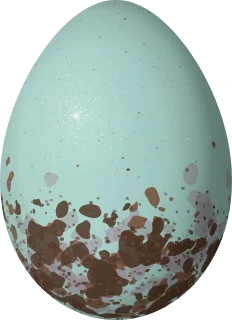

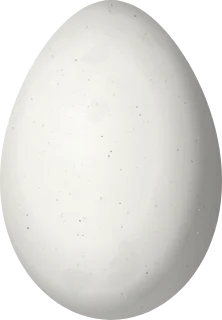
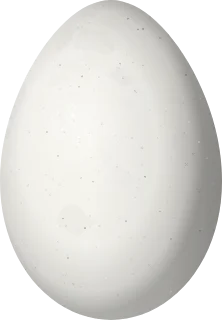


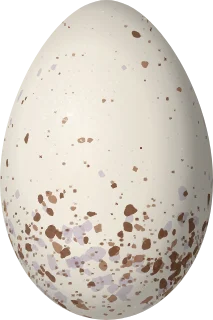
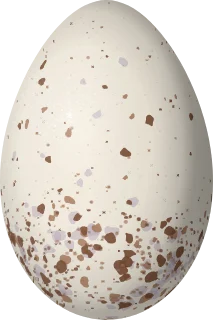


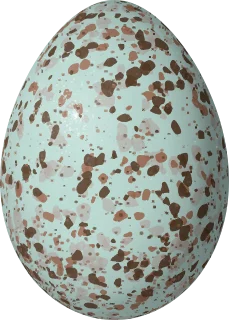


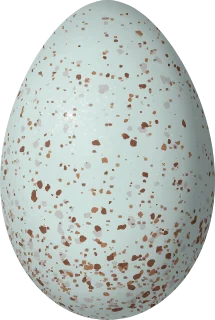
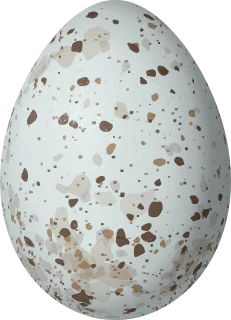

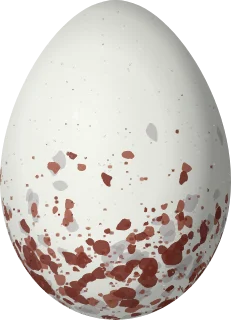
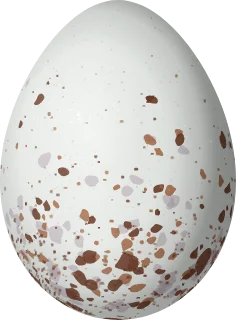


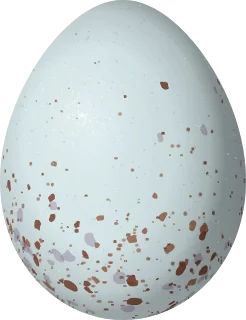


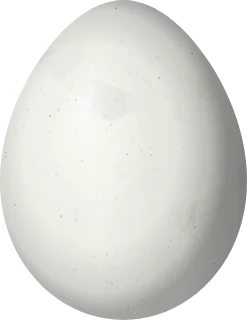
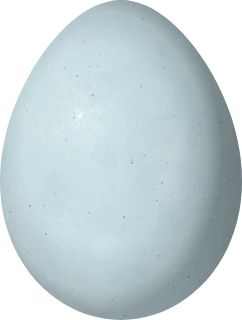
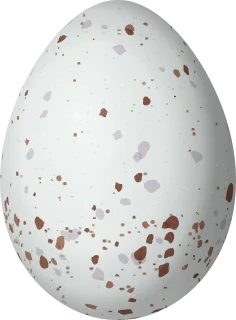


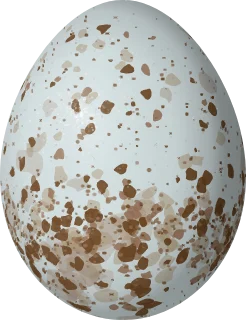


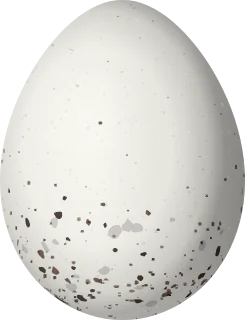


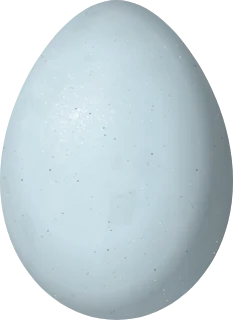
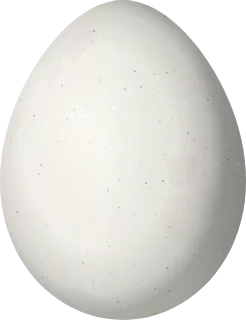
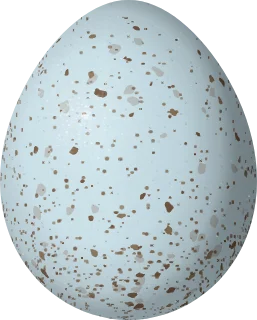
Amazonian Grosbeak
Cyanoloxia rothschildii
- 23.5 × 17 mm
- Clutch: 2 eggs
show all 9
South America: Bolivia, Brazil, Colombia, Ecuador, French Guiana, Guyana, Peru, Suriname, VenezuelaWhite, perhaps tinged greenish, with dense rusty blood-red blotches over greyish ones, heaviest at the larger end; some eggs marked only around the larger end.
Sources of information
- Size
- Pinto 1953, Sobre a coleção Carlos Estevão de peles, ninhos e ovos das aves de Belém (Pará), Papéis Avulsos de Zoologia 11(13): 113–224, p. 221.
- Description
- Pinto 1953, Sobre a coleção Carlos Estevão de peles, ninhos e ovos das aves de Belém (Pará), Papéis Avulsos de Zoologia 11(13): 113–224, p. 221.
- Shape
- Drawn from the length and width, with the taper estimated from the typical eggs of its group (how these eggs are drawn).
Know something more about this egg, or spotted a mistake? Message us.
Black-backed Grosbeak
Pheucticus aureoventris
- 25.2 × 19.1 mm
- Clutch: 2 eggs
Greenish with fine chestnut spots, concentrated at the large end.
Sources of information
- Size
- Average of 2 eggs: de la Peña, M. R. 2025. Aves Argentinas: descripción, comportamiento, reproducción y distribución. Comunicaciones del Museo Provincial de Ciencias Naturales "Florentino Ameghino" (Nueva Serie). Santa Fe., tomo 11, p. 114.
- Description
- de la Peña 2025 (Aves Argentinas tomo 11).
Drawing checked against a photo: de la Peña 2025, Aves Argentinas tomo 11, p. 114. - Shape
- Drawn from the length and width, with the taper estimated from the typical eggs of its group (how these eggs are drawn).
Know something more about this egg, or spotted a mistake? Message us.
Black-cheeked Ant Tanager
Driophlox atrimaxillaris
- 25.5 × 17.7 mm (estimated)
- Speculative: we haven't found a documented description of this egg yet, so we estimated its colours and markings and its size from related birds.
No documented description found yet; drawn like the Red-throated Ant Tanager egg (same genus).
Sources of information
- Size
- Estimated, no measurements found: the median length and width of measured eggs of the same genus: Driophlox fuscicauda, Driophlox gutturalis.
- Description
- Estimated, no description found: drawn like a related egg (Red-throated Ant Tanager).
- Shape
- Drawn from the length and width, with the taper estimated from the typical eggs of its group (how these eggs are drawn).
Have you seen this egg, or know a description or measurements of it? Message us.
Black-faced Grosbeak
Caryothraustes poliogaster
- 26.3 × 17 mm
- Clutch: 3 eggs
Dull white, mottled and spotted with bright shades of brown, especially at the thicker end.
Sources of information
- Size
- Skutch, A. F. 1972 (Publ. Nuttall Orn. Club 10: 211–218), quoted in Wetmore, A., R. F. Pasquier & S. L. Olson 1984. The birds of the Republic of Panamá, part 4. Smithsonian Miscellaneous Collections 150(4)., p. 543.
- Description
- Wetmore et al. 1984 (Birds of Panama pt 4).
- Shape
- Drawn from the length and width, with the taper estimated from the typical eggs of its group (how these eggs are drawn).
Know something more about this egg, or spotted a mistake? Message us.
Make a 3D-printable copy of this eggSee posters with this egg →
Black-headed Grosbeak
Pheucticus melanocephalus
- 24.7 × 17.7 mm
- Clutch: 2–5 eggs
Pale to greenish blue with brown or reddish brown spotting.
Sources of information
- Size
- Average of 50 eggs: Bent, Life Histories of North American Cardinals, Grosbeaks, Buntings, Towhees, Finches, Sparrows, and Allies (U.S. National Museum Bulletin 237, Part 1, 1968), p. 61.
Agrees with: Cornell Lab of Ornithology, All About Birds: Black-headed Grosbeak, Life History. - Description
- Cornell Lab of Ornithology, All About Birds: Black-headed Grosbeak, Life History.
Drawing checked against a photo: Bird Eggs of Canada photo (Royal Alberta Museum). - Clutch
- Cornell Lab of Ornithology, All About Birds.
- Shape
- Drawn from the length and width, with the taper estimated from the typical eggs of its group (how these eggs are drawn).
Know something more about this egg, or spotted a mistake? Message us.
Make a 3D-printable copy of this eggSee posters with this egg →
Black-thighed Grosbeak
Pheucticus tibialis
- 30 × 21.3 mm
Pale blue with a dense wreath of dull chestnut-brown spots over purple-lilac under-spots; the lilac spots also scattered elsewhere.
Sources of information
- Size
- Average of 2 eggs: Schönwetter, M. 1960–1992. Handbuch der Oologie (ed. W. Meise), Lieferung 29–36. Akademie-Verlag, Berlin., p. 276.
- Description
- Schönwetter, M. 1960–1992. Handbuch der Oologie (ed. W. Meise), Lieferung 29–36. Akademie-Verlag, Berlin., pdf p. 174.
- Shape
- Drawn from the length and width, with the taper estimated from the typical eggs of its group (how these eggs are drawn).
Know something more about this egg, or spotted a mistake? Message us.
Blackish-blue Seedeater
Amaurospiza moesta
- 18.8 × 14 mm (estimated)
- Speculative: we haven't found a documented description of this egg yet, so we estimated its colours and markings and its size from related birds.
No documented description found yet; drawn like the Blue Seedeater egg (same genus).
Sources of information
- Size
- Estimated, no measurements found: the median length and width of measured eggs of the same genus: Amaurospiza concolor.
- Description
- Estimated, no description found: drawn like a related egg (Blue Seedeater).
- Shape
- Drawn from the length and width, with the taper estimated from the typical eggs of its group (how these eggs are drawn).
Have you seen this egg, or know a description or measurements of it? Message us.
Blue Bunting
Cyanocompsa parellina
- 21.8 × 16.8 mm
Pure white, glossy, unmarked.
Sources of information
- Size
- Average of 12 eggs: Schönwetter, M. 1960–1992. Handbuch der Oologie (ed. W. Meise), Lieferung 29–36. Akademie-Verlag, Berlin., p. 278.
- Description
- Ogilvie-Grant 1912 (BM Egg Catalogue vol 5); supporting: Nehrkorn 1899 (Katalog der Eiersammlung).
- Shape
- Drawn from the length and width, with the taper estimated from the typical eggs of its group (how these eggs are drawn).
Know something more about this egg, or spotted a mistake? Message us.
Make a 3D-printable copy of this eggSee posters with this egg →
Blue Grosbeak
Passerina caerulea
- 22 × 16.8 mm
- Clutch: 3–5 eggs
show all 9
Canada & United States: United StatesMexico: Mexico
Central America: Belize, Costa Rica, El Salvador, Guatemala, Honduras, Nicaragua, Panama
Pale blue to white, and on rare occasions spotted with brown.
Sources of information
- Size
- Average of 50 eggs: Bent, Life Histories of North American Cardinals, Grosbeaks, Buntings, Towhees, Finches, Sparrows, and Allies (U.S. National Museum Bulletin 237, Part 1, 1968), p. 69.
Agrees with: Cornell Lab of Ornithology, All About Birds: Blue Grosbeak, Life History. - Description
- Cornell Lab of Ornithology, All About Birds: Blue Grosbeak, Life History.
- Clutch
- Cornell Lab of Ornithology, All About Birds.
- Shape
- Drawn from the length and width, with the taper estimated from the typical eggs of its group (how these eggs are drawn).
Know something more about this egg, or spotted a mistake? Message us.
Make a 3D-printable copy of this eggSee posters with this egg →
Blue Seedeater
Amaurospiza concolor
- 18.75 × 14 mm (approx.)
- Clutch: 2 eggs
Unmarked pale blue.
Sources of information
- Size
- Rowley, J. S. 1962 (Condor 64: 265), quoted in Wetmore, A., R. F. Pasquier & S. L. Olson 1984. The birds of the Republic of Panamá, part 4. Smithsonian Miscellaneous Collections 150(4)., p. 581.
- Description
- Wetmore, Pasquier & Olson 1984, The Birds of the Republic of Panamá, Part 4 (Smithsonian Misc. Coll. 150).
- Shape
- Drawn from the length and width, with the taper estimated from the typical eggs of its group (how these eggs are drawn).
Know something more about this egg, or spotted a mistake? Message us.
Blue-black Grosbeak
Cyanoloxia cyanoides
- 23.5 × 17.3 mm
- Clutch: 2 eggs
show all 11
Mexico: MexicoCentral America: Belize, Costa Rica, Guatemala, Honduras, Nicaragua, Panama
South America: Colombia, Ecuador, Peru, Venezuela
White or tinged blue, blotched and speckled with cinnamon, chestnut or reddish brown and pale lilac, heaviest at the thick end.
Sources of information
- Size
- Average of 16 eggs: Skutch, A. F. 1954. Life histories of Central American birds. Pacific Coast Avifauna 31., p. 56.
Agrees with: Worth 1939, quoted in Wetmore, A., R. F. Pasquier & S. L. Olson 1984. The birds of the Republic of Panamá, part 4. Smithsonian Miscellaneous Collections 150(4)., p. 550-551. - Description
- Skutch, A. F. 1954. Life Histories of Central American Birds. Pacific Coast Avifauna 31.
- Shape
- Drawn from the length and width, with the taper estimated from the typical eggs of its group (how these eggs are drawn).
Know something more about this egg, or spotted a mistake? Message us.
Make a 3D-printable copy of this eggSee posters with this egg →
Carmiol's Tanager
Chlorothraupis carmioli
- 25.2 × 16.8 mm
Creamy white, spotted and speckled in various browns and lilac, mostly in a broad wreath at the blunt end.
Sources of information
- Size
- Average of 2 eggs: Schönwetter, M. 1960–1992. Handbuch der Oologie (ed. W. Meise), Lieferung 29–36. Akademie-Verlag, Berlin., p. 309.
- Description
- Schönwetter, M. 1960–1992. Handbuch der Oologie (ed. W. Meise), Lieferung 29–36. Akademie-Verlag, Berlin., pdf p. 247.
- Shape
- Drawn from the length and width, with the taper estimated from the typical eggs of its group (how these eggs are drawn).
Know something more about this egg, or spotted a mistake? Message us.
Carrizal Seedeater
Amaurospiza carrizalensis
- 18.8 × 14 mm (estimated)
- Speculative: we haven't found a documented description of this egg yet, so we estimated its colours and markings and its size from related birds.
No documented description found yet; drawn like the Blue Seedeater egg (same genus).
Sources of information
- Size
- Estimated, no measurements found: the median length and width of measured eggs of the same genus: Amaurospiza concolor.
- Description
- Estimated, no description found: drawn like a related egg (Blue Seedeater).
- Shape
- Drawn from the length and width, with the taper estimated from the typical eggs of its group (how these eggs are drawn).
Have you seen this egg, or know a description or measurements of it? Message us.
Crested Ant Tanager
Driophlox cristata
- 25.5 × 17.7 mm (estimated)
- Speculative: we haven't found a documented description of this egg yet, so we estimated its colours and markings and its size from related birds.
No documented description found yet; drawn like the Red-throated Ant Tanager egg (same genus).
Sources of information
- Size
- Estimated, no measurements found: the median length and width of measured eggs of the same genus: Driophlox fuscicauda, Driophlox gutturalis.
- Description
- Estimated, no description found: drawn like a related egg (Red-throated Ant Tanager).
- Shape
- Drawn from the length and width, with the taper estimated from the typical eggs of its group (how these eggs are drawn).
Have you seen this egg, or know a description or measurements of it? Message us.
Crimson-collared Grosbeak
Periporphyrus celaeno
- 23.6 × 17 mm (estimated)
- Speculative: we haven't found documented measurements of this egg yet, so we estimated its size from related birds.
- Clutch: 2–3 eggs
Pale greyish blue, spotted all over with brown; like Cardinal eggs but larger and blunter.
Sources of information
- Size
- Sutton, G.M. 1950. Wilson Bull. 62: 156 ('much like Cardinal eggs, but seemed to be larger and blunter'; no measurements).
- Description
- Sutton, G.M. 1950. The Crimson-collared Grosbeak. Wilson Bulletin 62(4): 155-156., p. 156; other: Wikipedia: Crimson-collared grosbeak (2-3 pale blue-grey eggs with brown markings).
- Shape
- Drawn from the length and width, with the taper estimated from the typical eggs of its group (how these eggs are drawn).
Have you seen this egg, or know a description or measurements of it? Message us.
Dickcissel
Spiza americana
- 20.8 × 15.7 mm
- Clutch: 3–6 eggs
Unmarked, pale blue.
Sources of information
- Size
- Average of 50 eggs: Bent, Life Histories of North American Cardinals, Grosbeaks, Buntings, Towhees, Finches, Sparrows, and Allies (U.S. National Museum Bulletin 237, Part 1, 1968), p. 168.
- Description
- Cornell Lab of Ornithology, All About Birds: Dickcissel, Life History.
Drawing checked against a photo: Bird Eggs of Canada photo (Royal Saskatchewan Museum). - Clutch
- Cornell Lab of Ornithology, All About Birds.
- Shape
- Drawn from the length and width, with the taper estimated from the typical eggs of its group (how these eggs are drawn).
Know something more about this egg, or spotted a mistake? Message us.
Make a 3D-printable copy of this eggSee posters with this egg →
Ecuadorian Seedeater
Amaurospiza aequatorialis
- 18.8 × 14 mm (estimated)
- Speculative: we haven't found a documented description of this egg yet, so we estimated its colours and markings and its size from related birds.
No documented description found yet; drawn like the Blue Seedeater egg (same genus).
Sources of information
- Size
- Estimated, no measurements found: the median length and width of measured eggs of the same genus: Amaurospiza concolor.
- Description
- Estimated, no description found: drawn like a related egg (Blue Seedeater).
- Shape
- Drawn from the length and width, with the taper estimated from the typical eggs of its group (how these eggs are drawn).
Have you seen this egg, or know a description or measurements of it? Message us.
Flame-colored Tanager
Piranga bidentata
- 23 × 17.67 mm
- Clutch: 2–3 eggs
Pale blue, lightly speckled with reddish brown intermixed with dark lavender, most spots at the larger end.
Sources of information
- Size
- Blake, E. R. 1956 (Condor 58: 388), quoted in Wetmore, A., R. F. Pasquier & S. L. Olson 1984. The birds of the Republic of Panamá, part 4. Smithsonian Miscellaneous Collections 150(4)., p. 457.
- Description
- Wetmore, Pasquier & Olson 1984, The Birds of the Republic of Panamá, Part 4 (Smithsonian Misc. Coll. 150).
- Shape
- Drawn from the length and width, with the taper estimated from the typical eggs of its group (how these eggs are drawn).
Know something more about this egg, or spotted a mistake? Message us.
Glaucous-blue Grosbeak
Cyanoloxia glaucocaerulea
- 19.5 × 14.5 mm (approx.)
- Clutch: 3–4 eggs
Pale blue with reddish spots all over.
Sources of information
- Size
- de la Peña, M. R. 2025. Aves Argentinas: descripción, comportamiento, reproducción y distribución. Comunicaciones del Museo Provincial de Ciencias Naturales "Florentino Ameghino" (Nueva Serie). Santa Fe., tomo 11, p. 118.
- Description
- de la Peña 2025 (Aves Argentinas tomo 11).
- Shape
- Drawn from the length and width, with the taper estimated from the typical eggs of its group (how these eggs are drawn).
Know something more about this egg, or spotted a mistake? Message us.
Golden Grosbeak
Pheucticus chrysogaster
- 25.7 × 18.6 mm (approx.)
Matt, deep blue-green, heavily spotted and blotched with dark brown at the blunt end, fewer lilac-brown marks elsewhere.
Sources of information
- Size
- Schönwetter, M. 1960–1992. Handbuch der Oologie (ed. W. Meise), Lieferung 29–36. Akademie-Verlag, Berlin., p. 276.
- Description
- Schönwetter, M. 1960–1992. Handbuch der Oologie (ed. W. Meise), Lieferung 29–36. Akademie-Verlag, Berlin., pdf p. 174.
- Shape
- Drawn from the length and width, with the taper estimated from the typical eggs of its group (how these eggs are drawn).
Know something more about this egg, or spotted a mistake? Message us.
Grey-throated Chat
Granatellus sallaei
- 18.9 × 14.6 mm
White, delicately speckled with blackish brown mainly at the broad end; glossless.
Sources of information
- Size
- Average of 9 eggs: Schönwetter, M. 1960–1992. Handbuch der Oologie (ed. W. Meise), Lieferung 29–36. Akademie-Verlag, Berlin., p. 350.
- Description
- Ogilvie-Grant 1912 (BM Egg Catalogue vol 5); supporting: Nehrkorn 1899 (Katalog der Eiersammlung).
- Shape
- Drawn from the length and width, with the taper estimated from the typical eggs of its group (how these eggs are drawn).
Know something more about this egg, or spotted a mistake? Message us.
Make a 3D-printable copy of this eggSee posters with this egg →
Hepatic Tanager
Piranga flava
- 24.5 × 17.7 mm
- Clutch: 3–5 eggs
show all 17
Canada & United States: United StatesMexico: Mexico
Central America: Costa Rica, Panama
The Caribbean: Trinidad and Tobago
South America: Argentina, Bolivia, Brazil, Colombia, Ecuador, French Guiana, Guyana, Paraguay, Peru, Suriname, Uruguay, Venezuela
Bluish green speckled with brown or purple, especially around the large end.
Sources of information
- Size
- Average of 50 eggs: Bent, Life Histories of North American Blackbirds, Orioles, Tanagers, and Allies (U.S. National Museum Bulletin 211, 1958), p. 494.
Agrees with: Cornell Lab of Ornithology, All About Birds: Hepatic Tanager, Life History. - Description
- Cornell Lab of Ornithology, All About Birds: Hepatic Tanager, Life History.
- Clutch
- Cornell Lab of Ornithology, All About Birds.
- Shape
- Drawn from the length and width, with the taper estimated from the typical eggs of its group (how these eggs are drawn).
Know something more about this egg, or spotted a mistake? Message us.
Indigo Bunting
Passerina cyanea
- 18.7 × 13.7 mm
- Clutch: 3–4 eggs
Unmarked white; a few have brownish spots.
Sources of information
- Size
- Average of 50 eggs: Bent, Life Histories of North American Cardinals, Grosbeaks, Buntings, Towhees, Finches, Sparrows, and Allies (U.S. National Museum Bulletin 237, Part 1, 1968), p. 87.
Agrees with: Cornell Lab of Ornithology, All About Birds: Indigo Bunting, Life History. - Description
- Cornell Lab of Ornithology, All About Birds: Indigo Bunting, Life History.
Drawing checked against a photo: Bird Eggs of Canada photo (University of Saskatchewan Department of Biology Natural History Collection). - Clutch
- Cornell Lab of Ornithology, All About Birds.
- Shape
- Drawn from the length and width, with the taper estimated from the typical eggs of its group (how these eggs are drawn).
Know something more about this egg, or spotted a mistake? Message us.
Make a 3D-printable copy of this eggSee posters with this egg →
Lazuli Bunting
Passerina amoena
- 18.7 × 13.6 mm
- Clutch: 3–4 eggs
Pale blue to faint greenish-blue or white.
Sources of information
- Size
- Average of 50 eggs: Bent, Life Histories of North American Cardinals, Grosbeaks, Buntings, Towhees, Finches, Sparrows, and Allies (U.S. National Museum Bulletin 237, Part 1, 1968), p. 120.
Agrees with: Cornell Lab of Ornithology, All About Birds: Lazuli Bunting, Life History. - Description
- Cornell Lab of Ornithology, All About Birds: Lazuli Bunting, Life History.
Drawing checked against a photo: Bird Eggs of Canada photo (Royal Alberta Museum). - Clutch
- Cornell Lab of Ornithology, All About Birds.
- Shape
- Drawn from the length and width, with the taper estimated from the typical eggs of its group (how these eggs are drawn).
Know something more about this egg, or spotted a mistake? Message us.
Make a 3D-printable copy of this eggSee posters with this egg →
Lemon-spectacled Tanager
Chlorothraupis olivacea
- 25.2 × 16.8 mm (estimated)
- Speculative: we haven't found a documented description of this egg yet, so we estimated its colours and markings and its size from related birds.
No documented description found yet; drawn like the Carmiol's Tanager egg (same genus).
Sources of information
- Size
- Estimated, no measurements found: the median length and width of measured eggs of the same genus: Chlorothraupis carmioli.
- Description
- Estimated, no description found: drawn like a related egg (Carmiol's Tanager).
- Shape
- Drawn from the length and width, with the taper estimated from the typical eggs of its group (how these eggs are drawn).
Have you seen this egg, or know a description or measurements of it? Message us.
Northern Cardinal
Cardinalis cardinalis
- 25.3 × 18.2 mm
- Clutch: 2–5 eggs
Grayish white, buffy white, or greenish white speckled with pale gray to brown.
Sources of information
- Size
- Average of 50 eggs: Bent, Life Histories of North American Cardinals, Grosbeaks, Buntings, Towhees, Finches, Sparrows, and Allies (U.S. National Museum Bulletin 237, Part 1, 1968), p. 6.
Agrees with: Cornell Lab of Ornithology, All About Birds: Northern Cardinal, Life History. - Description
- Cornell Lab of Ornithology, All About Birds: Northern Cardinal, Life History.
Drawing checked against a photo: Wikimedia Commons photo; Bird Eggs of Canada photo (Royal Alberta Museum). - Clutch
- Cornell Lab of Ornithology, All About Birds.
- Shape
- Drawn from the length and width, with the taper estimated from the typical eggs of its group (how these eggs are drawn).
Know something more about this egg, or spotted a mistake? Message us.
Make a 3D-printable copy of this eggSee posters with this egg →
Ochre-breasted Tanager
Chlorothraupis stolzmanni
- 25.2 × 16.8 mm (estimated)
- Speculative: we haven't found a documented description of this egg yet, so we estimated its colours and markings and its size from related birds.
No documented description found yet; drawn like the Carmiol's Tanager egg (same genus).
Sources of information
- Size
- Estimated, no measurements found: the median length and width of measured eggs of the same genus: Chlorothraupis carmioli.
- Description
- Estimated, no description found: drawn like a related egg (Carmiol's Tanager).
- Shape
- Drawn from the length and width, with the taper estimated from the typical eggs of its group (how these eggs are drawn).
Have you seen this egg, or know a description or measurements of it? Message us.
Orange-breasted Bunting
Passerina leclancherii
- 18.8 × 14.4 mm (estimated)
- Speculative: we haven't found documented measurements of this egg yet, so we estimated its size from related birds.
- Clutch: 3–4 eggs
Bluish-white or greenish-white, unmarked.
Sources of information
- Size
- Reference egg in dossier: Indigo Bunting 18.7 x 13.7 mm.
Agrees with: Wikipedia: Orange-breasted bunting ~12.5 cm; Indigo bunting 11.5-13 cm. - Description
- Birds of the World (Neotropical Birds, historic account), Orange-breasted Bunting, Breeding, citing Brewer 2011; related: Wikipedia, Orange-breasted bunting.
- Shape
- Drawn from the length and width, with the taper estimated from the typical eggs of its group (how these eggs are drawn).
Have you seen this egg, or know a description or measurements of it? Message us.
Painted Bunting
Passerina ciris
- 18.9 × 14.5 mm
- Clutch: 3–4 eggs
Grayish or pale bluish white, with fine speckles of brown and gray.
Sources of information
- Size
- Average of 50 eggs: Bent, Life Histories of North American Cardinals, Grosbeaks, Buntings, Towhees, Finches, Sparrows, and Allies (U.S. National Museum Bulletin 237, Part 1, 1968), p. 142.
Agrees with: Cornell Lab of Ornithology, All About Birds: Painted Bunting, Life History. - Description
- Cornell Lab of Ornithology, All About Birds: Painted Bunting, Life History.
- Clutch
- Cornell Lab of Ornithology, All About Birds.
- Shape
- Drawn from the length and width, with the taper estimated from the typical eggs of its group (how these eggs are drawn).
Know something more about this egg, or spotted a mistake? Message us.
Pyrrhuloxia
Cardinalis sinuatus
- 24.5 × 17.8 mm
- Clutch: 2–4 eggs
Grayish to greenish white, with pale gray or brown markings (very similar to eggs of the Northern Cardinal).
Sources of information
- Size
- Average of 50 eggs: Bent, Life Histories of North American Cardinals, Grosbeaks, Buntings, Towhees, Finches, Sparrows, and Allies (U.S. National Museum Bulletin 237, Part 1, 1968), p. 25.
Agrees with: Cornell Lab of Ornithology, All About Birds: Pyrrhuloxia, Life History. - Description
- Cornell Lab of Ornithology, All About Birds: Pyrrhuloxia, Life History.
- Clutch
- Cornell Lab of Ornithology, All About Birds.
- Shape
- Drawn from the length and width, with the taper estimated from the typical eggs of its group (how these eggs are drawn).
Know something more about this egg, or spotted a mistake? Message us.
Red-and-black Grosbeak
Periporphyrus erythromelas
- 23.6 × 17 mm (estimated)
- Speculative: we haven't found a documented description of this egg yet, so we estimated its colours and markings and its size from related birds.
No documented description found yet; drawn like the Crimson-collared Grosbeak egg (same genus).
Sources of information
- Size
- Estimated, no measurements found: the median length and width of measured eggs of the same family: Amaurospiza concolor, Cardinalis cardinalis, Cardinalis phoeniceus, Cardinalis sinuatus, Caryothraustes canadensis ….
- Description
- Estimated, no description found: drawn like a related egg (Crimson-collared Grosbeak).
- Shape
- Drawn from the length and width, with the taper estimated from the typical eggs of its group (how these eggs are drawn).
Have you seen this egg, or know a description or measurements of it? Message us.
Red-breasted Chat
Granatellus venustus
- 18.6 × 14.3 mm
- Clutch: 3–4 eggs
White, smooth, unmarked.
Sources of information
- Size
- Vega Rivera, Alvarado, Lobato & Escalante 2004, Phenology, habitat use, and nesting of the Red-breasted Chat (Granatellus venustus). Wilson Bulletin 116(1): 89-93, p. 91.
- Description
- Vega Rivera, Alvarado, Lobato & Escalante 2004, Phenology, habitat use, and nesting of the Red-breasted Chat (Granatellus venustus). Wilson Bulletin 116(1): 89-93, p. 91.
- Shape
- Drawn from the length and width, with the taper estimated from the typical eggs of its group (how these eggs are drawn).
Know something more about this egg, or spotted a mistake? Message us.
Red-crowned Ant Tanager
Habia rubica
- 24.27 × 16.87 mm
- Clutch: 2–3 eggs
show all 17
Mexico: MexicoCentral America: Belize, Costa Rica, El Salvador, Guatemala, Honduras, Nicaragua, Panama
The Caribbean: Trinidad and Tobago
South America: Argentina, Bolivia, Brazil, Colombia, Ecuador, Paraguay, Peru, Venezuela
Dull white or faintly bluish, speckled and blotched pale brown or cinnamon (sometimes chocolate spots), in a wreath around the large end.
Sources of information
- Size
- Average of 3 eggs: Willis, E. O. 1961. A study of nesting ant-tanagers in British Honduras. The Condor 63(6): 479-503., p. 485.
- Description
- Wetmore, A. et al. 1984. The Birds of the Republic of Panamá, part 4; supporting: Willis, E. O. 1961. Condor 63 (British Honduras nest).
- Shape
- Drawn from the length and width, with the taper estimated from the typical eggs of its group (how these eggs are drawn).
Know something more about this egg, or spotted a mistake? Message us.
Make a 3D-printable copy of this eggSee posters with this egg →
Red-headed Tanager
Piranga erythrocephala
- 23.2 × 17.3 mm (estimated)
- Speculative: we haven't found a documented description of this egg yet, so we estimated its colours and markings and its size from related birds.
Pale blue, speckled with reddish-brown and lavender, more at the larger end (estimated from Flame-colored Tanager).
Sources of information
- Size
- Wikipedia, Red-headed tanager (15 cm, 19.9-24.5 g).
- Description
- Cornell All About Birds, Flame-colored Tanager life history (eggs 'Pale blue, with reddish-brown and dark lavender speckling', 2-3) - congener proxy; supporting: Wikipedia, Red-headed tanager (citing Hilty 2020, BOW): nest a cup of fine twigs; no other breeding information published.
- Shape
- Drawn from the length and width, with the taper estimated from the typical eggs of its group (how these eggs are drawn).
Have you seen this egg, or know a description or measurements of it? Message us.
Red-hooded Tanager
Piranga rubriceps
- 23.2 × 17.3 mm (estimated)
- Speculative: we haven't found a documented description of this egg yet, so we estimated its colours and markings and its size from related birds.
No documented description found yet; drawn like the Flame-colored Tanager egg (same genus).
Sources of information
- Size
- Estimated, no measurements found: the median length and width of measured eggs of the same genus: Piranga bidentata, Piranga flava, Piranga leucoptera, Piranga ludoviciana, Piranga olivacea ….
- Description
- Estimated, no description found: drawn like a related egg (Flame-colored Tanager).
- Shape
- Drawn from the length and width, with the taper estimated from the typical eggs of its group (how these eggs are drawn).
Have you seen this egg, or know a description or measurements of it? Message us.
Red-throated Ant Tanager
Driophlox fuscicauda
- 25.7 × 17.6 mm
- Clutch: 2–4 eggs
show all 9
Mexico: MexicoCentral America: Belize, Costa Rica, El Salvador, Guatemala, Honduras, Nicaragua, Panama
South America: Colombia
Plain white, unmarked.
Sources of information
- Size
- Average of 6 eggs: Willis, E. 1961. A study of nesting ant-tanagers in British Honduras. Condor 63: 479-503, p. 485.
- Description
- Willis, E. 1961. A study of nesting ant-tanagers in British Honduras. Condor 63: 479-503, p. 485.
Agrees with: Wikipedia, 'Red-throated ant tanager' (citing Chiver, Morton & van Dort 2024, Birds of the World v1.1): 'two to four unspotted white eggs'. - Shape
- Drawn from the length and width, with the taper estimated from the typical eggs of its group (how these eggs are drawn).
Know something more about this egg, or spotted a mistake? Message us.
Make a 3D-printable copy of this eggSee posters with this egg →
Rose-bellied Bunting
Passerina rositae
- 20.3 × 15 mm
- Clutch: 2–4 eggs
Plain white to light bluish white, spotted and blotched with reddish brown and lavender, chiefly around the large end.
Sources of information
- Size
- Average of 3 eggs: Schönwetter, M. 1960–1992. Handbuch der Oologie (ed. W. Meise), Lieferung 29–36. Akademie-Verlag, Berlin., p. 279.
- Description
- Pérez-Sánchez, Villegas-Patraca & MacGregor-Fors 2011, Ornitología Neotropical 22: 569–576 (quoting Crossin & Petit 1962: 58), pp. 569–570, 574; support: Monroy-Ojeda, Grosselet & Ruiz 2013, Huitzil 14(2): 146–149, p. 147.
- Shape
- Drawn from the length and width, with the taper estimated from the typical eggs of its group (how these eggs are drawn).
Know something more about this egg, or spotted a mistake? Message us.
Rose-breasted Chat
Granatellus pelzelni
- 18.8 × 14.4 mm (estimated)
- Speculative: we haven't found a documented description of this egg yet, so we estimated its colours and markings and its size from related birds.
No documented description found yet; drawn like the Grey-throated Chat egg (same genus).
Sources of information
- Size
- Estimated, no measurements found: the median length and width of measured eggs of the same genus: Granatellus sallaei, Granatellus venustus.
- Description
- Estimated, no description found: drawn like a related egg (Grey-throated Chat).
- Shape
- Drawn from the length and width, with the taper estimated from the typical eggs of its group (how these eggs are drawn).
Have you seen this egg, or know a description or measurements of it? Message us.
Rose-breasted Grosbeak
Pheucticus ludovicianus
- 24.6 × 17.7 mm
- Clutch: 1–5 eggs
Pale green to blue, with reddish brown or purplish speckles.
Sources of information
- Size
- Average of 50 eggs: Bent, A. C. et al. (Austin, O. L., ed.) 1968. Life histories of North American cardinals, grosbeaks, buntings, towhees, finches, sparrows, and allies, part 1. U.S. National Museum Bulletin 237, scan leaf 76 (account begins scan leaf 72).
- Description
- Cornell Lab of Ornithology, All About Birds: Rose-breasted Grosbeak, Life History.
Drawing checked against a photo: Bird Eggs of Canada photo (Royal Saskatchewan Museum). - Clutch
- Cornell Lab of Ornithology, All About Birds.
- Shape
- Drawn from the length and width, with the taper estimated from the typical eggs of its group (how these eggs are drawn).
Know something more about this egg, or spotted a mistake? Message us.
Make a 3D-printable copy of this eggSee posters with this egg →
Rose-throated Tanager
Piranga roseogularis
- 23.2 × 17.3 mm (estimated)
- Speculative: we haven't found a documented description of this egg yet, so we estimated its colours and markings and its size from related birds.
No documented description found yet; drawn like the Flame-colored Tanager egg (same genus).
Sources of information
- Size
- Estimated, no measurements found: the median length and width of measured eggs of the same genus: Piranga bidentata, Piranga flava, Piranga leucoptera, Piranga ludoviciana, Piranga olivacea ….
- Description
- Estimated, no description found: drawn like a related egg (Flame-colored Tanager).
- Shape
- Drawn from the length and width, with the taper estimated from the typical eggs of its group (how these eggs are drawn).
Have you seen this egg, or know a description or measurements of it? Message us.
Make a 3D-printable copy of this eggSee posters with this egg →
Scarlet Tanager
Piranga olivacea
- 23.3 × 16.5 mm
- Clutch: 3–5 eggs
Greenish blue to light blue speckled with chestnut, purplish red, and lilac.
Sources of information
- Size
- Average of 50 eggs: Bent, A. C. 1958. Life histories of North American blackbirds, orioles, tanagers, and allies. U.S. National Museum Bulletin 211 (account by W. M. Tyler; egg data by Harris), scan leaf 497 (account begins scan leaf 493).
- Description
- Cornell Lab of Ornithology, All About Birds: Scarlet Tanager, Life History.
Drawing checked against a photo: Bird Eggs of Canada photo (Royal Alberta Museum). - Clutch
- Cornell Lab of Ornithology, All About Birds.
- Shape
- Drawn from the length and width, with the taper estimated from the typical eggs of its group (how these eggs are drawn).
Know something more about this egg, or spotted a mistake? Message us.
Make a 3D-printable copy of this eggSee posters with this egg →
Sooty Ant Tanager
Driophlox gutturalis
- 25.4 × 17.8 mm (approx.)
White, thickly speckled and mottled with dull reddish-brown and pale lavender, chiefly at the broad end; slightly glossy.
Sources of information
- Size
- Ogilvie-Grant, W. R. 1912. Catalogue of the Collection of Birds' Eggs in the British Museum, vol. 5. London.
- Description
- Ogilvie-Grant 1912 (BM Egg Catalogue vol 5).
- Shape
- Drawn from the length and width, with the taper estimated from the typical eggs of its group (how these eggs are drawn).
Know something more about this egg, or spotted a mistake? Message us.
Summer Tanager
Piranga rubra
- 23.1 × 17.1 mm
- Clutch: 3–4 eggs
Pale blue to pale green, with brown markings.
Sources of information
- Size
- Average of 50 eggs: Bent, Life Histories of North American Blackbirds, Orioles, Tanagers, and Allies (U.S. National Museum Bulletin 211, 1958), p. 499.
Agrees with: Cornell Lab of Ornithology, All About Birds: Summer Tanager, Life History. - Description
- Cornell Lab of Ornithology, All About Birds: Summer Tanager, Life History.
- Clutch
- Cornell Lab of Ornithology, All About Birds.
- Shape
- Drawn from the length and width, with the taper estimated from the typical eggs of its group (how these eggs are drawn).
Know something more about this egg, or spotted a mistake? Message us.
Make a 3D-printable copy of this eggSee posters with this egg →
Ultramarine Grosbeak
Cyanoloxia brissonii
- 23.78 × 16 mm
- Clutch: 2 eggs
Pale blue with fine chestnut spots all over, concentrated at the large end.
Sources of information
- Size
- Average of 3 eggs: Stoddard, M. C., et al. 2017. Avian egg shape: form, function, and evolution. Science 356: 1249-1254 (Data S1, MVZ egg collection).
- Description
- de la Peña 2025 (Aves Argentinas tomo 11).
Drawing checked against a photo: de la Peña 2025, Aves Argentinas tomo 11, p. 121. - Shape
- Drawn from the length and width, with the taper estimated from the typical eggs of its group (how these eggs are drawn).
Know something more about this egg, or spotted a mistake? Message us.
Varied Bunting
Passerina versicolor
- 17.8 × 14.3 mm
- Clutch: 2–5 eggs
Pale blue or green, with variable amount of speckling and spotting.
Sources of information
- Size
- Average of 21 eggs: Bent, Life Histories of North American Cardinals, Grosbeaks, Buntings, Towhees, Finches, Sparrows, and Allies (U.S. National Museum Bulletin 237, Part 1, 1968), p. 134.
- Description
- Cornell Lab of Ornithology, All About Birds: Varied Bunting, Life History.
- Clutch
- Cornell Lab of Ornithology, All About Birds.
- Shape
- Drawn from the length and width, with the taper estimated from the typical eggs of its group (how these eggs are drawn).
Know something more about this egg, or spotted a mistake? Message us.
Vermilion Cardinal
Cardinalis phoeniceus
- 24.3 × 17.9 mm
Dull white, sometimes faintly grey or greenish, densely dotted and finely spotted all over with olive-brown (often blurred), with pale lilac-grey under-spots.
Sources of information
- Size
- Average of 11 eggs: Schönwetter, M. 1960–1992. Handbuch der Oologie (ed. W. Meise), Lieferung 29–36. Akademie-Verlag, Berlin., p. 277.
- Description
- Schönwetter, M. 1960–1992. Handbuch der Oologie (ed. W. Meise), Lieferung 29–36. Akademie-Verlag, Berlin., pdf p. 175.
- Shape
- Drawn from the length and width, with the taper estimated from the typical eggs of its group (how these eggs are drawn).
Know something more about this egg, or spotted a mistake? Message us.
Western Tanager
Piranga ludoviciana
- 22.9 × 16.8 mm
- Clutch: 3–5 eggs
Blue or bluish green, sometimes almost white, and sparsely spotted with gray-brown.
Sources of information
- Size
- Average of 50 eggs: Bent, Life Histories of North American Blackbirds, Orioles, Tanagers, and Allies (U.S. National Museum Bulletin 211, 1958), p. 471.
Agrees with: Cornell Lab of Ornithology, All About Birds: Western Tanager, Life History. - Description
- Cornell Lab of Ornithology, All About Birds: Western Tanager, Life History.
Drawing checked against a photo: Bird Eggs of Canada photo (Royal Alberta Museum). - Clutch
- Cornell Lab of Ornithology, All About Birds.
- Shape
- Drawn from the length and width, with the taper estimated from the typical eggs of its group (how these eggs are drawn).
Know something more about this egg, or spotted a mistake? Message us.
Make a 3D-printable copy of this eggSee posters with this egg →
White-winged Tanager
Piranga leucoptera
- 24 × 17.5 mm
- Speculative: we haven't found a documented description of this egg yet, so we estimated its colours and markings from related birds.
show all 15
Mexico: MexicoCentral America: Belize, Costa Rica, El Salvador, Guatemala, Honduras, Nicaragua, Panama
South America: Bolivia, Brazil, Colombia, Ecuador, Guyana, Peru, Venezuela
Pale blue to pale greenish blue, speckled with brown and grey, heaviest toward the large end (estimated from other Piranga tanagers).
Sources of information
- Size
- Average of 2 eggs: Schönwetter, M. 1960–1992. Handbuch der Oologie (ed. W. Meise), Lieferung 29–36. Akademie-Verlag, Berlin., p. 312.
- Description
- No egg description found (Wikipedia: 'No other information about the species' breeding phenology has been published'; only a nest under construction described). Look based on congeners Summer, Western and Hepatic Tanagers.
- Shape
- Drawn from the length and width, with the taper estimated from the typical eggs of its group (how these eggs are drawn).
Have you seen this egg, or know a description or measurements of it? Message us.
Make a 3D-printable copy of this eggSee posters with this egg →
Yellow Grosbeak
Pheucticus chrysopeplus
- 27.2 × 18.3 mm
- Speculative: we haven't found a documented description of this egg yet, so we estimated its colours and markings from related birds.
No documented description found yet; drawn like the Rose-breasted Grosbeak egg (same genus).
Sources of information
- Size
- Average of 3 eggs: Schönwetter, M. 1960–1992. Handbuch der Oologie (ed. W. Meise), Lieferung 29–36. Akademie-Verlag, Berlin., p. 276.
- Description
- Estimated, no description found: drawn like a related egg (Rose-breasted Grosbeak).
- Shape
- Drawn from the length and width, with the taper estimated from the typical eggs of its group (how these eggs are drawn).
Have you seen this egg, or know a description or measurements of it? Message us.
Yellow-green Grosbeak
Caryothraustes canadensis
- 26.3 × 17 mm
- Speculative: we haven't found a documented description of this egg yet, so we estimated its colours and markings from related birds.
- Clutch: 3 eggs
Dull white, mottled and spotted with brown, chiefly at the thick end (from the Black-faced Grosbeak).
Sources of information
- Size
- Average of 3 eggs: Wetmore et al. 1984 (Birds of Panama pt 4), ["p. 543"].
- Description
- relative: Wetmore et al. 1984 (Birds of Panama pt 4).
- Shape
- Drawn from the length and width, with the taper estimated from the typical eggs of its group (how these eggs are drawn).
Have you seen this egg, or know a description or measurements of it? Message us.
Yellow-lored Tanager
Chlorothraupis frenata
- 25.2 × 16.8 mm (estimated)
- Speculative: we haven't found a documented description of this egg yet, so we estimated its colours and markings and its size from related birds.
No documented description found yet; drawn like the Carmiol's Tanager egg (same genus).
Sources of information
- Size
- Estimated, no measurements found: the median length and width of measured eggs of the same genus: Chlorothraupis carmioli.
- Description
- Estimated, no description found: drawn like a related egg (Carmiol's Tanager).
- Shape
- Drawn from the length and width, with the taper estimated from the typical eggs of its group (how these eggs are drawn).
Have you seen this egg, or know a description or measurements of it? Message us.
Tell us about this egg
A description, measurements, a photo or a source (a book, paper, museum record or website) all help. We check every message and update the egg.