
45 eggs at true relative size, from the 31 mm egg of the Least Bittern to the 91.3 mm egg of the American Flamingo.
About this collection. 4,422 eggs, covering nearly every bird that nests in the Americas, from Canada and the United States through Mexico, Central America and the Caribbean to South America, plus a few famous eggs from elsewhere, like the Ostrich and the extinct Elephant Bird. Sizes come from published measurements wherever we found them; shapes and colours are our best estimates (how accurate these eggs are).
2,116 of them are marked Speculative: we haven't found documented descriptions or measurements of these eggs yet (for 129 of them, a source we checked reports the egg as undescribed), so they are estimated from their closest relatives. They are hidden unless you untick Hide speculative eggs. We keep adding sources and update the eggs as we go. Have you seen one of these eggs, or know a source? Message us.
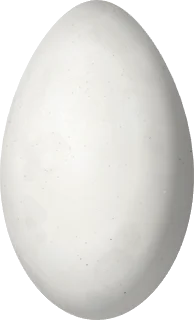


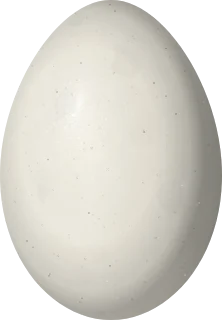
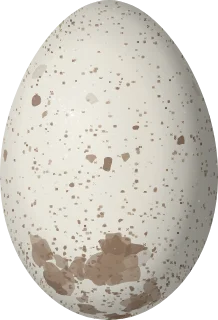


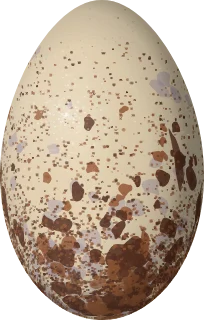

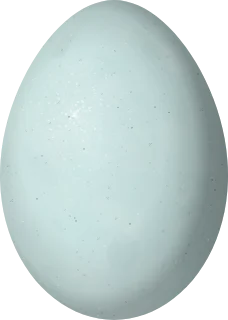
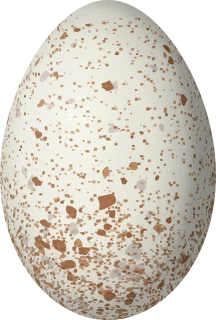
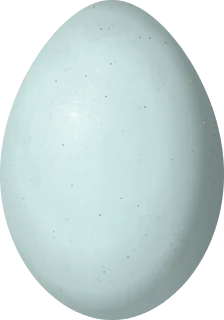
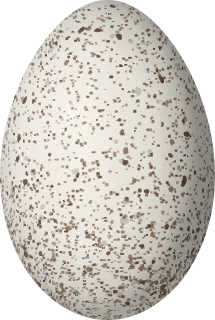

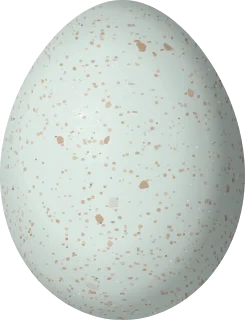


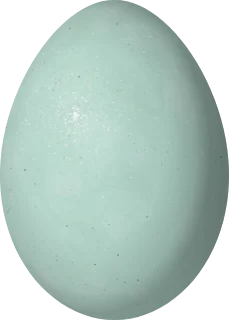
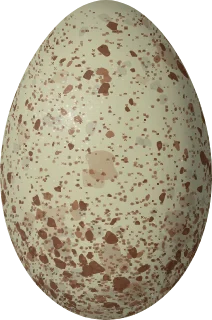


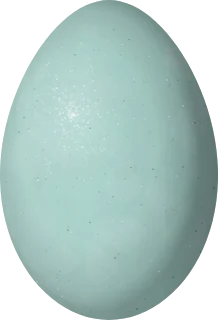

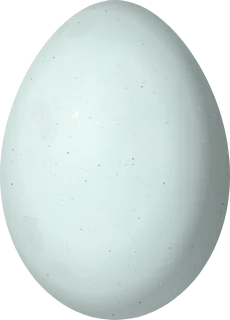


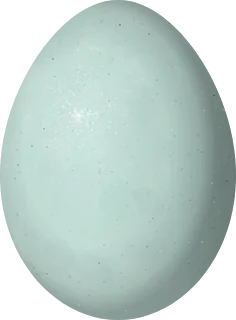

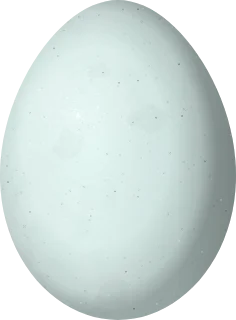

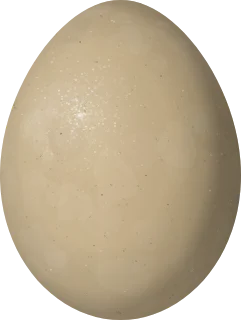
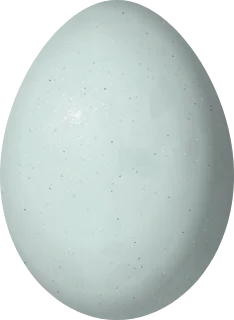
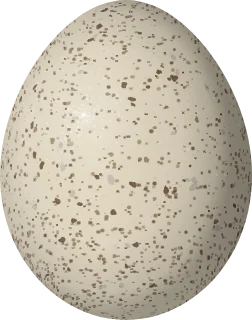

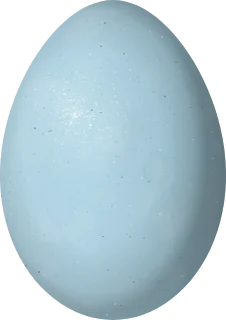


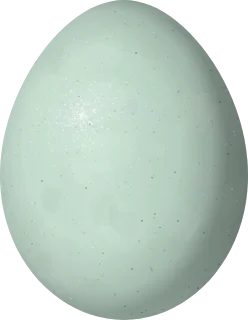

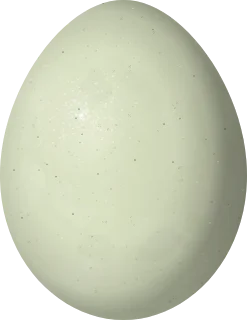

Agami Heron
Agamia agami
- 52.13 × 37.2 mm
show all 17
Mexico: MexicoCentral America: Belize, Costa Rica, El Salvador, Guatemala, Honduras, Nicaragua, Panama
South America: Bolivia, Brazil, Colombia, Ecuador, French Guiana, Guyana, Peru, Suriname, Venezuela
Very pale dull glaucous-blue, unmarked; subelliptical.
Sources of information
- Size
- Wetmore, A. 1965. The birds of the Republic of Panamá, part 1 (Tinamidae to Rynchopidae). Smithsonian Miscellaneous Collections 150(1)., p. 97.
- Description
- Wetmore 1965, The Birds of the Republic of Panamá, Part 1 (Smithsonian Misc. Coll. 150).
- Shape
- Drawn from the length and width, with the taper estimated from the typical eggs of its group (how these eggs are drawn).
Know something more about this egg, or spotted a mistake? Message us.
Make a 3D-printable copy of this eggSee posters with this egg →
American Bittern
Botaurus lentiginosus
- 48.6 × 36.6 mm
- Clutch: 2–7 eggs
Beige-brown to olive; unmarked.
Sources of information
- Size
- Average of 43 eggs: Bent, Life Histories of North American Marsh Birds (U.S. National Museum Bulletin 135, 1927), p. 76.
- Description
- Cornell Lab of Ornithology, All About Birds: American Bittern, Life History.
Drawing checked against a photo: Bird Eggs of Canada photo (Royal Saskatchewan Museum). - Clutch
- Cornell Lab of Ornithology, All About Birds.
- Shape
- Drawn from the length and width, with the taper estimated from the typical eggs of its group (how these eggs are drawn).
Know something more about this egg, or spotted a mistake? Message us.
Make a 3D-printable copy of this eggSee posters with this egg →
American Flamingo
Phoenicopterus ruber
- 91.3 × 55.4 mm
- Clutch: 1–2 eggs
White.
Sources of information
- Size
- Average of 41 eggs: Bent, Life Histories of North American Marsh Birds (U.S. National Museum Bulletin 135, 1927), p. 6.
- Description
- Cornell Lab of Ornithology, All About Birds: American Flamingo, Life History.
- Clutch
- Cornell Lab of Ornithology, All About Birds.
- Shape
- Drawn from the length and width, with the taper estimated from the typical eggs of its group (how these eggs are drawn).
Know something more about this egg, or spotted a mistake? Message us.
Make a 3D-printable copy of this eggSee posters with this egg →
Andean Flamingo
Phoenicoparrus andinus
- 84.7 × 54.3 mm
- Clutch: 1 egg
Elliptical, white, unmarked, with a chalky coat.
Sources of information
- Size
- Average of 13 eggs: de la Peña, M. R. 2025. Aves Argentinas: descripción, comportamiento, reproducción y distribución. Comunicaciones del Museo Provincial de Ciencias Naturales "Florentino Ameghino" (Nueva Serie). Santa Fe., tomo 2, p. 9.
- Description
- de la Peña 2025 (Aves Argentinas tomo 2).
- Shape
- Drawn from the length and width, with the taper estimated from the typical eggs of its group (how these eggs are drawn).
Know something more about this egg, or spotted a mistake? Message us.
Andean Ibis
Theristicus branickii
- 67.7 × 43.1 mm (estimated)
- Speculative: we haven't found a documented description of this egg yet, so we estimated its colours and markings and its size from related birds.
No documented description found yet; drawn like the Plumbeous Ibis egg (same genus).
Sources of information
- Size
- Estimated, no measurements found: the median length and width of measured eggs of the same genus: Theristicus caerulescens, Theristicus caudatus, Theristicus melanopis.
- Description
- Estimated, no description found: drawn like a related egg (Plumbeous Ibis).
- Shape
- Drawn from the length and width, with the taper estimated from the typical eggs of its group (how these eggs are drawn).
Have you seen this egg, or know a description or measurements of it? Message us.
Bare-faced Ibis
Phimosus infuscatus
- 47.4 × 34.6 mm
- Clutch: 3 eggs
Pale blue, unmarked, rather dull.
Sources of information
- Size
- Average of 27 eggs: de la Peña, M. R. 2025. Aves Argentinas: descripción, comportamiento, reproducción y distribución. Comunicaciones del Museo Provincial de Ciencias Naturales "Florentino Ameghino" (Nueva Serie). Santa Fe., tomo 6, p. 259.
- Description
- de la Peña 2025 (Aves Argentinas tomo 6).
Drawing checked against a photo: de la Peña 2025, Aves Argentinas tomo 6, p. 259. - Shape
- Drawn from the length and width, with the taper estimated from the typical eggs of its group (how these eggs are drawn).
Know something more about this egg, or spotted a mistake? Message us.
Bare-throated Tiger Heron
Tigrisoma mexicanum
- 57.35 × 44.4 mm
- Clutch: 2–3 eggs
show all 10
Mexico: MexicoCentral America: Belize, Costa Rica, El Salvador, Guatemala, Honduras, Nicaragua, Panama
South America: Colombia, Peru
Very pale glaucous-green, sparingly and indistinctly dotted pinkish buff; others say unspotted dull white with greenish tinge.
Sources of information
- Size
- Wetmore, A. 1965. The birds of the Republic of Panamá, part 1 (Tinamidae to Rynchopidae). Smithsonian Miscellaneous Collections 150(1)., p. 106.
- Description
- Wetmore, A. 1965. The Birds of the Republic of Panamá, Part 1. Smithsonian Misc. Coll. 150(1).
- Shape
- Drawn from the length and width, with the taper estimated from the typical eggs of its group (how these eggs are drawn).
Know something more about this egg, or spotted a mistake? Message us.
Make a 3D-printable copy of this eggSee posters with this egg →
Black-crowned Night-Heron
Nycticorax nycticorax
- 51.5 × 37 mm
- Clutch: 3–5 eggs
show all 27
Canada & United States: Canada, United StatesMexico: Mexico
Central America: Belize, Costa Rica, El Salvador, Guatemala, Honduras, Nicaragua, Panama
The Caribbean: Aruba, Trinidad and Tobago, Caribbean islands
South America: Argentina, Bolivia, Brazil, Chile, Colombia, Ecuador, Falkland Islands, French Guiana, Guyana, Paraguay, Peru, Suriname, Uruguay, Venezuela
Greenish-blue.
Sources of information
- Size
- Average of 48 eggs: Bent, Life Histories of North American Marsh Birds (U.S. National Museum Bulletin 135, 1927), p. 203.
Agrees with: Cornell Lab of Ornithology, All About Birds: Black-crowned Night-Heron, Life History. - Description
- Cornell Lab of Ornithology, All About Birds: Black-crowned Night-Heron, Life History.
Drawing checked against a photo: Bird Eggs of Canada photo (Royal Saskatchewan Museum). - Clutch
- Cornell Lab of Ornithology, All About Birds.
- Shape
- Drawn from the length and width, with the taper estimated from the typical eggs of its group (how these eggs are drawn).
Know something more about this egg, or spotted a mistake? Message us.
Make a 3D-printable copy of this eggSee posters with this egg →
Black-faced Ibis
Theristicus melanopis
- 68 × 44.3 mm
Greyish white to reddish grey with fine violet and blackish-brown dots and worm- and hair-lines, crowded at the blunt end.
Sources of information
- Size
- Average of 30 eggs: Schönwetter, M. 1960–1992. Handbuch der Oologie (ed. W. Meise), Lieferung 2. Akademie-Verlag, Berlin., p. 107.
- Description
- Nehrkorn 1899 (Katalog der Eiersammlung).
- Shape
- Drawn from the length and width, with the taper estimated from the typical eggs of its group (how these eggs are drawn).
Know something more about this egg, or spotted a mistake? Message us.
Boat-billed Heron
Cochlearius cochlearius
- 50.25 × 35.25 mm
- Clutch: 2–4 eggs
show all 20
Mexico: MexicoCentral America: Belize, Costa Rica, El Salvador, Guatemala, Honduras, Nicaragua, Panama
The Caribbean: Trinidad and Tobago
South America: Argentina, Bolivia, Brazil, Colombia, Ecuador, French Guiana, Guyana, Paraguay, Peru, Suriname, Venezuela
Pale bluish white (greyish-greenish in collections), lightly speckled with cinnamon in a faint ring near the blunt end, often almost unmarked.
Sources of information
- Size
- Average of 50 eggs: Hellebrekers, W. Ph. J. 1942. Revision of the Penard oölogical collection from Surinam. Zoologische Mededelingen 24: 240-275, p. 243.
- Description
- Hauber, Bates & Becker (eds.) 2014, The Book of Eggs (Univ. Chicago Press), p. 119; supporting: Hellebrekers 1942, Revision of the Penard oölogical collection from Surinam (Zool. Meded. 24).
- Shape
- Drawn from the length and width, with the taper estimated from the typical eggs of its group (how these eggs are drawn).
Know something more about this egg, or spotted a mistake? Message us.
Make a 3D-printable copy of this eggSee posters with this egg →
Buff-necked Ibis
Theristicus caudatus
- 64 × 43 mm (approx.)
- Clutch: 2–4 eggs
Whitish, with brown specks.
Sources of information
- Size
- de la Peña, M. R. 2025. Aves Argentinas: descripción, comportamiento, reproducción y distribución. Comunicaciones del Museo Provincial de Ciencias Naturales "Florentino Ameghino" (Nueva Serie). Santa Fe., tomo 6, p. 266.
- Description
- de la Peña 2025 (Aves Argentinas tomo 6).
- Shape
- Drawn from the length and width, with the taper estimated from the typical eggs of its group (how these eggs are drawn).
Know something more about this egg, or spotted a mistake? Message us.
Capped Heron
Pilherodius pileatus
- 49.4 × 36.5 mm (estimated)
- Speculative: we haven't found a documented description of this egg yet, so we estimated its colours and markings and its size from related birds.
show all 12
Central America: PanamaSouth America: Argentina, Bolivia, Brazil, Colombia, Ecuador, French Guiana, Guyana, Paraguay, Peru, Suriname, Venezuela
No documented description found yet; drawn like the Black-crowned Night-Heron egg (same family).
Sources of information
- Size
- Estimated, no measurements found: the median length and width of measured eggs of the same family: Agamia agami, Ardea alba, Ardea cinerea, Ardea cocoi, Ardea herodias ….
- Description
- Estimated, no description found: drawn like a related egg (Black-crowned Night-Heron).
- Shape
- Drawn from the length and width, with the taper estimated from the typical eggs of its group (how these eggs are drawn).
Have you seen this egg, or know a description or measurements of it? Message us.
Cattle Egret
Ardea ibis
- 45.56 × 32.22 mm
- Clutch: 2–4 eggs
show all 26
Canada & United States: United StatesMexico: Mexico
Central America: Belize, Costa Rica, El Salvador, Guatemala, Honduras, Nicaragua, Panama
The Caribbean: Aruba, Curaçao, Trinidad and Tobago, Caribbean islands
South America: Argentina, Bolivia, Brazil, Chile, Colombia, Ecuador, French Guiana, Guyana, Paraguay, Peru, Suriname, Uruguay, Venezuela
Pale sky blue to sea green.
Sources of information
- Size
- Average of 330 eggs: Arendt & Arendt 1988, Colonial Waterbirds 11(1): 72–84 (Montserrat, 330 eggs).
Agrees with: Cornell Lab of Ornithology, All About Birds: Cattle Egret, Life History. - Description
- Cornell Lab of Ornithology, All About Birds: Cattle Egret, Life History.
Drawing checked against a photo: Bird Eggs of Canada photo (Royal Saskatchewan Museum). - Clutch
- Cornell Lab of Ornithology, All About Birds.
- Shape
- Drawn from the length and width, with the taper estimated from the typical eggs of its group (how these eggs are drawn).
Know something more about this egg, or spotted a mistake? Message us.
Make a 3D-printable copy of this eggSee posters with this egg →
Chilean Flamingo
Phoenicopterus chilensis
- 91.3 × 54.2 mm
- Clutch: 1 egg
Elliptical, white, chalky, rough and glossless.
Sources of information
- Size
- Average of 5 eggs: Schönwetter, M. 1960–1992. Handbuch der Oologie (ed. W. Meise), Lieferung 2. Akademie-Verlag, Berlin., p. 111.
- Description
- de la Peña 2025 (Aves Argentinas tomo 2); Oates 1902 (BM Egg Catalogue vol 2).
- Shape
- Drawn from the length and width, with the taper estimated from the typical eggs of its group (how these eggs are drawn).
Know something more about this egg, or spotted a mistake? Message us.
Cocoi Heron
Ardea cocoi
- 65.4 × 46.5 mm
- Clutch: 3 eggs
show all 14
Central America: PanamaSouth America: Argentina, Bolivia, Brazil, Chile, Colombia, Ecuador, French Guiana, Guyana, Paraguay, Peru, Suriname, Uruguay, Venezuela
Pale sky blue, unmarked (some paler speckles/whitish traces).
Sources of information
- Size
- Average of 25 eggs: Schönwetter, M. 1960–1992. Handbuch der Oologie (ed. W. Meise), Lieferung 2. Akademie-Verlag, Berlin., p. 88.
- Description
- IUCN-SSC Heron Specialist Group, Herons of the World: Cocoi Heron; related: Hellebrekers 1942, Revision of the Penard oölogical collection from Surinam (Zool. Meded. 24).
Drawing checked against a photo: de la Peña 2025, Aves Argentinas tomo 6, p. 217. - Shape
- Drawn from the length and width, with the taper estimated from the typical eggs of its group (how these eggs are drawn).
Know something more about this egg, or spotted a mistake? Message us.
Fasciated Tiger Heron
Tigrisoma fasciatum
- 58.5 × 44.7 mm (estimated)
- Speculative: we haven't found a documented description of this egg yet, so we estimated its colours and markings and its size from related birds.
show all 14
Central America: Costa Rica, Honduras, Nicaragua, PanamaSouth America: Argentina, Bolivia, Brazil, Colombia, Ecuador, French Guiana, Guyana, Peru, Suriname, Venezuela
No documented description found yet; drawn like the Bare-throated Tiger Heron egg (same genus).
Sources of information
- Size
- Estimated, no measurements found: the median length and width of measured eggs of the same genus: Tigrisoma lineatum, Tigrisoma mexicanum.
- Description
- Estimated, no description found: drawn like a related egg (Bare-throated Tiger Heron).
- Shape
- Drawn from the length and width, with the taper estimated from the typical eggs of its group (how these eggs are drawn).
Have you seen this egg, or know a description or measurements of it? Message us.
Glossy Ibis
Plegadis falcinellus
- 52.1 × 36.9 mm
- Clutch: 3–4 eggs
Pale greenish blue.
Sources of information
- Size
- Average of 75 eggs: Bent, Life Histories of North American Marsh Birds (U.S. National Museum Bulletin 135, 1927), p. 47.
Agrees with: Cornell Lab of Ornithology, All About Birds: Glossy Ibis, Life History. - Description
- Bent, Life Histories of North American Marsh Birds (U.S. National Museum Bulletin 135, 1927), p. 47.
Drawing checked against a photo: Bird Eggs of Canada photo (University of Saskatchewan Department of Biology Natural History Collection). - Shape
- Drawn from the length and width, with the taper estimated from the typical eggs of its group (how these eggs are drawn).
Know something more about this egg, or spotted a mistake? Message us.
Make a 3D-printable copy of this eggSee posters with this egg →
Great Blue Heron
Ardea herodias
- 64.5 × 45.2 mm
- Clutch: 2–6 eggs
show all 12
Canada & United States: Canada, United StatesMexico: Mexico
Central America: Belize, Costa Rica, El Salvador, Guatemala, Honduras, Nicaragua, Panama
The Caribbean: Caribbean islands
South America: Ecuador
Pale blue, fading slightly with age.
Sources of information
- Size
- Average of 50 eggs: Bent, Life Histories of North American Marsh Birds (U.S. National Museum Bulletin 135, 1927), p. 106.
Agrees with: Cornell Lab of Ornithology, All About Birds: Great Blue Heron, Life History. - Description
- Cornell Lab of Ornithology, All About Birds: Great Blue Heron, Life History.
Drawing checked against a photo: Flickr photo by Burke Museum; Bird Eggs of Canada photo (Royal Saskatchewan Museum). - Clutch
- Cornell Lab of Ornithology, All About Birds.
- Shape
- Drawn from the length and width, with the taper estimated from the typical eggs of its group (how these eggs are drawn).
Know something more about this egg, or spotted a mistake? Message us.
Make a 3D-printable copy of this eggSee posters with this egg →
Great Egret
Ardea alba
- 56.5 × 40.5 mm
- Clutch: 1–6 eggs
show all 27
Canada & United States: Canada, United StatesMexico: Mexico
Central America: Belize, Costa Rica, El Salvador, Guatemala, Honduras, Nicaragua, Panama
The Caribbean: Aruba, Bonaire, Sint Eustatius and Saba, Trinidad and Tobago, Caribbean islands
South America: Argentina, Bolivia, Brazil, Chile, Colombia, Ecuador, French Guiana, Guyana, Paraguay, Peru, Suriname, Uruguay, Venezuela
Smooth, pale greenish blue.
Sources of information
- Size
- Average of 53 eggs: Bent, A. C. 1926. Life Histories of North American Marsh Birds. U.S. National Museum Bulletin 135, scan p. 158.
- Description
- Cornell Lab of Ornithology, All About Birds: Great Egret, Life History.
Drawing checked against a photo: Bird Eggs of Canada photo (University of Saskatchewan Department of Biology Natural History Collection); de la Peña 2025, Aves Argentinas tomo 6, p. 226. - Clutch
- Cornell Lab of Ornithology, All About Birds.
- Shape
- Drawn from the length and width, with the taper estimated from the typical eggs of its group (how these eggs are drawn).
Know something more about this egg, or spotted a mistake? Message us.
Make a 3D-printable copy of this eggSee posters with this egg →
Green Heron
Butorides virescens
- 38 × 29.5 mm
- Clutch: 3–5 eggs
show all 15
Canada & United States: Canada, United StatesMexico: Mexico
Central America: Belize, Costa Rica, El Salvador, Guatemala, Honduras, Nicaragua, Panama
The Caribbean: Aruba, Bonaire, Sint Eustatius and Saba, Curaçao, Trinidad and Tobago, Caribbean islands
Pale green to bluish.
Sources of information
- Size
- Average of 43 eggs: Bent, Life Histories of North American Marsh Birds (U.S. National Museum Bulletin 135, 1927), p. 187.
Agrees with: Cornell Lab of Ornithology, All About Birds: Green Heron, Life History. - Description
- Cornell Lab of Ornithology, All About Birds: Green Heron, Life History.
Drawing checked against a photo: Bird Eggs of Canada photo (Royal Alberta Museum). - Clutch
- Cornell Lab of Ornithology, All About Birds.
- Shape
- Drawn from the length and width, with the taper estimated from the typical eggs of its group (how these eggs are drawn).
Know something more about this egg, or spotted a mistake? Message us.
Make a 3D-printable copy of this eggSee posters with this egg →
Green Ibis
Mesembrinibis cayennensis
- 54.6 × 38.6 mm
show all 15
Central America: Costa Rica, Honduras, Nicaragua, PanamaSouth America: Argentina, Bolivia, Brazil, Colombia, Ecuador, French Guiana, Guyana, Paraguay, Peru, Suriname, Venezuela
Deep olive green, mostly unmarked; some with fine brown or blackish spots or irregular lines at the larger end.
Sources of information
- Size
- Average of 6 eggs: Schönwetter, M. 1960–1992. Handbuch der Oologie (ed. W. Meise), Lieferung 2. Akademie-Verlag, Berlin., p. 107.
- Description
- Wetmore 1965, The Birds of the Republic of Panama, part 1.
- Shape
- Drawn from the length and width, with the taper estimated from the typical eggs of its group (how these eggs are drawn).
Know something more about this egg, or spotted a mistake? Message us.
Jabiru
Jabiru mycteria
- 78.4 × 58.3 mm
- Clutch: 3–4 eggs
show all 14
Mexico: MexicoCentral America: Belize, Costa Rica, Guatemala, Honduras, Nicaragua
South America: Argentina, Bolivia, Brazil, Colombia, Guyana, Paraguay, Peru, Venezuela
White, unmarked.
Sources of information
- Size
- Average of 4 eggs: de la Peña, M. R. 2025. Aves Argentinas: descripción, comportamiento, reproducción y distribución. Comunicaciones del Museo Provincial de Ciencias Naturales "Florentino Ameghino" (Nueva Serie). Santa Fe., tomo 6, p. 120.
- Description
- de la Peña 2025 (Aves Argentinas tomo 6).
- Shape
- Drawn from the length and width, with the taper estimated from the typical eggs of its group (how these eggs are drawn).
Know something more about this egg, or spotted a mistake? Message us.
Make a 3D-printable copy of this eggSee posters with this egg →
James's Flamingo
Phoenicoparrus jamesi
- 82.8 × 51.1 mm
- Clutch: 1 egg
Elliptical, white, unmarked, with a chalky coat.
Sources of information
- Size
- Average of 18 eggs: de la Peña, M. R. 2025. Aves Argentinas: descripción, comportamiento, reproducción y distribución. Comunicaciones del Museo Provincial de Ciencias Naturales "Florentino Ameghino" (Nueva Serie). Santa Fe., tomo 2, p. 12.
- Description
- de la Peña 2025 (Aves Argentinas tomo 2).
- Shape
- Drawn from the length and width, with the taper estimated from the typical eggs of its group (how these eggs are drawn).
Know something more about this egg, or spotted a mistake? Message us.
Least Bittern
Ixobrychus exilis
- 31 × 23.5 mm
- Clutch: 2–6 eggs
show all 23
Canada & United States: Canada, United StatesMexico: Mexico
Central America: Belize, Costa Rica, El Salvador, Guatemala, Honduras, Nicaragua, Panama
The Caribbean: Aruba, Trinidad and Tobago, Caribbean islands
South America: Argentina, Bolivia, Brazil, Colombia, Ecuador, French Guiana, Guyana, Paraguay, Peru, Suriname
Pale blue or green.
Sources of information
- Size
- Average of 58 eggs: Bent, A. C. 1926. Life Histories of North American Marsh Birds. U.S. National Museum Bulletin 135, scan p. 106.
- Description
- Cornell Lab of Ornithology, All About Birds: Least Bittern, Life History.
Drawing checked against a photo: Bird Eggs of Canada photo (University of Saskatchewan Department of Biology Natural History Collection). - Clutch
- Cornell Lab of Ornithology, All About Birds.
- Shape
- Drawn from the length and width, with the taper estimated from the typical eggs of its group (how these eggs are drawn).
Know something more about this egg, or spotted a mistake? Message us.
Make a 3D-printable copy of this eggSee posters with this egg →
Little Blue Heron
Egretta caerulea
- 44 × 33.5 mm
- Clutch: 3–4 eggs
show all 23
Canada & United States: United StatesMexico: Mexico
Central America: Belize, Costa Rica, El Salvador, Guatemala, Honduras, Nicaragua, Panama
The Caribbean: Aruba, Bonaire, Sint Eustatius and Saba, Trinidad and Tobago, Caribbean islands
South America: Argentina, Bolivia, Brazil, Colombia, Ecuador, French Guiana, Guyana, Peru, Suriname, Venezuela
Pale bluish green.
Sources of information
- Size
- Average of 54 eggs: Bent, Life Histories of North American Marsh Birds (U.S. National Museum Bulletin 135, 1927), p. 179.
Agrees with: Cornell Lab of Ornithology, All About Birds: Little Blue Heron, Life History. - Description
- Cornell Lab of Ornithology, All About Birds: Little Blue Heron, Life History.
- Clutch
- Cornell Lab of Ornithology, All About Birds.
- Shape
- Drawn from the length and width, with the taper estimated from the typical eggs of its group (how these eggs are drawn).
Know something more about this egg, or spotted a mistake? Message us.
Make a 3D-printable copy of this eggSee posters with this egg →
Little Egret
Egretta garzetta
- 46.2 × 33.5 mm
- Speculative: we haven't found a documented description of this egg yet, so we estimated its colours and markings from related birds.
No documented description found yet; drawn like the Snowy Egret egg (same genus).
Sources of information
- Size
- Average of 312 eggs: Schönwetter, M. 1960–1992. Handbuch der Oologie (ed. W. Meise), Lieferung 2. Akademie-Verlag, Berlin., p. 91.
- Description
- Estimated, no description found: drawn like a related egg (Snowy Egret).
- Shape
- Drawn from the length and width, with the taper estimated from the typical eggs of its group (how these eggs are drawn).
Have you seen this egg, or know a description or measurements of it? Message us.
Maguari Stork
Ciconia maguari
- 75.8 × 52.7 mm
- Clutch: 3 eggs
Dull white, unmarked, slightly glossy.
Sources of information
- Size
- Average of 15 eggs: de la Peña, M. R. 2025. Aves Argentinas: descripción, comportamiento, reproducción y distribución. Comunicaciones del Museo Provincial de Ciencias Naturales "Florentino Ameghino" (Nueva Serie). Santa Fe., tomo 6, p. 114.
- Description
- Oates 1902 (BM Egg Catalogue vol 2); de la Peña 2025 (Aves Argentinas tomo 6).
Drawing checked against a photo: de la Peña 2025, Aves Argentinas tomo 6, p. 114. - Shape
- Drawn from the length and width, with the taper estimated from the typical eggs of its group (how these eggs are drawn).
Know something more about this egg, or spotted a mistake? Message us.
Make a 3D-printable copy of this eggSee posters with this egg →
Pinnated Bittern
Botaurus pinnatus
- 51.8 × 40.5 mm
- Clutch: 2–3 eggs
show all 19
Mexico: MexicoCentral America: Belize, Costa Rica, El Salvador, Guatemala, Honduras, Nicaragua
The Caribbean: Trinidad and Tobago
South America: Argentina, Bolivia, Brazil, Colombia, Ecuador, French Guiana, Guyana, Paraguay, Suriname, Uruguay, Venezuela
Pale olive, unmarked.
Sources of information
- Size
- Average of 2 eggs: de la Peña, M. R. 2025. Aves Argentinas: descripción, comportamiento, reproducción y distribución. Comunicaciones del Museo Provincial de Ciencias Naturales "Florentino Ameghino" (Nueva Serie). Santa Fe., tomo 6, p. 181.
- Description
- de la Peña 2025 (Aves Argentinas tomo 6).
- Shape
- Drawn from the length and width, with the taper estimated from the typical eggs of its group (how these eggs are drawn).
Know something more about this egg, or spotted a mistake? Message us.
Make a 3D-printable copy of this eggSee posters with this egg →
Plumbeous Ibis
Theristicus caerulescens
- 67.7 × 43.1 mm
- Clutch: 2–3 eggs
Light brown or ochre, blotched rufous, violet, dark brown and cinnamon towards the larger end, with fine dark streaks there.
Sources of information
- Size
- Average of 4 eggs: de la Peña, M. R. 2025. Aves Argentinas: descripción, comportamiento, reproducción y distribución. Comunicaciones del Museo Provincial de Ciencias Naturales "Florentino Ameghino" (Nueva Serie). Santa Fe., tomo 6, p. 264.
- Description
- de la Peña 2025 (Aves Argentinas tomo 6).
- Shape
- Drawn from the length and width, with the taper estimated from the typical eggs of its group (how these eggs are drawn).
Know something more about this egg, or spotted a mistake? Message us.
Puna Ibis
Plegadis ridgwayi
- 52 × 35.4 mm
Unmarked pale turquoise to pale blue-green.
Sources of information
- Size
- Average of 8 eggs: Schönwetter, M. 1960–1992. Handbuch der Oologie (ed. W. Meise), Lieferung 2. Akademie-Verlag, Berlin., p. 108.
- Description
- Nehrkorn 1899 (Katalog der Eiersammlung).
Drawing checked against a photo: de la Peña 2025, Aves Argentinas tomo 6, p. 255. - Shape
- Drawn from the length and width, with the taper estimated from the typical eggs of its group (how these eggs are drawn).
Know something more about this egg, or spotted a mistake? Message us.
Reddish Egret
Egretta rufescens
- 51 × 37.6 mm
- Clutch: 3–6 eggs
Pale bluish green.
Sources of information
- Size
- Average of 42 eggs: Bent, Life Histories of North American Marsh Birds (U.S. National Museum Bulletin 135, 1927), p. 161.
Agrees with: Cornell Lab of Ornithology, All About Birds: Reddish Egret, Life History. - Description
- Cornell Lab of Ornithology, All About Birds: Reddish Egret, Life History.
- Clutch
- Cornell Lab of Ornithology, All About Birds.
- Shape
- Drawn from the length and width, with the taper estimated from the typical eggs of its group (how these eggs are drawn).
Know something more about this egg, or spotted a mistake? Message us.
Make a 3D-printable copy of this eggSee posters with this egg →
Roseate Spoonbill
Platalea ajaja
- 65 × 43.9 mm
- Clutch: 1–5 eggs
show all 21
Canada & United States: United StatesMexico: Mexico
Central America: Belize, Costa Rica, El Salvador, Guatemala, Honduras, Nicaragua, Panama
South America: Argentina, Bolivia, Brazil, Colombia, Ecuador, French Guiana, Guyana, Paraguay, Peru, Suriname, Uruguay, Venezuela
Whitish to pale green, evenly covered with brown spots.
Sources of information
- Size
- Average of 40 eggs: Bent, Life Histories of North American Marsh Birds (U.S. National Museum Bulletin 135, 1927), p. 16.
Agrees with: Cornell Lab of Ornithology, All About Birds: Roseate Spoonbill, Life History. - Description
- Cornell Lab of Ornithology, All About Birds: Roseate Spoonbill, Life History.
Drawing checked against a photo: de la Peña 2025, Aves Argentinas tomo 6, p. 275. - Clutch
- Cornell Lab of Ornithology, All About Birds.
- Shape
- Drawn from the length and width, with the taper estimated from the typical eggs of its group (how these eggs are drawn).
Know something more about this egg, or spotted a mistake? Message us.
Make a 3D-printable copy of this eggSee posters with this egg →
Rufescent Tiger Heron
Tigrisoma lineatum
- 59.75 × 44.95 mm (approx.)
- Clutch: 2 eggs
show all 17
Central America: Costa Rica, Honduras, Nicaragua, PanamaThe Caribbean: Trinidad and Tobago
South America: Argentina, Bolivia, Brazil, Colombia, Ecuador, French Guiana, Guyana, Paraguay, Peru, Suriname, Uruguay, Venezuela
Clear pale sky blue, dotted and lightly blotched with brown and violet.
Sources of information
- Size
- Rossi 1958, quoted in Wetmore, A. 1965. The birds of the Republic of Panamá, part 1. Smithsonian Miscellaneous Collections 150(1)., pp. 108–109.
- Description
- Wetmore 1965, The Birds of the Republic of Panama pt 1 (Smithson. Misc. Coll. 150), quoting Rossi 1958 and Guimarães Sobrinho 1932.
- Shape
- Drawn from the length and width, with the taper estimated from the typical eggs of its group (how these eggs are drawn).
Know something more about this egg, or spotted a mistake? Message us.
Scarlet Ibis
Eudocimus ruber
- 56.03 × 37.06 mm
- Clutch: 1–5 eggs
Dull green to greenish or bluish white, spotted and blotched with dark and light brown, often more at the large end; dull.
Sources of information
- Size
- Average of 100 eggs: Hellebrekers, W. P. J. 1942. Revision of the Penard oölogical collection from Surinam. Zoologische Mededelingen 24: 240–275., p. 242.
- Description
- Hauber, M. E. (ed.) 2014. The Book of Eggs. University of Chicago Press (photo and text), p. 109; supporting: Hellebrekers, W. P. J. 1942. Revision of the Penard oölogical collection from Surinam. Zool. Meded. 24.
- Shape
- Drawn from the length and width, with the taper estimated from the typical eggs of its group (how these eggs are drawn).
Know something more about this egg, or spotted a mistake? Message us.
Sharp-tailed Ibis
Cercibis oxycerca
- 69 × 47 mm (approx.)
Dirty white, essentially unmarked, with occasional faint brown clouds.
Sources of information
- Size
- Nehrkorn, A. 1899. Katalog der Eiersammlung nebst Beschreibungen der aussereuropäischen Eier. Braunschweig.
- Description
- Nehrkorn 1899 (Katalog der Eiersammlung).
- Shape
- Drawn from the length and width, with the taper estimated from the typical eggs of its group (how these eggs are drawn).
Know something more about this egg, or spotted a mistake? Message us.
Snowy Egret
Egretta thula
- 43 × 32.4 mm
- Clutch: 2–6 eggs
show all 27
Canada & United States: United StatesMexico: Mexico
Central America: Belize, Costa Rica, El Salvador, Guatemala, Honduras, Nicaragua, Panama
The Caribbean: Aruba, Bonaire, Sint Eustatius and Saba, Curaçao, Trinidad and Tobago, Caribbean islands
South America: Argentina, Bolivia, Brazil, Chile, Colombia, Ecuador, French Guiana, Guyana, Paraguay, Peru, Suriname, Uruguay, Venezuela
Pale greenish blue.
Sources of information
- Size
- Average of 46 eggs: Bent, Life Histories of North American Marsh Birds (U.S. National Museum Bulletin 135, 1927), p. 150.
Agrees with: Cornell Lab of Ornithology, All About Birds: Snowy Egret, Life History. - Description
- Cornell Lab of Ornithology, All About Birds: Snowy Egret, Life History.
Drawing checked against a photo: Bird Eggs of Canada photo (University of Saskatchewan Department of Biology Natural History Collection); de la Peña 2025, Aves Argentinas tomo 6, p. 240. - Clutch
- Cornell Lab of Ornithology, All About Birds.
- Shape
- Drawn from the length and width, with the taper estimated from the typical eggs of its group (how these eggs are drawn).
Know something more about this egg, or spotted a mistake? Message us.
Make a 3D-printable copy of this eggSee posters with this egg →
Striated Heron
Butorides striata
- 37.6 × 27.8 mm
- Clutch: 1–5 eggs
show all 15
Central America: PanamaThe Caribbean: Trinidad and Tobago, Caribbean islands
South America: Argentina, Bolivia, Brazil, Colombia, Ecuador, French Guiana, Guyana, Paraguay, Peru, Suriname, Uruguay, Venezuela
Pale green-blue, unmarked, dulling during incubation.
Sources of information
- Size
- Average of 50 eggs: Hellebrekers, W. P. J. 1942. Revision of the Penard oölogical collection from Surinam. Zoologische Mededelingen 24: 240–275., p. 243.
- Description
- IUCN-SSC Heron Specialist Group, Herons of the World: Striated Heron; related: Hellebrekers 1942, Revision of the Penard oölogical collection from Surinam (Zool. Meded. 24).
- Shape
- Drawn from the length and width, with the taper estimated from the typical eggs of its group (how these eggs are drawn).
Know something more about this egg, or spotted a mistake? Message us.
Make a 3D-printable copy of this eggSee posters with this egg →
Stripe-backed Bittern
Botaurus involucris
- 33.2 × 25.6 mm
show all 10
The Caribbean: Trinidad and TobagoSouth America: Argentina, Bolivia, Brazil, Chile, Colombia, Guyana, Paraguay, Uruguay, Venezuela
Pale yellowish green, unmarked.
Sources of information
- Size
- Average of 36 eggs: Schönwetter, M. 1960–1992. Handbuch der Oologie (ed. W. Meise), Lieferung 2. Akademie-Verlag, Berlin., p. 93.
- Description
- Nehrkorn 1899 (Katalog der Eiersammlung).
Drawing checked against a photo: de la Peña 2025, Aves Argentinas tomo 6, p. 187. - Shape
- Drawn from the length and width, with the taper estimated from the typical eggs of its group (how these eggs are drawn).
Know something more about this egg, or spotted a mistake? Message us.
Tricolored Heron
Egretta tricolor
- 44.1 × 32.3 mm
- Clutch: 3–5 eggs
show all 22
Canada & United States: United StatesMexico: Mexico
Central America: Belize, Costa Rica, El Salvador, Guatemala, Honduras, Nicaragua, Panama
The Caribbean: Aruba, Bonaire, Sint Eustatius and Saba, Curaçao, Trinidad and Tobago, Caribbean islands
South America: Brazil, Colombia, Ecuador, French Guiana, Guyana, Peru, Suriname, Venezuela
Pale greenish blue.
Sources of information
- Size
- Average of 41 eggs: Bent, Life Histories of North American Marsh Birds (U.S. National Museum Bulletin 135, 1927), p. 172.
Agrees with: Cornell Lab of Ornithology, All About Birds: Tricolored Heron, Life History. - Description
- Cornell Lab of Ornithology, All About Birds: Tricolored Heron, Life History.
- Clutch
- Cornell Lab of Ornithology, All About Birds.
- Shape
- Drawn from the length and width, with the taper estimated from the typical eggs of its group (how these eggs are drawn).
Know something more about this egg, or spotted a mistake? Message us.
Make a 3D-printable copy of this eggSee posters with this egg →
Whistling Heron
Syrigma sibilatrix
- 46.3 × 36.5 mm
- Clutch: 3–4 eggs
Pale sepia or greenish, with small brown and grey specks and spots.
Sources of information
- Size
- Average of 10 eggs: de la Peña, M. R. 2025. Aves Argentinas: descripción, comportamiento, reproducción y distribución. Comunicaciones del Museo Provincial de Ciencias Naturales "Florentino Ameghino" (Nueva Serie). Santa Fe., tomo 6, p. 233.
- Description
- de la Peña 2025 (Aves Argentinas tomo 6).
Drawing checked against a photo: de la Peña 2025, Aves Argentinas tomo 6, p. 233. - Shape
- Drawn from the length and width, with the taper estimated from the typical eggs of its group (how these eggs are drawn).
Know something more about this egg, or spotted a mistake? Message us.
Make a 3D-printable copy of this eggSee posters with this egg →
White Ibis
Eudocimus albus
- 57.6 × 38.3 mm
show all 14
Canada & United States: United StatesMexico: Mexico
Central America: Belize, Costa Rica, El Salvador, Guatemala, Honduras, Nicaragua, Panama
The Caribbean: Caribbean islands
South America: Colombia, Ecuador, Peru, Venezuela
Cream to blue-green eggs with brown splotches.
Sources of information
- Size
- Average of 80 eggs: Bent, Life Histories of North American Marsh Birds (U.S. National Museum Bulletin 135, 1927), p. 28.
- Description
- Cornell Lab of Ornithology, All About Birds: White Ibis, Life History.
- Shape
- Drawn from the length and width, with the taper estimated from the typical eggs of its group (how these eggs are drawn).
Know something more about this egg, or spotted a mistake? Message us.
Make a 3D-printable copy of this eggSee posters with this egg →
White-faced Ibis
Plegadis chihi
- 51.5 × 36 mm
- Clutch: 3–5 eggs
Turquoise to pale bluish green, unmarked.
Sources of information
- Size
- Average of 46 eggs: Bent, Life Histories of North American Marsh Birds (U.S. National Museum Bulletin 135, 1927), p. 54.
Agrees with: Cornell Lab of Ornithology, All About Birds: White-faced Ibis, Life History. - Description
- Cornell Lab of Ornithology, All About Birds: White-faced Ibis, Life History.
Drawing checked against a photo: Bird Eggs of Canada photo (Royal Alberta Museum); de la Peña 2025, Aves Argentinas tomo 6, p. 250. - Clutch
- Cornell Lab of Ornithology, All About Birds.
- Shape
- Drawn from the length and width, with the taper estimated from the typical eggs of its group (how these eggs are drawn).
Know something more about this egg, or spotted a mistake? Message us.
Wood Stork
Mycteria americana
- 67.9 × 46 mm
- Clutch: 1–5 eggs
show all 20
Canada & United States: United StatesMexico: Mexico
Central America: Belize, Costa Rica, El Salvador, Guatemala, Honduras, Nicaragua, Panama
The Caribbean: Caribbean islands
South America: Argentina, Bolivia, Brazil, Colombia, Ecuador, Guyana, Paraguay, Peru, Suriname, Venezuela
Creamy white.
Sources of information
- Size
- Average of 40 eggs: Bent, Life Histories of North American Marsh Birds (U.S. National Museum Bulletin 135, 1927), p. 60.
Agrees with: Cornell Lab of Ornithology, All About Birds: Wood Stork, Life History. - Description
- Cornell Lab of Ornithology, All About Birds: Wood Stork, Life History.
- Clutch
- Cornell Lab of Ornithology, All About Birds.
- Shape
- Drawn from the length and width, with the taper estimated from the typical eggs of its group (how these eggs are drawn).
Know something more about this egg, or spotted a mistake? Message us.
Make a 3D-printable copy of this eggSee posters with this egg →
Yellow-crowned Night-Heron
Nyctanassa violacea
- 51.3 × 36.9 mm
- Clutch: 2–6 eggs
show all 22
Canada & United States: United StatesMexico: Mexico
Central America: Belize, Costa Rica, El Salvador, Guatemala, Honduras, Nicaragua, Panama
The Caribbean: Aruba, Bonaire, Sint Eustatius and Saba, Curaçao, Trinidad and Tobago, Caribbean islands
South America: Brazil, Colombia, Ecuador, French Guiana, Guyana, Peru, Suriname, Venezuela
Pale bluish green.
Sources of information
- Size
- Average of 40 eggs: Bent, Life Histories of North American Marsh Birds (U.S. National Museum Bulletin 135, 1927), p. 215.
Agrees with: Cornell Lab of Ornithology, All About Birds: Yellow-crowned Night-Heron, Life History. - Description
- Cornell Lab of Ornithology, All About Birds: Yellow-crowned Night-Heron, Life History.
- Clutch
- Cornell Lab of Ornithology, All About Birds.
- Shape
- Drawn from the length and width, with the taper estimated from the typical eggs of its group (how these eggs are drawn).
Know something more about this egg, or spotted a mistake? Message us.
Make a 3D-printable copy of this eggSee posters with this egg →
Zigzag Heron
Zebrilus undulatus
- 49.4 × 36.5 mm (estimated)
- Speculative: we haven't found a description of this egg (a source we checked reports it as undescribed), so we estimated its colours and markings and its size from related birds.
show all 9
South America: Bolivia, Brazil, Colombia, Ecuador, French Guiana, Guyana, Peru, Suriname, VenezuelaNo documented description found yet; drawn like the Black-crowned Night-Heron egg (same family).
Sources of information
- Size
- Estimated, no measurements found: the median length and width of measured eggs of the same family: Agamia agami, Ardea alba, Ardea cinerea, Ardea cocoi, Ardea herodias ….
- Description
- Estimated, no description found: drawn like a related egg (Black-crowned Night-Heron).
- Shape
- Drawn from the length and width, with the taper estimated from the typical eggs of its group (how these eggs are drawn).
Have you seen this egg, or know a description or measurements of it? Message us.
Tell us about this egg
A description, measurements, a photo or a source (a book, paper, museum record or website) all help. We check every message and update the egg.