
62 eggs at true relative size, from the 27.5 mm egg of the Peruvian Tern to the 77.9 mm egg of the Great Black-backed Gull.
About this collection. 4,422 eggs, covering nearly every bird that nests in the Americas, from Canada and the United States through Mexico, Central America and the Caribbean to South America, plus a few famous eggs from elsewhere, like the Ostrich and the extinct Elephant Bird. Sizes come from published measurements wherever we found them; shapes and colours are our best estimates (how accurate these eggs are).
2,116 of them are marked Speculative: we haven't found documented descriptions or measurements of these eggs yet (for 129 of them, a source we checked reports the egg as undescribed), so they are estimated from their closest relatives. They are hidden unless you untick Hide speculative eggs. We keep adding sources and update the eggs as we go. Have you seen one of these eggs, or know a source? Message us.
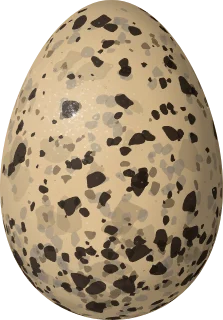
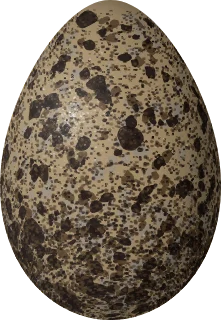
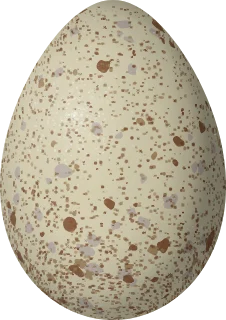

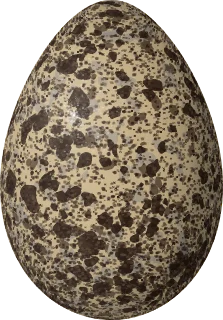
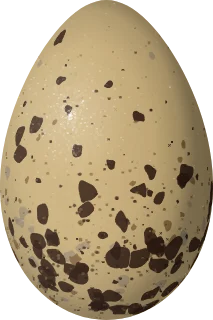
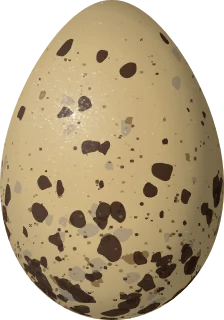
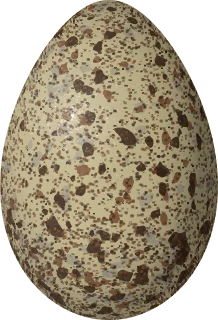
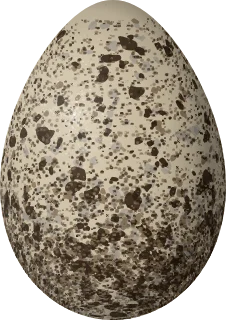
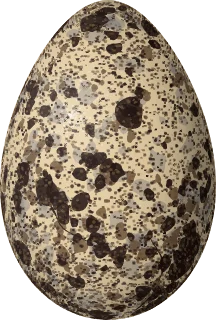

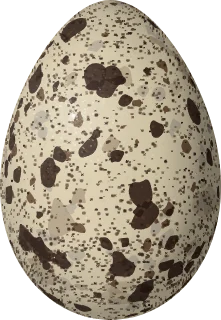
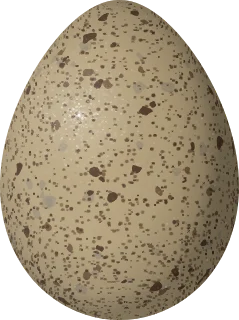
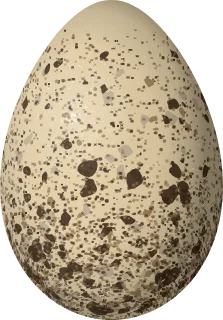

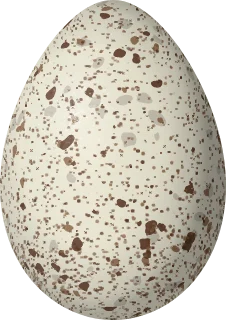

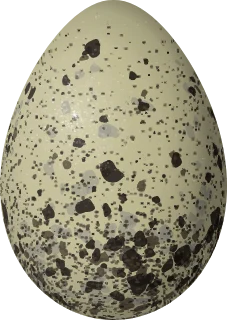
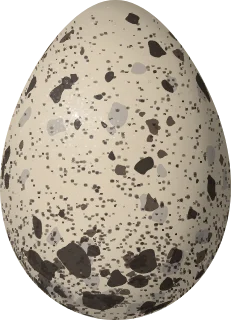

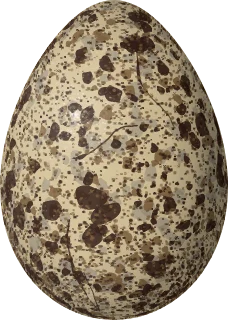
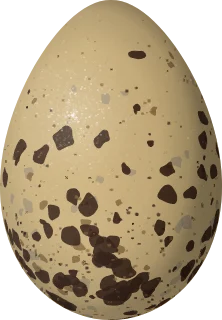
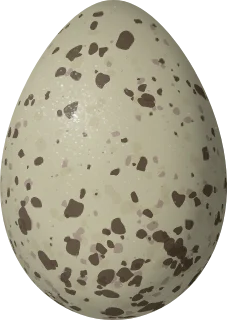
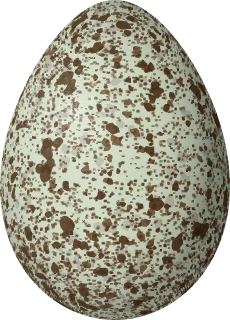
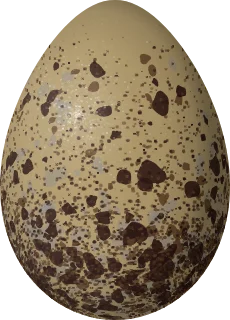

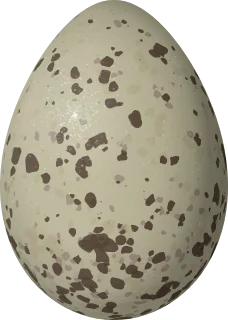
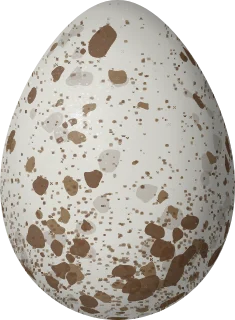


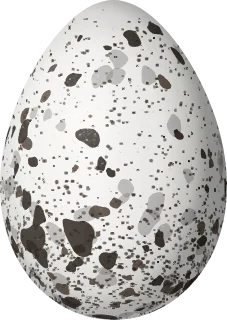
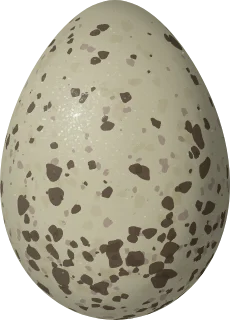

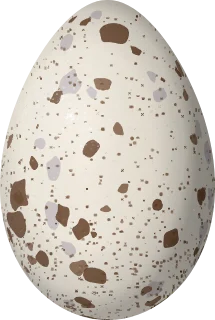
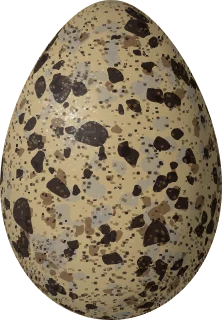

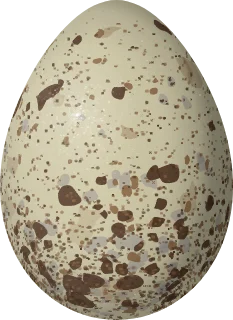


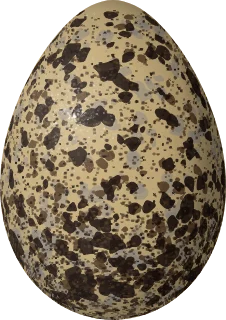
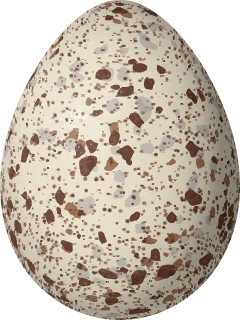

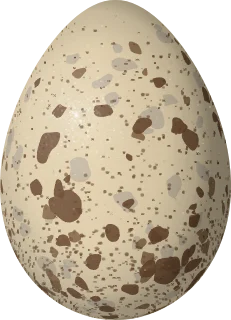
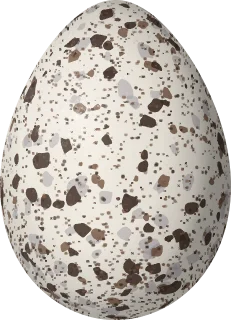


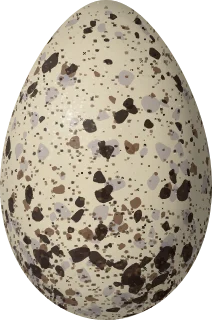
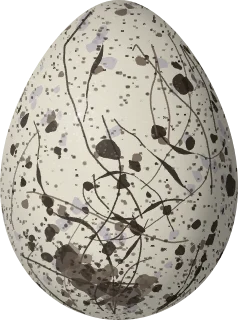
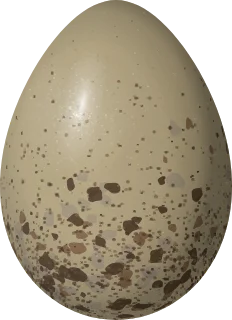
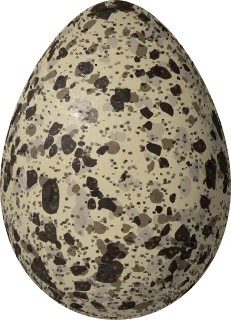
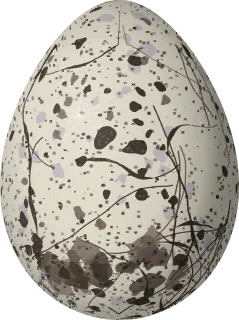
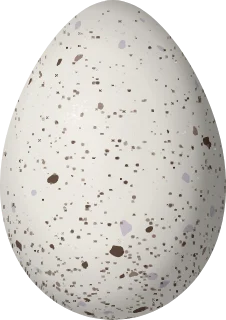
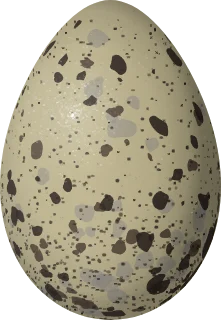

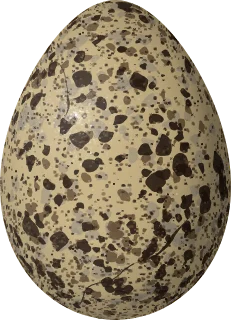

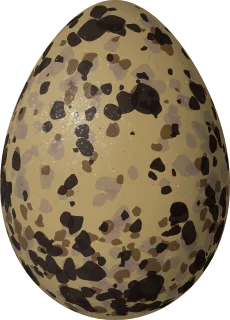
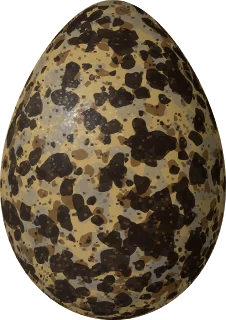
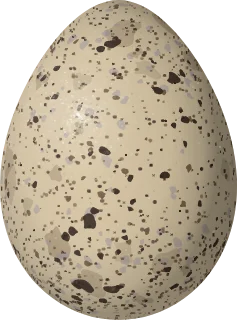
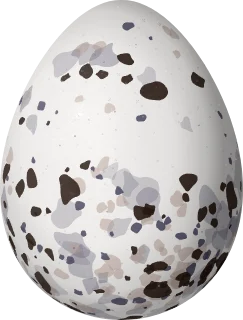

Aleutian Tern
Onychoprion aleuticus
- 42 × 29 mm
Olive-buff to brownish, spotted and blotched with dark brown.
Sources of information
- Size
- Average of 44 eggs: Bent, Life Histories of North American Gulls and Terns (U.S. National Museum Bulletin 113, 1921), p. 269.
- Description
- Bent, Life Histories of North American Gulls and Terns (U.S. National Museum Bulletin 113, 1921), p. 269.
- Shape
- Drawn from the length and width, with the taper estimated from the typical eggs of its group (how these eggs are drawn).
Know something more about this egg, or spotted a mistake? Message us.
Andean Gull
Chroicocephalus serranus
- 60.5 × 43 mm
- Clutch: 2–3 eggs
Olive green, with black and grey specks and blotches concentrated at the large end.
Sources of information
- Size
- Average of 5 eggs: Schönwetter, M. 1960–1992. Handbuch der Oologie (ed. W. Meise), Lieferung 7. Akademie-Verlag, Berlin., p. 447.
- Description
- de la Peña 2025 (Aves Argentinas tomo 5).
- Shape
- Drawn from the length and width, with the taper estimated from the typical eggs of its group (how these eggs are drawn).
Know something more about this egg, or spotted a mistake? Message us.
Arctic Tern
Sterna paradisaea
- 41 × 29.5 mm
- Clutch: 1–3 eggs
Olive to buff with numerous small dark brown spots and blotches.
Sources of information
- Size
- Average of 123 eggs: Bent, Life Histories of North American Gulls and Terns (U.S. National Museum Bulletin 113, 1921), p. 252.
Agrees with: Cornell Lab of Ornithology, All About Birds: Arctic Tern, Life History. - Description
- Cornell Lab of Ornithology, All About Birds: Arctic Tern, Life History.
Drawing checked against a photo: Bird Eggs of Canada photo (Royal Alberta Museum). - Clutch
- Cornell Lab of Ornithology, All About Birds.
- Shape
- Drawn from the length and width, with the taper estimated from the typical eggs of its group (how these eggs are drawn).
Know something more about this egg, or spotted a mistake? Message us.
Make a 3D-printable copy of this eggSee posters with this egg →
Atlantic White Tern
Gygis alba
- 43.9 × 32.6 mm
- Speculative: we haven't found a documented description of this egg yet, so we estimated its colours and markings from related birds.
No documented description found yet; drawn like the Blue-billed White Tern egg (same genus).
Sources of information
- Size
- Average of 32 eggs: Schönwetter, M. 1960–1992. Handbuch der Oologie (ed. W. Meise), Lieferung 8. Akademie-Verlag, Berlin., p. 457.
- Description
- Estimated, no description found: drawn like a related egg (Blue-billed White Tern).
- Shape
- Drawn from the length and width, with the taper estimated from the typical eggs of its group (how these eggs are drawn).
Have you seen this egg, or know a description or measurements of it? Message us.
Belcher's Gull
Larus belcheri
- 63.7 × 45.6 mm
- Speculative: we haven't found a documented description of this egg yet, so we estimated its colours and markings from related birds.
No documented description found yet; drawn like the Herring Gull egg (same genus).
Sources of information
- Size
- Average of 30 eggs: Schönwetter, M. 1960–1992. Handbuch der Oologie (ed. W. Meise), Lieferung 7. Akademie-Verlag, Berlin., p. 444.
- Description
- Estimated, no description found: drawn like a related egg (Herring Gull).
- Shape
- Drawn from the length and width, with the taper estimated from the typical eggs of its group (how these eggs are drawn).
Have you seen this egg, or know a description or measurements of it? Message us.
Black Noddy
Anous minutus
- 44.5 × 31.1 mm
- Clutch: 1 egg
Pale reddish-buff, with a few rusty and dark maroon-brown spots and small blotches, mostly at the blunt end.
Sources of information
- Size
- Average of 36 eggs: Schönwetter, M. 1960–1992. Handbuch der Oologie (ed. W. Meise), Lieferung 8. Akademie-Verlag, Berlin., p. 456.
- Description
- Hauber et al. 2014, The Book of Eggs, p. 174.
- Shape
- Drawn from the length and width, with the taper estimated from the typical eggs of its group (how these eggs are drawn).
Know something more about this egg, or spotted a mistake? Message us.
Black Skimmer
Rynchops niger
- 45 × 33.5 mm
- Clutch: 1–5 eggs
show all 14
Canada & United States: United StatesMexico: Mexico
Central America: El Salvador
South America: Argentina, Bolivia, Brazil, Colombia, Ecuador, Guyana, Paraguay, Peru, Suriname, Uruguay, Venezuela
Cream, spotted and blotched dark chestnut-brown over grey, all over.
Sources of information
- Size
- Average of 58 eggs: Bent, Life Histories of North American Gulls and Terns (U.S. National Museum Bulletin 113, 1921), p. 314.
Agrees with: Cornell Lab of Ornithology, All About Birds: Black Skimmer, Life History. - Description
- Cornell Lab of Ornithology, All About Birds: Black Skimmer, Life History.
Drawing checked against a photo: Wikimedia Commons photo; de la Peña 2025, Aves Argentinas tomo 5, p. 106. - Clutch
- Cornell Lab of Ornithology, All About Birds.
- Shape
- Drawn from the length and width, with the taper estimated from the typical eggs of its group (how these eggs are drawn).
Know something more about this egg, or spotted a mistake? Message us.
Black Tern
Chlidonias niger
- 34 × 24 mm
Light buff to dark olive, speckled with gray to dark brown.
Sources of information
- Size
- Average of 122 eggs: Bent, A.C. 1921. Life histories of North American gulls and terns. U.S. Natl. Mus. Bull. 113, scan p. 451.
- Description
- Cornell Lab of Ornithology, All About Birds: Black Tern, Life History.
Drawing checked against a photo: Bird Eggs of Canada photo (Royal Saskatchewan Museum). - Shape
- Drawn from the length and width, with the taper estimated from the typical eggs of its group (how these eggs are drawn).
Know something more about this egg, or spotted a mistake? Message us.
Make a 3D-printable copy of this eggSee posters with this egg →
Black-headed Gull
Chroicocephalus ridibundus
- 53 × 37.5 mm
- Speculative: we haven't found a documented description of this egg yet, so we estimated its colours and markings from related birds.
No documented description found yet; drawn like the Grey-headed Gull egg (same genus).
Sources of information
- Size
- Average of 9 eggs: Stoddard, M. C., et al. 2017. Avian egg shape: form, function, and evolution. Science 356: 1249-1254 (Data S1, MVZ egg collection).
- Description
- Estimated, no description found: drawn like a related egg (Grey-headed Gull).
- Shape
- Drawn from the length and width, with the taper estimated from the typical eggs of its group (how these eggs are drawn).
Have you seen this egg, or know a description or measurements of it? Message us.
Black-legged Kittiwake
Rissa tridactyla
- 56.1 × 40.8 mm
- Clutch: 1–3 eggs
Brown, blue, gray, olive or tan, with dark brown-gray speckling.
Sources of information
- Size
- Average of 41 eggs: Bent, Life Histories of North American Gulls and Terns (U.S. National Museum Bulletin 113, 1921), p. 38.
- Description
- Cornell Lab of Ornithology, All About Birds: Black-legged Kittiwake, Life History.
- Clutch
- Cornell Lab of Ornithology, All About Birds.
- Shape
- Drawn from the length and width, with the taper estimated from the typical eggs of its group (how these eggs are drawn).
Know something more about this egg, or spotted a mistake? Message us.
Make a 3D-printable copy of this eggSee posters with this egg →
Blue-billed White Tern
Gygis candida
- 42.5 × 31.8 mm
Dull grey to greyish yellow with large violet clouds and grey-brown to blackish vermiculations, scribbles, lines and blots spread evenly.
Sources of information
- Size
- Average of 11 eggs: Schönwetter, M. 1960–1992. Handbuch der Oologie (ed. W. Meise), Lieferung 8. Akademie-Verlag, Berlin., p. 457.
- Description
- Nehrkorn 1899 (Katalog der Eiersammlung).
- Shape
- Drawn from the length and width, with the taper estimated from the typical eggs of its group (how these eggs are drawn).
Know something more about this egg, or spotted a mistake? Message us.
Bonaparte's Gull
Chroicocephalus philadelphia
- 49.5 × 34.9 mm
- Clutch: 2–3 eggs
Buffy green, with dark spots and blotches.
Sources of information
- Size
- Bent, Life Histories of North American Gulls and Terns (U.S. National Museum Bulletin 113, 1921), p. 176.
- Description
- Cornell Lab of Ornithology, All About Birds: Bonaparte's Gull, Life History.
Drawing checked against a photo: Bird Eggs of Canada photo (Royal Saskatchewan Museum). - Clutch
- Cornell Lab of Ornithology, All About Birds.
- Shape
- Drawn from the length and width, with the taper estimated from the typical eggs of its group (how these eggs are drawn).
Know something more about this egg, or spotted a mistake? Message us.
Make a 3D-printable copy of this eggSee posters with this egg →
Bridled Tern
Onychoprion anaethetus
- 46 × 33.2 mm
- Clutch: 1 egg
show all 11
Canada & United States: United StatesMexico: Mexico
Central America: Belize, Costa Rica, Panama
The Caribbean: Aruba, Trinidad and Tobago, Caribbean islands
South America: Colombia, Ecuador, Venezuela
Creamy, pinkish or pure white ground, spotted and blotched with brown and grey/lilac over the whole egg.
Sources of information
- Size
- Average of 20 eggs: Bent, A. C. 1921. Life histories of North American gulls and terns. U.S. National Museum Bulletin 113, p. 288 (scan leaf 444).
Agrees with: [Ghabre Nakhoda Island, Khuzestan, Iran study; authors/title not visible on page] Journal of Animal Biology (Alzahra Univ.), article 5529. - Description
- Bent 1921, Life Histories of North American Gulls and Terns (US Natl. Mus. Bull. 113).
- Shape
- Drawn from the length and width, with the taper estimated from the typical eggs of its group (how these eggs are drawn).
Know something more about this egg, or spotted a mistake? Message us.
Brown Noddy
Anous stolidus
- 52 × 35 mm
show all 13
Canada & United States: United StatesMexico: Mexico
Central America: Belize, Panama
The Caribbean: Aruba, Trinidad and Tobago, Caribbean islands
South America: Brazil, Chile, Colombia, Ecuador, French Guiana, Venezuela
Chalky off-white with bold brown markings and less distinct gray to lilac markings.
Sources of information
- Size
- Average of 44 eggs: Bent, Life Histories of North American Gulls and Terns (U.S. National Museum Bulletin 113, 1921), p. 306.
- Description
- Cornell Lab of Ornithology, All About Birds: Brown Noddy, Life History.
- Shape
- Drawn from the length and width, with the taper estimated from the typical eggs of its group (how these eggs are drawn).
Know something more about this egg, or spotted a mistake? Message us.
Make a 3D-printable copy of this eggSee posters with this egg →
Brown Skua
Stercorarius antarcticus
- 65.3 × 48.7 mm (approx.)
- Clutch: 1–2 eggs
Olive-buff, sparsely spotted with small brown and grey marks.
Sources of information
- Size
- de la Peña, M. R. 2025. Aves Argentinas: descripción, comportamiento, reproducción y distribución. Comunicaciones del Museo Provincial de Ciencias Naturales "Florentino Ameghino" (Nueva Serie). Santa Fe., tomo 5, p. 100.
- Description
- de la Peña 2025 (Aves Argentinas tomo 5).
Drawing checked against a photo: de la Peña 2025, Aves Argentinas tomo 5, p. 100. - Shape
- Drawn from the length and width, with the taper estimated from the typical eggs of its group (how these eggs are drawn).
Know something more about this egg, or spotted a mistake? Message us.
Brown-hooded Gull
Chroicocephalus maculipennis
- 50.89 × 37 mm
Pale greenish grey to olive-brown or buff, spotted and blotched yellowish and blackish brown over pale purple (rarely unspotted blue).
Sources of information
- Size
- Average of 3 eggs: Stoddard, M. C., et al. 2017. Avian egg shape: form, function, and evolution. Science 356: 1249-1254 (Data S1, MVZ egg collection).
- Description
- Oates 1901 (BM Egg Catalogue vol 1); supporting: Nehrkorn 1899 (Katalog der Eiersammlung).
Drawing checked against a photo: de la Peña 2025, Aves Argentinas tomo 5, p. 117. - Shape
- Drawn from the length and width, with the taper estimated from the typical eggs of its group (how these eggs are drawn).
Know something more about this egg, or spotted a mistake? Message us.
California Gull
Larus californicus
- 67.5 × 45.5 mm
- Clutch: 1–4 eggs
Buff to greenish, with dark spots, speckles, splotches, and short swirls.
Sources of information
- Size
- Average of 50 eggs: Bent, Life Histories of North American Gulls and Terns (U.S. National Museum Bulletin 113, 1921), p. 127.
Agrees with: Cornell Lab of Ornithology, All About Birds: California Gull, Life History. - Description
- Cornell Lab of Ornithology, All About Birds: California Gull, Life History.
Drawing checked against a photo: Bird Eggs of Canada photo (Royal Saskatchewan Museum). - Clutch
- Cornell Lab of Ornithology, All About Birds.
- Shape
- Drawn from the length and width, with the taper estimated from the typical eggs of its group (how these eggs are drawn).
Know something more about this egg, or spotted a mistake? Message us.
Make a 3D-printable copy of this eggSee posters with this egg →
Caspian Tern
Hydroprogne caspia
- 64.5 × 45 mm
- Clutch: 1–3 eggs
Buff, sparingly marked with dark spots and sometimes large irregular blotches.
Sources of information
- Size
- Average of 48 eggs: Bent, A. C. 1921. Life Histories of North American Gulls and Terns. U.S. National Museum Bulletin 113, scan p. 304.
- Description
- Cornell Lab of Ornithology, All About Birds: Caspian Tern, Life History.
Drawing checked against a photo: Bird Eggs of Canada photo (Royal Saskatchewan Museum). - Clutch
- Cornell Lab of Ornithology, All About Birds.
- Shape
- Drawn from the length and width, with the taper estimated from the typical eggs of its group (how these eggs are drawn).
Know something more about this egg, or spotted a mistake? Message us.
Make a 3D-printable copy of this eggSee posters with this egg →
Chilean Skua
Stercorarius chilensis
- 73.7 × 52.1 mm (approx.)
Greyish buff, spotted and blotched with pale yellowish brown over pale purple; like Great Skua.
Sources of information
- Size
- Oates, E. W. 1901. Catalogue of the Collection of Birds' Eggs in the British Museum, vol. 1. London., p. 225.
- Description
- Oates 1901 (BM Egg Catalogue vol 1).
Drawing checked against a photo: de la Peña 2025, Aves Argentinas tomo 5, p. 95. - Shape
- Drawn from the length and width, with the taper estimated from the typical eggs of its group (how these eggs are drawn).
Know something more about this egg, or spotted a mistake? Message us.
Common Tern
Sterna hirundo
- 41.5 × 30 mm
- Clutch: 1–4 eggs
Olive to buff, marked with numerous dark brown spots and blotches.
Sources of information
- Size
- Average of 82 eggs: Bent, A. C. 1921. Life Histories of North American Gulls and Terns. U.S. National Museum Bulletin 113, scan p. 365.
- Description
- Cornell Lab of Ornithology, All About Birds: Common Tern, Life History.
Drawing checked against a photo: Wikimedia Commons photo; Bird Eggs of Canada photo (Royal Saskatchewan Museum). - Clutch
- Cornell Lab of Ornithology, All About Birds.
- Shape
- Drawn from the length and width, with the taper estimated from the typical eggs of its group (how these eggs are drawn).
Know something more about this egg, or spotted a mistake? Message us.
Make a 3D-printable copy of this eggSee posters with this egg →
Dolphin Gull
Leucophaeus scoresbii
- 60.44 × 42 mm
Olive-buff to grey-green, evenly spotted and blotched yellowish and chocolate brown over pale purple.
Sources of information
- Size
- Average of 4 eggs: Stoddard, M. C., et al. 2017. Avian egg shape: form, function, and evolution. Science 356: 1249-1254 (Data S1, MVZ egg collection).
- Description
- Oates 1901 (BM Egg Catalogue vol 1); supporting: Nehrkorn 1899 (Katalog der Eiersammlung).
- Shape
- Drawn from the length and width, with the taper estimated from the typical eggs of its group (how these eggs are drawn).
Know something more about this egg, or spotted a mistake? Message us.
Elegant Tern
Thalasseus elegans
- 53.5 × 38 mm
- Clutch: 1–2 eggs
White to buff to pinkish to pale maroon, spotted and blotched with brown, black, gray, and purplish.
Sources of information
- Size
- Average of 27 eggs: Bent, Life Histories of North American Gulls and Terns (U.S. National Museum Bulletin 113, 1921), p. 220.
- Description
- Cornell Lab of Ornithology, All About Birds: Elegant Tern, Life History.
- Clutch
- Cornell Lab of Ornithology, All About Birds.
- Shape
- Drawn from the length and width, with the taper estimated from the typical eggs of its group (how these eggs are drawn).
Know something more about this egg, or spotted a mistake? Message us.
Forster's Tern
Sterna forsteri
- 43 × 31 mm
- Clutch: 1–4 eggs
Olive to buff, marked with numerous small spots and blotches of dark brown, often concentrated around the larger end.
Sources of information
- Size
- Average of 65 eggs: Bent, Life Histories of North American Gulls and Terns (U.S. National Museum Bulletin 113, 1921), p. 233.
Agrees with: Cornell Lab of Ornithology, All About Birds: Forster's Tern, Life History. - Description
- Cornell Lab of Ornithology, All About Birds: Forster's Tern, Life History.
Drawing checked against a photo: Bird Eggs of Canada photo (Royal Alberta Museum). - Clutch
- Cornell Lab of Ornithology, All About Birds.
- Shape
- Drawn from the length and width, with the taper estimated from the typical eggs of its group (how these eggs are drawn).
Know something more about this egg, or spotted a mistake? Message us.
Make a 3D-printable copy of this eggSee posters with this egg →
Franklin's Gull
Leucophaeus pipixcan
- 52 × 36 mm
- Clutch: 2–4 eggs
Greenish brown with dark splotches.
Sources of information
- Size
- Average of 48 eggs: Bent, Life Histories of North American Gulls and Terns (U.S. National Museum Bulletin 113, 1921), p. 167.
- Description
- Cornell Lab of Ornithology, All About Birds: Franklin's Gull, Life History.
Drawing checked against a photo: Bird Eggs of Canada photo (Royal Saskatchewan Museum). - Clutch
- Cornell Lab of Ornithology, All About Birds.
- Shape
- Drawn from the length and width, with the taper estimated from the typical eggs of its group (how these eggs are drawn).
Know something more about this egg, or spotted a mistake? Message us.
Glaucous Gull
Larus hyperboreus
- 75.8 × 52.4 mm
- Clutch: 1–3 eggs
Light gray-brown or olive with gray and dark brown spots.
Sources of information
- Size
- Average of 56 eggs: Bent, Life Histories of North American Gulls and Terns (U.S. National Museum Bulletin 113, 1921), p. 55.
- Description
- Cornell Lab of Ornithology, All About Birds: Glaucous Gull, Life History.
Drawing checked against a photo: Bird Eggs of Canada photo (Royal Alberta Museum). - Clutch
- Cornell Lab of Ornithology, All About Birds.
- Shape
- Drawn from the length and width, with the taper estimated from the typical eggs of its group (how these eggs are drawn).
Know something more about this egg, or spotted a mistake? Message us.
Make a 3D-printable copy of this eggSee posters with this egg →
Glaucous-winged Gull
Larus glaucescens
- 72.8 × 50.8 mm
- Clutch: 1–4 eggs
Light greenish marked with dark scrawls.
Sources of information
- Size
- Average of 47 eggs: Bent, Life Histories of North American Gulls and Terns (U.S. National Museum Bulletin 113, 1921), p. 69.
- Description
- Cornell Lab of Ornithology, All About Birds: Glaucous-winged Gull, Life History.
Drawing checked against a photo: Bird Eggs of Canada photo (Royal Alberta Museum). - Clutch
- Cornell Lab of Ornithology, All About Birds.
- Shape
- Drawn from the length and width, with the taper estimated from the typical eggs of its group (how these eggs are drawn).
Know something more about this egg, or spotted a mistake? Message us.
Make a 3D-printable copy of this eggSee posters with this egg →
Great Black-backed Gull
Larus marinus
- 77.9 × 54.2 mm
- Clutch: 2–3 eggs
Pale yellowish, greenish, or brownish, with speckles of dark brown or olive.
Sources of information
- Size
- Average of 59 eggs: Bent, Life Histories of North American Gulls and Terns (U.S. National Museum Bulletin 113, 1921), p. 80.
Agrees with: Cornell Lab of Ornithology, All About Birds: Great Black-backed Gull, Life History. - Description
- Cornell Lab of Ornithology, All About Birds: Great Black-backed Gull, Life History.
Drawing checked against a photo: Bird Eggs of Canada photo (Royal Alberta Museum). - Clutch
- Cornell Lab of Ornithology, All About Birds.
- Shape
- Drawn from the length and width, with the taper estimated from the typical eggs of its group (how these eggs are drawn).
Know something more about this egg, or spotted a mistake? Message us.
Make a 3D-printable copy of this eggSee posters with this egg →
Grey Gull
Leucophaeus modestus
- 58.2 × 41.2 mm
- Speculative: we haven't found a documented description of this egg yet, so we estimated its colours and markings from related birds.
No documented description found yet; drawn like the Laughing Gull egg (same genus).
Sources of information
- Size
- Average of 12 eggs: Schönwetter, M. 1960–1992. Handbuch der Oologie (ed. W. Meise), Lieferung 7. Akademie-Verlag, Berlin., p. 444.
- Description
- Estimated, no description found: drawn like a related egg (Laughing Gull).
- Shape
- Drawn from the length and width, with the taper estimated from the typical eggs of its group (how these eggs are drawn).
Have you seen this egg, or know a description or measurements of it? Message us.
Grey Noddy
Anous albivitta
- 42.4 × 30 mm
- Speculative: we haven't found a documented description of this egg yet, so we estimated its colours and markings from related birds.
Greyish white with pale violet undermarks and very sparse pale grey and dark brown dots, slightly crowded at the blunt end; dull and rough (estimated from Blue Noddy).
Sources of information
- Size
- Average of 40 eggs: Schönwetter, M. 1960–1992. Handbuch der Oologie (ed. W. Meise), Lieferung 8. Akademie-Verlag, Berlin., p. 455.
- Description
- Nehrkorn 1899 (Katalog der Eiersammlung).
- Shape
- Drawn from the length and width, with the taper estimated from the typical eggs of its group (how these eggs are drawn).
Have you seen this egg, or know a description or measurements of it? Message us.
Grey-headed Gull
Chroicocephalus cirrocephalus
- 53.75 × 35.25 mm
Dark cream to olive-buff, evenly spotted, lined and blotched yellowish, rufous and blackish brown over very pale purple.
Sources of information
- Size
- Average of 2 eggs: Stoddard, M. C., et al. 2017. Avian egg shape: form, function, and evolution. Science 356: 1249-1254 (Data S1, MVZ egg collection).
- Description
- Oates 1901 (BM Egg Catalogue vol 1); supporting: Nehrkorn 1899 (Katalog der Eiersammlung).
Drawing checked against a photo: de la Peña 2025, Aves Argentinas tomo 5, p. 122. - Shape
- Drawn from the length and width, with the taper estimated from the typical eggs of its group (how these eggs are drawn).
Know something more about this egg, or spotted a mistake? Message us.
Gull-billed Tern
Gelochelidon nilotica
- 47 × 34 mm
- Clutch: 2–3 eggs
Light buff, yellowish, grayish, or greenish buff with irregular brown spots.
Sources of information
- Size
- Average of 47 eggs: Bent, Life Histories of North American Gulls and Terns (U.S. National Museum Bulletin 113, 1921), pp. 199–200.
Agrees with: Cornell Lab of Ornithology, All About Birds: Gull-billed Tern, Life History. - Description
- Cornell Lab of Ornithology, All About Birds: Gull-billed Tern, Life History.
- Clutch
- Cornell Lab of Ornithology, All About Birds.
- Shape
- Drawn from the length and width, with the taper estimated from the typical eggs of its group (how these eggs are drawn).
Know something more about this egg, or spotted a mistake? Message us.
Heermann's Gull
Larus heermanni
- 58.83 × 40.9 mm
- Speculative: we haven't found a documented description of this egg yet, so we estimated its colours and markings from related birds.
No documented description found yet; drawn like the Herring Gull egg (same genus).
Sources of information
- Size
- Average of 44 eggs: Stoddard, M. C., et al. 2017. Avian egg shape: form, function, and evolution. Science 356: 1249-1254 (Data S1, MVZ egg collection).
- Description
- Estimated, no description found: drawn like a related egg (Herring Gull).
- Shape
- Drawn from the length and width, with the taper estimated from the typical eggs of its group (how these eggs are drawn).
Have you seen this egg, or know a description or measurements of it? Message us.
Herring Gull
Larus smithsonianus
- 72.3 × 50.5 mm
- Clutch: 1–3 eggs
Light olive, buff, or greenish with darker splotches or speckling.
Sources of information
- Size
- Average of 45 eggs: Bent, A. C. 1921. Life Histories of North American Gulls and Terns. U.S. National Museum Bulletin 113, scan p. 164.
- Description
- Cornell Lab of Ornithology, All About Birds: Herring Gull, Life History.
Drawing checked against a photo: Wikimedia Commons photo; Bird Eggs of Canada photo (Royal Saskatchewan Museum). - Clutch
- Cornell Lab of Ornithology, All About Birds.
- Shape
- Drawn from the length and width, with the taper estimated from the typical eggs of its group (how these eggs are drawn).
Know something more about this egg, or spotted a mistake? Message us.
Make a 3D-printable copy of this eggSee posters with this egg →
Iceland Gull
Larus glaucoides
- 68 × 48 mm
- Clutch: 1–4 eggs
Pale grayish brown, spotted and blotched with dark brown.
Sources of information
- Size
- Average of 54 eggs: Bent, Life Histories of North American Gulls and Terns (U.S. National Museum Bulletin 113, 1921), p. 62.
Agrees with: Cornell Lab of Ornithology, All About Birds: Iceland Gull, Life History. - Description
- Cornell Lab of Ornithology, All About Birds: Iceland Gull, Life History.
Drawing checked against a photo: Bird Eggs of Canada photo (University of Saskatchewan Department of Biology Natural History Collection). - Clutch
- Cornell Lab of Ornithology, All About Birds.
- Shape
- Drawn from the length and width, with the taper estimated from the typical eggs of its group (how these eggs are drawn).
Know something more about this egg, or spotted a mistake? Message us.
Make a 3D-printable copy of this eggSee posters with this egg →
Inca Tern
Larosterna inca
- 50.4 × 34.6 mm
- Speculative: we haven't found a documented description of this egg yet, so we estimated its colours and markings from related birds.
No documented description found yet; drawn like the Laughing Gull egg (same family).
Sources of information
- Size
- Average of 4 eggs: Schönwetter, M. 1960–1992. Handbuch der Oologie (ed. W. Meise), Lieferung 8. Akademie-Verlag, Berlin., p. 455.
- Description
- Estimated, no description found: drawn like a related egg (Laughing Gull).
- Shape
- Drawn from the length and width, with the taper estimated from the typical eggs of its group (how these eggs are drawn).
Have you seen this egg, or know a description or measurements of it? Message us.
Ivory Gull
Pagophila eburnea
- 60.5 × 43.6 mm
- Clutch: 1–3 eggs
Dark to pale brown with variable amount of dark spotting and blotching.
Sources of information
- Size
- Average of 32 eggs: Bent, Life Histories of North American Gulls and Terns (U.S. National Museum Bulletin 113, 1921), p. 32.
- Description
- Cornell Lab of Ornithology, All About Birds: Ivory Gull, Life History.
- Clutch
- Cornell Lab of Ornithology, All About Birds.
- Shape
- Drawn from the length and width, with the taper estimated from the typical eggs of its group (how these eggs are drawn).
Know something more about this egg, or spotted a mistake? Message us.
Kelp Gull
Larus dominicanus
- 66.96 × 47.87 mm
Olive-buff to pale olive-cream, spotted and blotched dark and chestnut brown over grey, all over.
Sources of information
- Size
- Average of 4 eggs: Stoddard, M. C., et al. 2017. Avian egg shape: form, function, and evolution. Science 356: 1249-1254 (Data S1, MVZ egg collection).
- Description
- Oates 1901 (BM Egg Catalogue vol 1); supporting: Nehrkorn 1899 (Katalog der Eiersammlung).
Drawing checked against a photo: de la Peña 2025, Aves Argentinas tomo 5, p. 140. - Shape
- Drawn from the length and width, with the taper estimated from the typical eggs of its group (how these eggs are drawn).
Know something more about this egg, or spotted a mistake? Message us.
Large-billed Tern
Phaetusa simplex
- 48.5 × 36.3 mm
- Clutch: 2–3 eggs
show all 11
South America: Argentina, Bolivia, Brazil, Colombia, Ecuador, Guyana, Paraguay, Peru, Suriname, Uruguay, VenezuelaPale cream, with chestnut-brown and grey specks and small blotches all over.
Sources of information
- Size
- Average of 4 eggs: de la Peña, M. R. 2025. Aves Argentinas: descripción, comportamiento, reproducción y distribución. Comunicaciones del Museo Provincial de Ciencias Naturales "Florentino Ameghino" (Nueva Serie). Santa Fe., tomo 5, p. 150.
- Description
- de la Peña 2025 (Aves Argentinas tomo 5).
Drawing checked against a photo: de la Peña 2025, Aves Argentinas tomo 5, p. 150. - Shape
- Drawn from the length and width, with the taper estimated from the typical eggs of its group (how these eggs are drawn).
Know something more about this egg, or spotted a mistake? Message us.
Laughing Gull
Leucophaeus atricilla
- 53.5 × 38.5 mm
- Clutch: 2–4 eggs
show all 16
Canada & United States: Canada, United StatesMexico: Mexico
Central America: Belize, Costa Rica, El Salvador, Guatemala, Nicaragua, Panama
The Caribbean: Aruba, Bonaire, Sint Eustatius and Saba, Curaçao, Trinidad and Tobago, Caribbean islands
South America: French Guiana, Venezuela
Slightly pointed at one end. Brown with black splotches.
Sources of information
- Size
- Average of 69 eggs: Bent, Life Histories of North American Gulls and Terns (U.S. National Museum Bulletin 113, 1921), p. 158.
Agrees with: Cornell Lab of Ornithology, All About Birds: Laughing Gull, Life History. - Description
- Cornell Lab of Ornithology, All About Birds: Laughing Gull, Life History.
Drawing checked against a photo: Bird Eggs of Canada photo (Royal Alberta Museum). - Clutch
- Cornell Lab of Ornithology, All About Birds.
- Shape
- Drawn from the length and width, with the taper estimated from the typical eggs of its group (how these eggs are drawn).
Know something more about this egg, or spotted a mistake? Message us.
Make a 3D-printable copy of this eggSee posters with this egg →
Lava Gull
Leucophaeus fuliginosus
- 55.9 × 39.9 mm (estimated)
- Speculative: we haven't found a documented description of this egg yet, so we estimated its colours and markings and its size from related birds.
No documented description found yet; drawn like the Laughing Gull egg (same genus).
Sources of information
- Size
- Estimated, no measurements found: the median length and width of measured eggs of the same genus: Leucophaeus atricilla, Leucophaeus modestus, Leucophaeus pipixcan, Leucophaeus scoresbii.
- Description
- Estimated, no description found: drawn like a related egg (Laughing Gull).
- Shape
- Drawn from the length and width, with the taper estimated from the typical eggs of its group (how these eggs are drawn).
Have you seen this egg, or know a description or measurements of it? Message us.
Make a 3D-printable copy of this eggSee posters with this egg →
Least Tern
Sternula antillarum
- 31 × 23.5 mm
- Clutch: 1–3 eggs
show all 16
Canada & United States: United StatesMexico: Mexico
Central America: Belize, Costa Rica, El Salvador, Guatemala, Honduras, Nicaragua, Panama
The Caribbean: Aruba, Bonaire, Sint Eustatius and Saba, Curaçao, Caribbean islands
South America: Brazil, Colombia, Venezuela
Beige to light olive, splotched with brown or black.
Sources of information
- Size
- Average of 63 eggs: Bent, Life Histories of North American Gulls and Terns (U.S. National Museum Bulletin 113, 1921), p. 275.
Agrees with: Cornell Lab of Ornithology, All About Birds: Least Tern, Life History. - Description
- Cornell Lab of Ornithology, All About Birds: Least Tern, Life History.
Drawing checked against a photo: Bird Eggs of Canada photo (Royal Saskatchewan Museum). - Clutch
- Cornell Lab of Ornithology, All About Birds.
- Shape
- Drawn from the length and width, with the taper estimated from the typical eggs of its group (how these eggs are drawn).
Know something more about this egg, or spotted a mistake? Message us.
Make a 3D-printable copy of this eggSee posters with this egg →
Little Gull
Hydrocoloeus minutus
- 41.3 × 30 mm (approx.)
- Clutch: 1–4 eggs
Olive to buff, marked with numerous small spots and blotches of dark brown, often concentrated around the larger end.
Sources of information
- Size
- Oates, E.W. 1901. Catalogue of the Collection of Birds' Eggs in the British Museum (Natural History). Vol. 1, scan p. 232.
Agrees with: Bent, A.C. 1921. Life histories of North American gulls and terns. U.S. Natl. Mus. Bull. 113, scan pp. 268-270. - Description
- Cornell Lab of Ornithology, All About Birds: Little Gull, Life History.
Drawing checked against a photo: Bird Eggs of Canada photo (Royal Alberta Museum). - Clutch
- Cornell Lab of Ornithology, All About Birds.
- Shape
- Drawn from the length and width, with the taper estimated from the typical eggs of its group (how these eggs are drawn).
Know something more about this egg, or spotted a mistake? Message us.
Make a 3D-printable copy of this eggSee posters with this egg →
Long-tailed Jaeger
Stercorarius longicaudus
- 55 × 39 mm
- Clutch: 1–2 eggs
Greenish to olive brown or pale blue, with dark brown spots.
Sources of information
- Size
- Average of 48 eggs: Bent, Life Histories of North American Gulls and Terns (U.S. National Museum Bulletin 113, 1921), p. 22.
Agrees with: Cornell Lab of Ornithology, All About Birds: Long-tailed Jaeger, Life History. - Description
- Cornell Lab of Ornithology, All About Birds: Long-tailed Jaeger, Life History.
Drawing checked against a photo: Bird Eggs of Canada photo (Royal Alberta Museum). - Clutch
- Cornell Lab of Ornithology, All About Birds.
- Shape
- Drawn from the length and width, with the taper estimated from the typical eggs of its group (how these eggs are drawn).
Know something more about this egg, or spotted a mistake? Message us.
Make a 3D-printable copy of this eggSee posters with this egg →
Olrog's Gull
Larus atlanticus
- 71.15 × 48.55 mm (approx.)
- Clutch: 3 eggs
Olive, with brown, chestnut and grey specks and blotches all over.
Sources of information
- Size
- de la Peña, M. R. 2025. Aves Argentinas: descripción, comportamiento, reproducción y distribución. Comunicaciones del Museo Provincial de Ciencias Naturales "Florentino Ameghino" (Nueva Serie). Santa Fe., tomo 5, p. 134.
- Description
- de la Peña 2025 (Aves Argentinas tomo 5).
- Shape
- Drawn from the length and width, with the taper estimated from the typical eggs of its group (how these eggs are drawn).
Know something more about this egg, or spotted a mistake? Message us.
Parasitic Jaeger
Stercorarius parasiticus
- 57 × 41 mm
- Clutch: 1–2 eggs
Greenish to brownish olive, blotched with brown.
Sources of information
- Size
- Average of 50 eggs: Bent, Life Histories of North American Gulls and Terns (U.S. National Museum Bulletin 113, 1921), p. 15.
Agrees with: Cornell Lab of Ornithology, All About Birds: Parasitic Jaeger, Life History. - Description
- Cornell Lab of Ornithology, All About Birds: Parasitic Jaeger, Life History.
Drawing checked against a photo: Bird Eggs of Canada photo (University of Saskatchewan Department of Biology Natural History Collection). - Clutch
- Cornell Lab of Ornithology, All About Birds.
- Shape
- Drawn from the length and width, with the taper estimated from the typical eggs of its group (how these eggs are drawn).
Know something more about this egg, or spotted a mistake? Message us.
Make a 3D-printable copy of this eggSee posters with this egg →
Peruvian Tern
Sternula lorata
- 27.5 × 22 mm (approx.)
Pale grey with larger violet undermarks and fine yellowish-brown spots spread evenly.
Sources of information
- Size
- Nehrkorn, A. 1899. Katalog der Eiersammlung nebst Beschreibungen der aussereuropäischen Eier. Braunschweig.
- Description
- Nehrkorn 1899 (Katalog der Eiersammlung).
- Shape
- Drawn from the length and width, with the taper estimated from the typical eggs of its group (how these eggs are drawn).
Know something more about this egg, or spotted a mistake? Message us.
Pomarine Jaeger
Stercorarius pomarinus
- 62 × 44 mm
- Clutch: 1–2 eggs
Brown to dark olive-buff, spotted with brown and gray.
Sources of information
- Size
- Average of 49 eggs: Bent, Life Histories of North American Gulls and Terns (U.S. National Museum Bulletin 113, 1921), p. 9.
Agrees with: Cornell Lab of Ornithology, All About Birds: Pomarine Jaeger, Life History. - Description
- Cornell Lab of Ornithology, All About Birds: Pomarine Jaeger, Life History.
Drawing checked against a photo: Bird Eggs of Canada photo (University of Saskatchewan Department of Biology Natural History Collection). - Clutch
- Cornell Lab of Ornithology, All About Birds.
- Shape
- Drawn from the length and width, with the taper estimated from the typical eggs of its group (how these eggs are drawn).
Know something more about this egg, or spotted a mistake? Message us.
Make a 3D-printable copy of this eggSee posters with this egg →
Red-legged Kittiwake
Rissa brevirostris
- 55.8 × 40.9 mm
- Clutch: 1 egg
Gray, ochre, or greenish, with irregular brown markings.
Sources of information
- Size
- Average of 43 eggs: Bent, Life Histories of North American Gulls and Terns (U.S. National Museum Bulletin 113, 1921), p. 50.
- Description
- Cornell Lab of Ornithology, All About Birds: Red-legged Kittiwake, Life History.
- Clutch
- Cornell Lab of Ornithology, All About Birds.
- Shape
- Drawn from the length and width, with the taper estimated from the typical eggs of its group (how these eggs are drawn).
Know something more about this egg, or spotted a mistake? Message us.
Ring-billed Gull
Larus delawarensis
- 59.3 × 42.3 mm
- Clutch: 2–4 eggs
Pale olive gray with dark brown speckles.
Sources of information
- Size
- Average of 40 eggs: Bent, A. C. 1921. Life histories of North American gulls and terns. U.S. National Museum Bulletin 113, scan leaf 207 (account begins printed p. 132).
- Description
- Cornell Lab of Ornithology, All About Birds: Ring-billed Gull, Life History.
Drawing checked against a photo: Bird Eggs of Canada photo (Royal Saskatchewan Museum). - Clutch
- Cornell Lab of Ornithology, All About Birds.
- Shape
- Drawn from the length and width, with the taper estimated from the typical eggs of its group (how these eggs are drawn).
Know something more about this egg, or spotted a mistake? Message us.
Make a 3D-printable copy of this eggSee posters with this egg →
Roseate Tern
Sterna dougallii
- 42 × 30 mm
- Clutch: 1–5 eggs
show all 10
Canada & United States: Canada, United StatesCentral America: Belize, Honduras
The Caribbean: Aruba, Bonaire, Sint Eustatius and Saba, Curaçao, Trinidad and Tobago, Caribbean islands
South America: Venezuela
Brown with dark speckles and streaks.
Sources of information
- Size
- Average of 87 eggs: Bent, Life Histories of North American Gulls and Terns (U.S. National Museum Bulletin 113, 1921), p. 259.
- Description
- Cornell Lab of Ornithology, All About Birds: Roseate Tern, Life History.
Drawing checked against a photo: Bird Eggs of Canada photo (University of Saskatchewan Department of Biology Natural History Collection). - Clutch
- Cornell Lab of Ornithology, All About Birds.
- Shape
- Drawn from the length and width, with the taper estimated from the typical eggs of its group (how these eggs are drawn).
Know something more about this egg, or spotted a mistake? Message us.
Make a 3D-printable copy of this eggSee posters with this egg →
Ross's Gull
Rhodostethia rosea
- 43.5 × 31.6 mm
Dark olive-brown, sometimes olive-green tinged, quite glossy, with fairly loose, not very large, rounded light and dark brown spots, more towards the blunt end.
Sources of information
- Size
- Average of 36 eggs: Schönwetter, M. 1960–1992. Handbuch der Oologie (ed. W. Meise), Lieferung 7. Akademie-Verlag, Berlin., p. 448.
- Description
- Schönwetter, M. 1960–1992. Handbuch der Oologie (ed. W. Meise), Lieferung 07. Akademie-Verlag, Berlin., pdf p. 57.
- Shape
- Drawn from the length and width, with the taper estimated from the typical eggs of its group (how these eggs are drawn).
Know something more about this egg, or spotted a mistake? Message us.
Royal Tern
Thalasseus maximus
- 63 × 44.5 mm
- Clutch: 1–2 eggs
show all 12
Canada & United States: United StatesMexico: Mexico
Central America: Honduras
The Caribbean: Aruba, Bonaire, Sint Eustatius and Saba, Trinidad and Tobago, Caribbean islands
South America: Argentina, Brazil, French Guiana, Uruguay, Venezuela
Cream or pale greenish, with small brown and grey specks and spots evenly all over.
Sources of information
- Size
- Average of 54 eggs: Bent, Life Histories of North American Gulls and Terns (U.S. National Museum Bulletin 113, 1921), p. 215.
Agrees with: Cornell Lab of Ornithology, All About Birds: Royal Tern, Life History. - Description
- Cornell Lab of Ornithology, All About Birds: Royal Tern, Life History.
Drawing checked against a photo: Wikimedia Commons photo; de la Peña 2025, Aves Argentinas tomo 5, p. 177. - Clutch
- Cornell Lab of Ornithology, All About Birds.
- Shape
- Drawn from the length and width, with the taper estimated from the typical eggs of its group (how these eggs are drawn).
Know something more about this egg, or spotted a mistake? Message us.
Sabine's Gull
Xema sabini
- 45.5 × 32 mm
- Clutch: 1–4 eggs
Slightly pointed. Rich olive-green with darker greenish-brown, irregular markings.
Sources of information
- Size
- Average of 56 eggs: Bent, Life Histories of North American Gulls and Terns (U.S. National Museum Bulletin 113, 1921), p. 193.
- Description
- Cornell Lab of Ornithology, All About Birds: Sabine's Gull, Life History.
Drawing checked against a photo: Bird Eggs of Canada photo (University of Saskatchewan Department of Biology Natural History Collection). - Clutch
- Cornell Lab of Ornithology, All About Birds.
- Shape
- Drawn from the length and width, with the taper estimated from the typical eggs of its group (how these eggs are drawn).
Know something more about this egg, or spotted a mistake? Message us.
Make a 3D-printable copy of this eggSee posters with this egg →
Sandwich Tern
Thalasseus sandvicensis
- 51.1 × 36 mm
show all 17
Canada & United States: United StatesMexico: Mexico
Central America: Belize, Costa Rica, El Salvador, Guatemala, Honduras, Nicaragua, Panama
The Caribbean: Aruba, Bonaire, Sint Eustatius and Saba, Caribbean islands
South America: Argentina, Brazil, French Guiana, Uruguay, Venezuela
White or whitish cream, boldly spotted and blotched blackish brown and grey, heavier at the larger end.
Sources of information
- Size
- Average of 41 eggs: Bent, Life Histories of North American Gulls and Terns (U.S. National Museum Bulletin 113, 1921), p. 224.
- Description
- Cornell Lab of Ornithology, All About Birds: Sandwich Tern, Life History.
Drawing checked against a photo: de la Peña 2025, Aves Argentinas tomo 5, p. 173. - Shape
- Drawn from the length and width, with the taper estimated from the typical eggs of its group (how these eggs are drawn).
Know something more about this egg, or spotted a mistake? Message us.
Short-billed Gull
Larus brachyrhynchus
- 57 × 41 mm
- Clutch: 1–5 eggs
Light olive with variable amount of dark brown speckles.
Sources of information
- Size
- Average of 50 eggs: Bent, Life Histories of North American Gulls and Terns (U.S. National Museum Bulletin 113, 1921), p. 142.
- Description
- Cornell Lab of Ornithology, All About Birds: Short-billed Gull, Life History.
Drawing checked against a photo: Bird Eggs of Canada photo (Royal Ontario Museum). - Clutch
- Cornell Lab of Ornithology, All About Birds.
- Shape
- Drawn from the length and width, with the taper estimated from the typical eggs of its group (how these eggs are drawn).
Know something more about this egg, or spotted a mistake? Message us.
Make a 3D-printable copy of this eggSee posters with this egg →
Snowy-crowned Tern
Sterna trudeaui
- 44.48 × 29.46 mm
Pale buff to olive-buff, spotted and blotched dark and chestnut brown over pale grey, all over.
Sources of information
- Size
- Average of 2 eggs: Stoddard, M. C., et al. 2017. Avian egg shape: form, function, and evolution. Science 356: 1249-1254 (Data S1, MVZ egg collection).
- Description
- Oates 1901 (BM Egg Catalogue vol 1).
Drawing checked against a photo: de la Peña 2025, Aves Argentinas tomo 5, p. 169. - Shape
- Drawn from the length and width, with the taper estimated from the typical eggs of its group (how these eggs are drawn).
Know something more about this egg, or spotted a mistake? Message us.
Sooty Tern
Onychoprion fuscatus
- 50 × 35 mm
show all 13
Canada & United States: United StatesMexico: Mexico
Central America: Belize, Costa Rica, Panama
The Caribbean: Aruba, Trinidad and Tobago, Caribbean islands
South America: Brazil, Chile, Ecuador, French Guiana, Venezuela
White, buff, or pink, with brown, black, and/or lilac speckling.
Sources of information
- Size
- Average of 76 eggs: Bent, Life Histories of North American Gulls and Terns (U.S. National Museum Bulletin 113, 1921), p. 281.
- Description
- Cornell Lab of Ornithology, All About Birds: Sooty Tern, Life History.
- Shape
- Drawn from the length and width, with the taper estimated from the typical eggs of its group (how these eggs are drawn).
Know something more about this egg, or spotted a mistake? Message us.
Make a 3D-printable copy of this eggSee posters with this egg →
South American Tern
Sterna hirundinacea
- 47.16 × 32.06 mm
Creamy buff (also pale green, reddish or olive buff) with blackish-brown and pale inky-purple spots and blotches.
Sources of information
- Size
- Average of 2 eggs: Stoddard, M. C., et al. 2017. Avian egg shape: form, function, and evolution. Science 356: 1249-1254 (Data S1, MVZ egg collection).
- Description
- Oates 1901 (BM Egg Catalogue vol 1); supporting: Nehrkorn 1899 (Katalog der Eiersammlung).
Drawing checked against a photo: de la Peña 2025, Aves Argentinas tomo 5, p. 162. - Shape
- Drawn from the length and width, with the taper estimated from the typical eggs of its group (how these eggs are drawn).
Know something more about this egg, or spotted a mistake? Message us.
Swallow-tailed Gull
Creagrus furcatus
- 65.7 × 45.3 mm
- Clutch: 1 egg
Off-white to pale buff, evenly spotted and blotched with dark brown and many grey undermarks.
Sources of information
- Size
- Average of 10 eggs: Schönwetter, M. 1960–1992. Handbuch der Oologie (ed. W. Meise), Lieferung 7. Akademie-Verlag, Berlin., p. 448.
- Description
- Hauber et al. 2014, The Book of Eggs, p. 168.
- Shape
- Drawn from the length and width, with the taper estimated from the typical eggs of its group (how these eggs are drawn).
Know something more about this egg, or spotted a mistake? Message us.
Make a 3D-printable copy of this eggSee posters with this egg →
Western Gull
Larus occidentalis
- 72.4 × 50.4 mm
- Clutch: 1–3 eggs
Light buff or greenish with dark blotching.
Sources of information
- Size
- Average of 70 eggs: Bent, Life Histories of North American Gulls and Terns (U.S. National Museum Bulletin 113, 1921), p. 92.
- Description
- Cornell Lab of Ornithology, All About Birds: Western Gull, Life History.
Drawing checked against a photo: Bird Eggs of Canada photo (University of Saskatchewan Department of Biology Natural History Collection). - Clutch
- Cornell Lab of Ornithology, All About Birds.
- Shape
- Drawn from the length and width, with the taper estimated from the typical eggs of its group (how these eggs are drawn).
Know something more about this egg, or spotted a mistake? Message us.
Yellow-billed Tern
Sternula superciliaris
- 31.98 × 23.72 mm
show all 11
South America: Argentina, Bolivia, Brazil, Colombia, Ecuador, Guyana, Paraguay, Peru, Suriname, Uruguay, VenezuelaWarm buff with small delicate dark brown spots and violet-grey undermarks, like Little Tern.
Sources of information
- Size
- Average of 3 eggs: Stoddard, M. C., et al. 2017. Avian egg shape: form, function, and evolution. Science 356: 1249-1254 (Data S1, MVZ egg collection).
- Description
- Oates 1901 (BM Egg Catalogue vol 1); supporting: Nehrkorn 1899 (Katalog der Eiersammlung).
- Shape
- Drawn from the length and width, with the taper estimated from the typical eggs of its group (how these eggs are drawn).
Know something more about this egg, or spotted a mistake? Message us.
Yellow-footed Gull
Larus livens
- 72.36 × 48.15 mm
- Speculative: we haven't found a documented description of this egg yet, so we estimated its colours and markings from related birds.
No documented description found yet; drawn like the Herring Gull egg (same genus).
Sources of information
- Size
- Average of 3 eggs: Stoddard, M. C., et al. 2017. Avian egg shape: form, function, and evolution. Science 356: 1249-1254 (Data S1, MVZ egg collection).
- Description
- Estimated, no description found: drawn like a related egg (Herring Gull).
- Shape
- Drawn from the length and width, with the taper estimated from the typical eggs of its group (how these eggs are drawn).
Have you seen this egg, or know a description or measurements of it? Message us.
Tell us about this egg
A description, measurements, a photo or a source (a book, paper, museum record or website) all help. We check every message and update the egg.