
674 bird eggs so far, illustrated at true relative size, with their measurements and where every number came from.
About this collection. These eggs cover most of the birds that nest in Canada and the United States, plus a few famous eggs from elsewhere, like the Ostrich and the extinct Elephant Bird. It isn’t every bird in the world yet; we’ll update this note as the collection grows.
Egg families


 Albatrosses, petrels, gannets & penguins7 eggs · 29.7–120 mm long


 Auks, murres & puffins20 eggs · 39.5–124 mm long


 Blackbirds & orioles21 eggs · 20.5–33.6 mm long


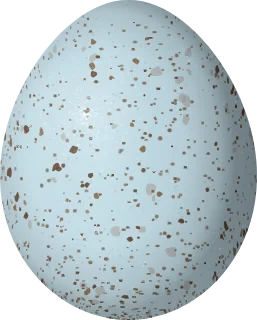 Cardinals, grosbeaks & tanagers14 eggs · 17.8–25.3 mm long


 Chickadees, nuthatches & wrens37 eggs · 13.3–25.9 mm long


 Crows, jays & magpies17 eggs · 27.3–49.5 mm long


 Cuckoos & roadrunners6 eggs · 22–39.2 mm long
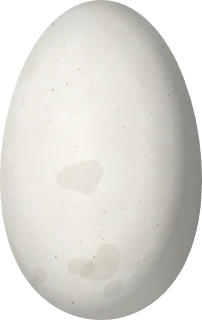

 Ducks, geese & swans48 eggs · 45.8–113.5 mm long
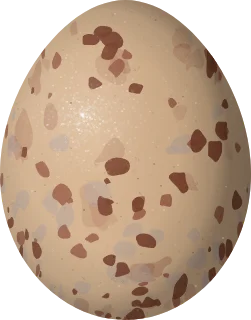

 Falcons7 eggs · 35–59.4 mm long
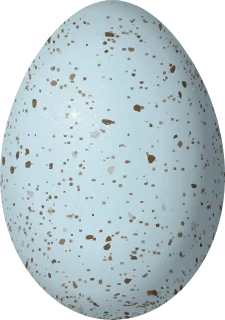

 Finches & House Sparrow19 eggs · 14.7–26 mm long


 Flycatchers & kingbirds35 eggs · 15.5–28.5 mm long


 Gamebirds & poultry28 eggs · 30–69 mm long


 Gulls, terns & jaegers35 eggs · 31–77.9 mm long


 Herons, ibises & storks18 eggs · 31–91.3 mm long


 Kingfishers & trogons4 eggs · 24.4–43.7 mm long


 Larks & swallows9 eggs · 18.3–24.5 mm long


 Loons & grebes12 eggs · 33.9–89 mm long


 Mockingbirds, catbirds & thrashers10 eggs · 23.3–30.1 mm long


 Nightjars & nighthawks9 eggs · 26.3–35.6 mm long


 Ostriches, emus & relatives7 eggs · 58–340 mm long


 Owls19 eggs · 26.6–57 mm long


 Parrots6 eggs · 19–50 mm long


 Pelicans & cormorants10 eggs · 52.5–90 mm long


 Pigeons & doves11 eggs · 21.9–39.7 mm long


 Rails, coots & cranes13 eggs · 25.6–98.4 mm long


 Shorebirds50 eggs · 29–65 mm long


 Shrikes & vireos15 eggs · 17.4–26.7 mm long


 Sparrows, juncos & longspurs48 eggs · 17–24.9 mm long


 Swifts & hummingbirds19 eggs · 10–28.6 mm long


 Thrushes & bluebirds14 eggs · 19.1–30.5 mm long


 Vultures, hawks & eagles26 eggs · 37.5–106 mm long


 Warblers51 eggs · 14.6–21.9 mm long


 Waxwings, starlings & pipits7 eggs · 19.1–29.5 mm long


 Woodpeckers22 eggs · 19.4–33.2 mm long
How these eggs are drawn
Every egg here is drawn from four numbers. Two are measured: its length and its width, taken from published averages of real eggs, with the source given for each egg. The other two set the egg’s taper: how much wider one end is than the other, and how pointed the narrow end is. Published sources rarely give those, so they’re estimated from the typical shape of eggs in the bird’s group (plovers’ eggs are top-shaped, owls’ nearly round, and so on) and applied across that group. The same four numbers make the 3D-printable eggs and the poster outlines, so they all match.
The colours and markings in the illustrations follow each egg’s published description. Real eggs vary a lot, even within one nest; each illustration shows a typical egg.
Every egg, A–Z
A
- Abert's Towhee
- Acadian Flycatcher
- Acorn Woodpecker
- Alder Flycatcher
- Aleutian Tern
- Allen's Hummingbird
- Altamira Oriole
- American Avocet
- American Bittern
- American Black Duck
- American Coot
- American Crow
- American Dipper
- American Flamingo
- American Golden-Plover
- American Goldfinch
- American Goshawk
- American Kestrel
- American Oystercatcher
- American Pipit
- American Redstart
- American Robin
- American Three-toed Woodpecker
- American Tree Sparrow
- American White Pelican
- American Wigeon
- American Woodcock
- Ancient Murrelet
- Anhinga
- Anna's Hummingbird
- Antillean Nighthawk
- Aplomado Falcon
- Arctic Loon
- Arctic Tern
- Arctic Warbler
- Arizona Woodpecker
- Ash-throated Flycatcher
- Ashy Storm-Petrel
- Atlantic Puffin
- Audubon's Oriole
B
- Bachman's Sparrow
- Baird's Sandpiper
- Baird's Sparrow
- Bald Eagle
- Baltimore Oriole
- Band-tailed Pigeon
- Bank Swallow
- Bar-tailed Godwit
- Barn Owl
- Barn Swallow
- Barred Owl
- Barrow's Goldeneye
- Bay-breasted Warbler
- Bell's Sparrow
- Bell's Vireo
- Belted Kingfisher
- Bendire's Thrasher
- Bewick's Wren
- Bicknell's Thrush
- Black Guillemot
- Black Oystercatcher
- Black Phoebe
- Black Rail
- Black Rosy-Finch
- Black Scoter
- Black Skimmer
- Black Swift
- Black Tern
- Black Turnstone
- Black Vulture
- Black-and-white Warbler
- Black-backed Woodpecker
- Black-bellied Plover
- Black-bellied Whistling-Duck
- Black-billed Cuckoo
- Black-billed Magpie
- Black-capped Chickadee
- Black-capped Vireo
- Black-chinned Hummingbird
- Black-chinned Sparrow
- Black-crested Titmouse
- Black-crowned Night-Heron
- Black-headed Grosbeak
- Black-legged Kittiwake
- Black-necked Stilt
- Black-tailed Gnatcatcher
- Black-throated Blue Warbler
- Black-throated Gray Warbler
- Black-throated Green Warbler
- Black-throated Sparrow
- Black-whiskered Vireo
- Blackburnian Warbler
- Blackpoll Warbler
- Blue Grosbeak
- Blue Jay
- Blue-gray Gnatcatcher
- Blue-headed Vireo
- Blue-throated Mountain-gem
- Blue-winged Teal
- Blue-winged Warbler
- Bluethroat
- Boat-tailed Grackle
- Bobolink
- Bohemian Waxwing
- Bonaparte's Gull
- Boreal Chickadee
- Boreal Owl
- Botteri's Sparrow
- Brandt's Cormorant
- Brant
- Brewer's Blackbird
- Brewer's Sparrow
- Bridled Titmouse
- Bristle-thighed Curlew
- Broad-billed Hummingbird
- Broad-tailed Hummingbird
- Broad-winged Hawk
- Bronzed Cowbird
- Brown Creeper
- Brown Noddy
- Brown Pelican
- Brown Thrasher
- Brown-capped Rosy-Finch
- Brown-crested Flycatcher
- Brown-headed Cowbird
- Brown-headed Nuthatch
- Budgerigar
- Buff-bellied Hummingbird
- Buff-breasted Flycatcher
- Buff-breasted Sandpiper
- Buff-collared Nightjar
- Bufflehead
- Bullock's Oriole
- Burrowing Owl
- Bushtit
C
- Cackling Goose
- Cactus Wren
- California Condor
- California Gnatcatcher
- California Gull
- California Quail
- California Scrub-Jay
- California Thrasher
- California Towhee
- Calliope Hummingbird
- Canada Goose
- Canada Jay
- Canada Warbler
- Canvasback
- Canyon Towhee
- Canyon Wren
- Cape May Warbler
- Carolina Chickadee
- Carolina Parakeet
- Carolina Wren
- Caspian Tern
- Cassin's Auklet
- Cassin's Finch
- Cassin's Kingbird
- Cassin's Sparrow
- Cassin's Vireo
- Cattle Egret
- Cave Swallow
- Cedar Waxwing
- Cerulean Warbler
- Chestnut-backed Chickadee
- Chestnut-collared Longspur
- Chestnut-sided Warbler
- Chihuahuan Meadowlark
- Chihuahuan Raven
- Chimney Swift
- Chipping Sparrow
- Chuck-will's-widow
- Chukar
- Cinnamon Teal
- Clapper Rail
- Clark's Grebe
- Clark's Nutcracker
- Clay-colored Sparrow
- Cliff Swallow
- Colima Warbler
- Common Black Hawk
- Common Cuckoo
- Common Eider
- Common Gallinule
- Common Goldeneye
- Common Grackle
- Common Ground Dove
- Common Loon
- Common Merganser
- Common Murre
- Common Nighthawk
- Common Pauraque
- Common Poorwill
- Common Raven
- Common Redpoll
- Common Ringed Plover
- Common Tern
- Common Yellowthroat
- Connecticut Warbler
- Cooper's Hawk
- Cordilleran Flycatcher
- Costa's Hummingbird
- Coturnix Quail
- Couch's Kingbird
- Crested Auklet
- Crested Caracara
- Crissal Thrasher
- Curve-billed Thrasher
D
- Dark-eyed Junco
- Dickcissel
- Domestic Chicken
- Domestic Duck
- Domestic Goose
- Double-crested Cormorant
- Dovekie
- Downy Woodpecker
- Dunlin
- Dusky Flycatcher
- Dusky Grouse
- Dusky-capped Flycatcher
E
- Eared Grebe
- Eastern Bluebird
- Eastern Kingbird
- Eastern Meadowlark
- Eastern Phoebe
- Eastern Screech-Owl
- Eastern Towhee
- Eastern Whip-poor-will
- Eastern Wood-Pewee
- Eastern Yellow Wagtail
- Elegant Tern
- Elegant Trogon
- Elephant Bird
- Elf Owl
- Emperor Goose
- Emperor Penguin
- Emu
- Eurasian Collared-Dove
- Eurasian Tree Sparrow
- European Starling
- Evening Grosbeak
F
- Ferruginous Hawk
- Ferruginous Pygmy-Owl
- Field Sparrow
- Fish Crow
- Flammulated Owl
- Florida Scrub-Jay
- Fork-tailed Storm-Petrel
- Forster's Tern
- Fox Sparrow
- Franklin's Gull
- Fulvous Whistling-Duck
G
- Gadwall
- Gambel's Quail
- Gila Woodpecker
- Gilded Flicker
- Glaucous Gull
- Glaucous-winged Gull
- Glossy Ibis
- Golden Eagle
- Golden-cheeked Warbler
- Golden-crowned Kinglet
- Golden-crowned Sparrow
- Golden-fronted Woodpecker
- Golden-winged Warbler
- Grace's Warbler
- Grasshopper Sparrow
- Gray Catbird
- Gray Flycatcher
- Gray Hawk
- Gray Kingbird
- Gray Partridge
- Gray Vireo
- Gray-cheeked Thrush
- Gray-crowned Rosy-Finch
- Great Auk
- Great Black-backed Gull
- Great Blue Heron
- Great Cormorant
- Great Crested Flycatcher
- Great Egret
- Great Gray Owl
- Great Horned Owl
- Great Kiskadee
- Great Tinamou
- Great Tit
- Great-tailed Grackle
- Greater Pewee
- Greater Prairie-Chicken
- Greater Roadrunner
- Greater Sage-Grouse
- Greater Scaup
- Greater White-fronted Goose
- Greater Yellowlegs
- Green Heron
- Green Jay
- Green Kingfisher
- Green-tailed Towhee
- Green-winged Teal
- Groove-billed Ani
- Gull-billed Tern
- Gunnison Sage-Grouse
- Gyrfalcon
H
- Hairy Woodpecker
- Hammond's Flycatcher
- Harlequin Duck
- Harris's Hawk
- Harris's Sparrow
- Helmeted Guineafowl
- Henslow's Sparrow
- Hepatic Tanager
- Hermit Thrush
- Hermit Warbler
- Herring Gull
- Himalayan Snowcock
- Hoary Redpoll
- Hooded Merganser
- Hooded Oriole
- Hooded Warbler
- Horned Grebe
- Horned Lark
- Horned Puffin
- House Finch
- House Sparrow
- House Wren
- Hudsonian Godwit
- Hutton's Vireo
I
J
K
L
- Ladder-backed Woodpecker
- Lapland Longspur
- Lark Bunting
- Lark Sparrow
- Laughing Gull
- Lawrence's Goldfinch
- Laysan Albatross
- Lazuli Bunting
- Leach's Storm-Petrel
- Least Auklet
- Least Bittern
- Least Flycatcher
- Least Grebe
- Least Sandpiper
- Least Tern
- LeConte's Sparrow
- LeConte's Thrasher
- Lesser Goldfinch
- Lesser Nighthawk
- Lesser Prairie-Chicken
- Lesser Scaup
- Lesser Yellowlegs
- Lewis's Woodpecker
- Limpkin
- Lincoln's Sparrow
- Little Blue Heron
- Little Gull
- Loggerhead Shrike
- Long-billed Curlew
- Long-billed Dowitcher
- Long-billed Thrasher
- Long-eared Owl
- Long-tailed Duck
- Long-tailed Jaeger
- Louisiana Waterthrush
- Lucifer Hummingbird
- Lucy's Warbler
M
- MacGillivray's Warbler
- Magnificent Frigatebird
- Magnolia Warbler
- Mallard
- Mangrove Cuckoo
- Marbled Godwit
- Marbled Murrelet
- Marsh Wren
- McKay's Bunting
- Merlin
- Mexican Chickadee
- Mexican Duck
- Mexican Jay
- Mexican Whip-poor-will
- Mississippi Kite
- Monk Parakeet
- Montezuma Quail
- Mottled Duck
- Mountain Bluebird
- Mountain Chickadee
- Mountain Plover
- Mountain Quail
- Mourning Dove
- Mourning Warbler
- Muscovy Duck
- Mute Swan
N
- Nanday Parakeet
- Nashville Warbler
- Nelson's Sparrow
- Neotropic Cormorant
- North Island Brown Kiwi
- Northern Beardless-Tyrannulet
- Northern Bobwhite
- Northern Cardinal
- Northern Flicker
- Northern Fulmar
- Northern Gannet
- Northern Harrier
- Northern Hawk Owl
- Northern Mockingbird
- Northern Parula
- Northern Pintail
- Northern Pygmy-Owl
- Northern Rough-winged Swallow
- Northern Saw-whet Owl
- Northern Shoveler
- Northern Shrike
- Northern Waterthrush
- Northern Wheatear
- Nuttall's Woodpecker
O
- Oak Titmouse
- Olive Sparrow
- Olive Warbler
- Olive-sided Flycatcher
- Orange-crowned Warbler
- Orchard Oriole
- Osprey
- Ostrich
- Ovenbird
P
- Pacific Golden-Plover
- Pacific Loon
- Pacific Wren
- Pacific-slope Flycatcher
- Painted Bunting
- Painted Redstart
- Palm Warbler
- Parakeet Auklet
- Parasitic Jaeger
- Passenger Pigeon
- Pectoral Sandpiper
- Pelagic Cormorant
- Peregrine Falcon
- Phainopepla
- Philadelphia Vireo
- Pied-billed Grebe
- Pigeon Guillemot
- Pileated Woodpecker
- Pine Grosbeak
- Pine Siskin
- Pine Warbler
- Pinyon Jay
- Piping Plover
- Plain Chachalaca
- Plumbeous Vireo
- Pomarine Jaeger
- Prairie Falcon
- Prairie Warbler
- Prothonotary Warbler
- Purple Finch
- Purple Gallinule
- Purple Martin
- Purple Sandpiper
- Pygmy Nuthatch
- Pyrrhuloxia
R
- Razorbill
- Red Crossbill
- Red Knot
- Red Phalarope
- Red-bellied Woodpecker
- Red-billed Pigeon
- Red-breasted Merganser
- Red-breasted Nuthatch
- Red-breasted Sapsucker
- Red-cockaded Woodpecker
- Red-crowned Parrot
- Red-eyed Vireo
- Red-faced Cormorant
- Red-faced Warbler
- Red-headed Woodpecker
- Red-legged Kittiwake
- Red-naped Sapsucker
- Red-necked Grebe
- Red-necked Phalarope
- Red-shouldered Hawk
- Red-tailed Hawk
- Red-throated Loon
- Red-winged Blackbird
- Reddish Egret
- Redhead
- Rhea
- Rhinoceros Auklet
- Ridgway's Rail
- Ring-billed Gull
- Ring-necked Duck
- Ring-necked Pheasant
- Ringed Kingfisher
- Rivoli's Hummingbird
- Rock Pigeon
- Rock Ptarmigan
- Rock Sandpiper
- Rock Wren
- Rose-breasted Grosbeak
- Rose-throated Becard
- Roseate Spoonbill
- Roseate Tern
- Ross's Goose
- Rough-legged Hawk
- Royal Tern
- Ruby-crowned Kinglet
- Ruby-throated Hummingbird
- Ruddy Duck
- Ruddy Turnstone
- Ruffed Grouse
- Rufous Hummingbird
- Rufous-crowned Sparrow
- Rufous-winged Sparrow
- Rusty Blackbird
S
- Sabine's Gull
- Sage Thrasher
- Sagebrush Sparrow
- Saltmarsh Sparrow
- Sanderling
- Sandhill Crane
- Sandwich Tern
- Savannah Sparrow
- Say's Phoebe
- Scaled Quail
- Scarlet Tanager
- Scissor-tailed Flycatcher
- Scott's Oriole
- Scripps's Murrelet
- Seaside Sparrow
- Sedge Wren
- Semipalmated Plover
- Semipalmated Sandpiper
- Sharp-shinned Hawk
- Sharp-tailed Grouse
- Short-billed Dowitcher
- Short-billed Gull
- Short-eared Owl
- Short-tailed Hawk
- Smith's Longspur
- Snail Kite
- Snow Bunting
- Snow Goose
- Snowy Egret
- Snowy Owl
- Snowy Plover
- Solitary Sandpiper
- Song Sparrow
- Sooty Grouse
- Sooty Tern
- Sora
- Southern Cassowary
- Spectacled Eider
- Spotted Owl
- Spotted Sandpiper
- Spotted Towhee
- Sprague's Pipit
- Spruce Grouse
- Steller's Eider
- Steller's Jay
- Stilt Sandpiper
- Sulphur-bellied Flycatcher
- Summer Tanager
- Surf Scoter
- Surfbird
- Swainson's Hawk
- Swainson's Thrush
- Swainson's Warbler
- Swallow-tailed Kite
- Swamp Sparrow
T
- Tennessee Warbler
- Thick-billed Kingbird
- Thick-billed Longspur
- Thick-billed Murre
- Townsend's Solitaire
- Townsend's Warbler
- Tree Swallow
- Tricolored Blackbird
- Tricolored Heron
- Tropical Kingbird
- Tropical Parula
- Trumpeter Swan
- Tufted Puffin
- Tufted Titmouse
- Tundra Swan
- Turkey Vulture
U
V
- Varied Bunting
- Varied Thrush
- Vaux's Swift
- Veery
- Verdin
- Vermilion Flycatcher
- Vervain Hummingbird
- Vesper Sparrow
- Violet-crowned Hummingbird
- Violet-green Swallow
- Virginia Rail
- Virginia's Warbler
W
- Wandering Tattler
- Warbling Vireo
- Western Bluebird
- Western Grebe
- Western Gull
- Western Kingbird
- Western Meadowlark
- Western Sandpiper
- Western Screech-Owl
- Western Tanager
- Western Wood-Pewee
- Whimbrel
- Whiskered Auklet
- Whiskered Screech-Owl
- White Ibis
- White-breasted Nuthatch
- White-crowned Pigeon
- White-crowned Sparrow
- White-eyed Vireo
- White-faced Ibis
- White-headed Woodpecker
- White-rumped Sandpiper
- White-tailed Hawk
- White-tailed Kite
- White-tailed Ptarmigan
- White-throated Sparrow
- White-throated Swift
- White-tipped Dove
- White-winged Crossbill
- White-winged Dove
- White-winged Scoter
- Whooping Crane
- Wild Turkey
- Willet
- Williamson's Sapsucker
- Willow Flycatcher
- Willow Ptarmigan
- Wilson's Phalarope
- Wilson's Plover
- Wilson's Snipe
- Wilson's Warbler
- Winter Wren
- Wood Duck
- Wood Stork
- Wood Thrush
- Woodhouse's Scrub-Jay
- Worm-eating Warbler
- Wrentit
Y
- Yellow Rail
- Yellow Warbler
- Yellow-bellied Flycatcher
- Yellow-bellied Sapsucker
- Yellow-billed Cuckoo
- Yellow-billed Loon
- Yellow-billed Magpie
- Yellow-breasted Chat
- Yellow-crowned Night-Heron
- Yellow-eyed Junco
- Yellow-headed Blackbird
- Yellow-rumped Warbler
- Yellow-throated Vireo
- Yellow-throated Warbler