
35 eggs at true relative size, from the 15.5 mm egg of the Buff-breasted Flycatcher to the 28.5 mm egg of the Great Kiskadee.
About this collection. These eggs cover most of the birds that nest in Canada and the United States, plus a few famous eggs from elsewhere, like the Ostrich and the extinct Elephant Bird. It isn’t every bird in the world yet; we’ll update this note as the collection grows.

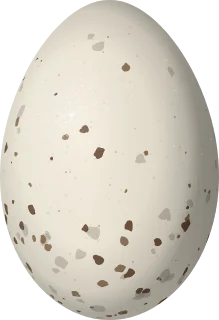

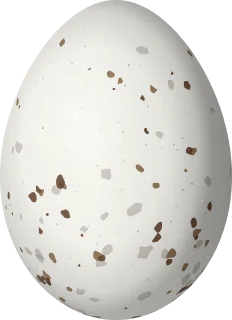
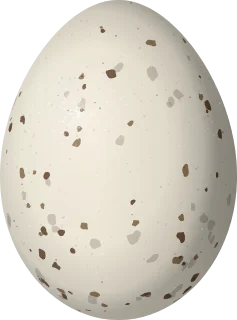
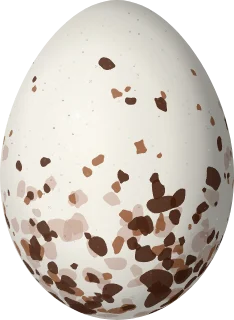
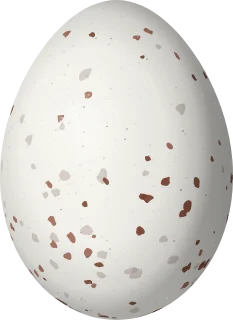


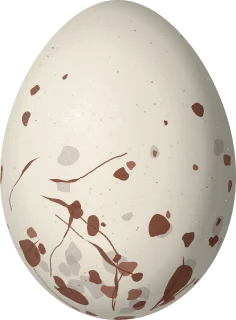
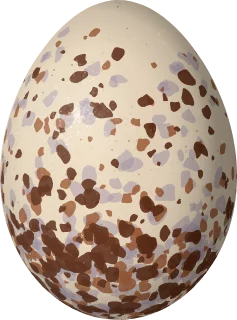
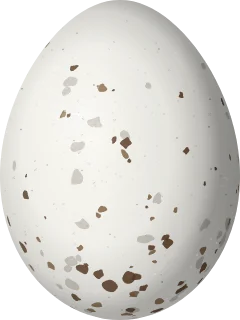
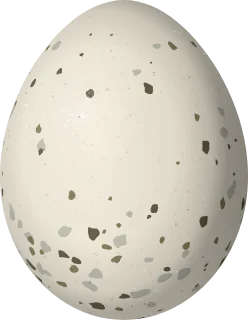

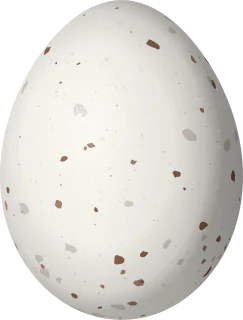
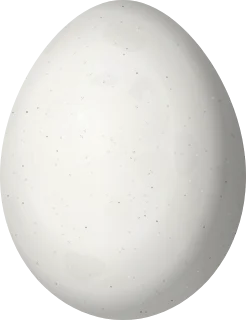
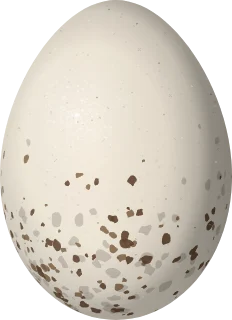
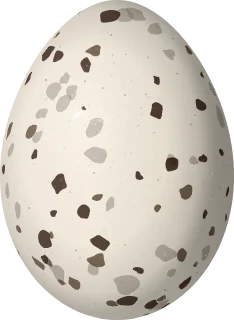


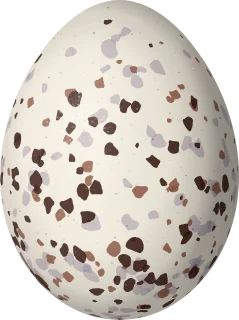
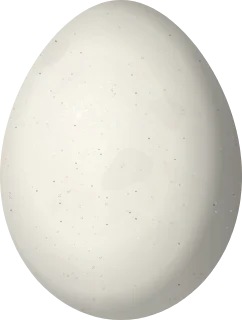
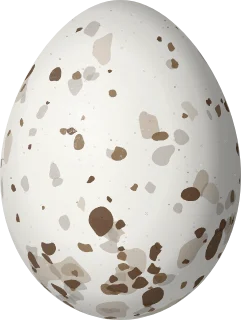

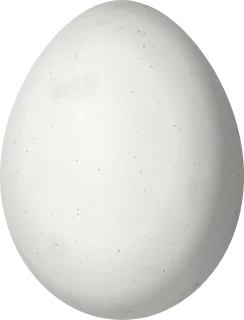
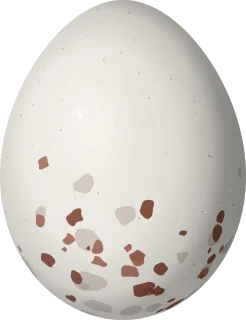
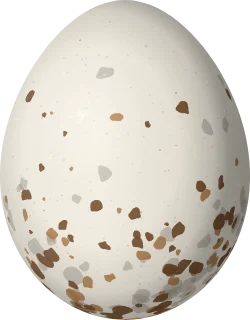


Acadian Flycatcher
Empidonax virescens
- 18.4 × 13.8 mm
- Clutch: 2–3 eggs
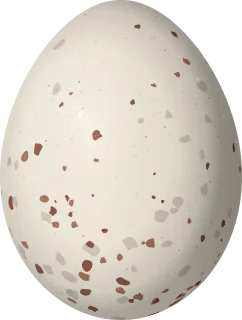
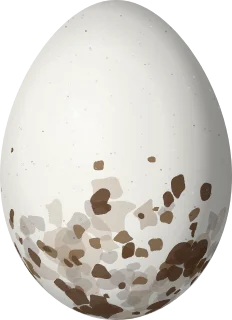
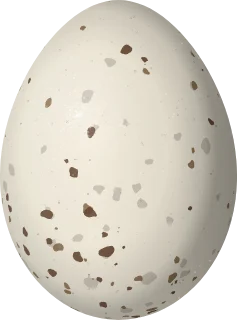
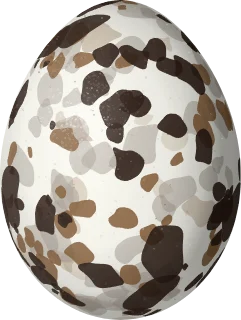
Creamy to buffy white with some small brownish spots at larger end.
Sources of information
- Size
- Average of 50 eggs: Bent, Life Histories of North American Flycatchers, Larks, Swallows, and Their Allies (U.S. National Museum Bulletin 179, 1942), p. 190.
Agrees with: Cornell Lab of Ornithology, All About Birds: Acadian Flycatcher, Life History. - Description
- Cornell Lab of Ornithology, All About Birds: Acadian Flycatcher, Life History.
Drawing checked against a photo: Bird Eggs of Canada photo (University of Saskatchewan Department of Biology Natural History Collection). - Clutch
- Cornell Lab of Ornithology, All About Birds.
- Shape
- Drawn from the length and width, with the taper estimated from the typical eggs of its group (how these eggs are drawn).
Make a 3D-printable copy of this egg →See posters with this egg →
Alder Flycatcher
Empidonax alnorum
- 18.5 × 13.5 mm
- Clutch: 3–4 eggs
Creamy white or buff, unmarked or dotted with dark irregular markings around large end.
Sources of information
- Size
- Average of 50 eggs: Bent, Life Histories of North American Flycatchers, Larks, Swallows, and Their Allies (U.S. National Museum Bulletin 179, 1942), p. 208.
Agrees with: Cornell Lab of Ornithology, All About Birds: Alder Flycatcher, Life History. - Description
- Cornell Lab of Ornithology, All About Birds: Alder Flycatcher, Life History.
Drawing checked against a photo: Bird Eggs of Canada photo (Royal Alberta Museum). - Clutch
- Cornell Lab of Ornithology, All About Birds.
- Shape
- Drawn from the length and width, with the taper estimated from the typical eggs of its group (how these eggs are drawn).
Make a 3D-printable copy of this egg →See posters with this egg →
Ash-throated Flycatcher
Myiarchus cinerascens
- 22.4 × 16.5 mm
- Clutch: 2–7 eggs
Creamy white with reddish brown streaks and elongated blotches.
Sources of information
- Size
- Average of 50 eggs: Bent, Life Histories of North American Flycatchers, Larks, Swallows, and Their Allies (U.S. National Museum Bulletin 179, 1942), p. 131.
Agrees with: Cornell Lab of Ornithology, All About Birds: Ash-throated Flycatcher, Life History. - Description
- Cornell Lab of Ornithology, All About Birds: Ash-throated Flycatcher, Life History.
- Clutch
- Cornell Lab of Ornithology, All About Birds.
- Shape
- Drawn from the length and width, with the taper estimated from the typical eggs of its group (how these eggs are drawn).
Black Phoebe
Sayornis nigricans
- 18.7 × 14.4 mm
- Clutch: 1–6 eggs
Pure white and glossy, sometimes with light spots around the large end.
Sources of information
- Size
- Average of 50 eggs: Bent, Life Histories of North American Flycatchers, Larks, Swallows, and Their Allies (U.S. National Museum Bulletin 179, 1942), p. 158.
Agrees with: Cornell Lab of Ornithology, All About Birds: Black Phoebe, Life History. - Description
- Cornell Lab of Ornithology, All About Birds: Black Phoebe, Life History.
- Clutch
- Cornell Lab of Ornithology, All About Birds.
- Shape
- Drawn from the length and width, with the taper estimated from the typical eggs of its group (how these eggs are drawn).
Brown-crested Flycatcher
Myiarchus tyrannulus
- 24.1 × 18.2 mm
- Clutch: 2–7 eggs
Creamy white or buff with reddish-brown markings.
Sources of information
- Size
- Average of 43 eggs: Bent, Life Histories of North American Flycatchers, Larks, Swallows, and Their Allies (U.S. National Museum Bulletin 179, 1942), p. 125.
Agrees with: Cornell Lab of Ornithology, All About Birds: Brown-crested Flycatcher, Life History. - Description
- Cornell Lab of Ornithology, All About Birds: Brown-crested Flycatcher, Life History.
- Clutch
- Cornell Lab of Ornithology, All About Birds.
- Shape
- Drawn from the length and width, with the taper estimated from the typical eggs of its group (how these eggs are drawn).
Buff-breasted Flycatcher
Empidonax fulvifrons
- 15.5 × 11.9 mm
Creamy white.
Sources of information
- Size
- Average of 30 eggs: Bent, Life Histories of North American Flycatchers, Larks, Swallows, and Their Allies (U.S. National Museum Bulletin 179, 1942), p. 257.
- Description
- Cornell Lab of Ornithology, All About Birds: Buff-breasted Flycatcher, Life History.
- Shape
- Drawn from the length and width, with the taper estimated from the typical eggs of its group (how these eggs are drawn).
Cassin's Kingbird
Tyrannus vociferans
- 23.5 × 17.4 mm
Creamy white with small brown spots.
Sources of information
- Size
- Average of 50 eggs: Bent, Life Histories of North American Flycatchers, Larks, Swallows, and Their Allies (U.S. National Museum Bulletin 179, 1942), p. 72.
- Description
- Cornell Lab of Ornithology, All About Birds: Cassin's Kingbird, Life History.
- Shape
- Drawn from the length and width, with the taper estimated from the typical eggs of its group (how these eggs are drawn).
Cordilleran Flycatcher
Empidonax occidentalis
- 16.5 × 13.35 mm (approx.)
- Clutch: 1–5 eggs
Creamy white with brown spotting concentrated at the larger end.
Sources of information
- Size
- Cornell Lab of Ornithology, All About Birds: Cordilleran Flycatcher, Life History.
- Description
- Cornell Lab of Ornithology, All About Birds: Cordilleran Flycatcher, Life History.
- Clutch
- Cornell Lab of Ornithology, All About Birds.
- Shape
- Drawn from the length and width, with the taper estimated from the typical eggs of its group (how these eggs are drawn).
Couch's Kingbird
Tyrannus couchii
- 24.8 × 18.4 mm
Cream or rich buff with dark spots.
Sources of information
- Size
- Average of 43 eggs: Bent, Life Histories of North American Flycatchers, Larks, Swallows, and Their Allies (U.S. National Museum Bulletin 179, 1942), p. 52.
- Description
- Cornell Lab of Ornithology, All About Birds: Couch's Kingbird, Life History.
- Shape
- Drawn from the length and width, with the taper estimated from the typical eggs of its group (how these eggs are drawn).
Dusky Flycatcher
Empidonax oberholseri
- 17.3 × 13.2 mm
- Clutch: 2–5 eggs
Dull white, occasionally spotted with brown.
Sources of information
- Size
- Average of 50 eggs: Bent, Life Histories of North American Flycatchers, Larks, Swallows, and Their Allies (U.S. National Museum Bulletin 179, 1942), p. 236.
Agrees with: Cornell Lab of Ornithology, All About Birds: Dusky Flycatcher, Life History. - Description
- Cornell Lab of Ornithology, All About Birds: Dusky Flycatcher, Life History.
Drawing checked against a photo: Bird Eggs of Canada photo (Royal Alberta Museum). - Clutch
- Cornell Lab of Ornithology, All About Birds.
- Shape
- Drawn from the length and width, with the taper estimated from the typical eggs of its group (how these eggs are drawn).
Make a 3D-printable copy of this egg →See posters with this egg →
Dusky-capped Flycatcher
Myiarchus tuberculifer
- 19.6 × 15.2 mm
- Clutch: 3–5 eggs
Creamy white, marked with brown, purple, and olive.
Sources of information
- Size
- Average of 43 eggs: Bent, Life Histories of North American Flycatchers, Larks, Swallows, and Their Allies (U.S. National Museum Bulletin 179, 1942), p. 138.
Agrees with: Cornell Lab of Ornithology, All About Birds: Dusky-capped Flycatcher, Life History. - Description
- Cornell Lab of Ornithology, All About Birds: Dusky-capped Flycatcher, Life History.
- Clutch
- Cornell Lab of Ornithology, All About Birds.
- Shape
- Drawn from the length and width, with the taper estimated from the typical eggs of its group (how these eggs are drawn).
Eastern Kingbird
Tyrannus tyrannus
- 24.2 × 17.7 mm
- Clutch: 2–5 eggs
Pale and smooth with a striking ring of irregular reddish spots.
Sources of information
- Size
- Average of 50 eggs: Bent, Life Histories of North American Flycatchers, Larks, Swallows, and Their Allies (U.S. National Museum Bulletin 179, 1942), p. 17.
Agrees with: Cornell Lab of Ornithology, All About Birds: Eastern Kingbird, Life History. - Description
- Cornell Lab of Ornithology, All About Birds: Eastern Kingbird, Life History.
Drawing checked against a photo: Wikimedia Commons photo; Bird Eggs of Canada photo (Royal Saskatchewan Museum). - Clutch
- Cornell Lab of Ornithology, All About Birds.
- Shape
- Drawn from the length and width, with the taper estimated from the typical eggs of its group (how these eggs are drawn).
Make a 3D-printable copy of this egg →See posters with this egg →
Eastern Phoebe
Sayornis phoebe
- 19.05 × 14.48 mm
- Clutch: 2–6 eggs
White, sometimes speckled with reddish brown.
Sources of information
- Size
- Average of 112 eggs: Bendire, Life Histories of North American Birds, Vol. 2 (1895), p. 276.
Agrees with: Cornell Lab of Ornithology, All About Birds: Eastern Phoebe, Life History. - Description
- Cornell Lab of Ornithology, All About Birds: Eastern Phoebe, Life History.
Drawing checked against a photo: Bird Eggs of Canada photo (Royal Saskatchewan Museum). - Clutch
- Cornell Lab of Ornithology, All About Birds.
- Shape
- Drawn from the length and width, with the taper estimated from the typical eggs of its group (how these eggs are drawn).
Make a 3D-printable copy of this egg →See posters with this egg →
Eastern Wood-Pewee
Contopus virens
- 18.24 × 13.65 mm
- Clutch: 2–4 eggs
White or creamy with a wreath of brown or purple speckles.
Sources of information
- Size
- Average of 72 eggs: Bent, Life Histories of North American Flycatchers, Larks, Swallows, and Their Allies (U.S. National Museum Bulletin 179, 1942), p. 270.
Agrees with: Cornell Lab of Ornithology, All About Birds: Eastern Wood-Pewee, Life History. - Description
- Cornell Lab of Ornithology, All About Birds: Eastern Wood-Pewee, Life History.
Drawing checked against a photo: Bird Eggs of Canada photo (Royal Alberta Museum). - Clutch
- Cornell Lab of Ornithology, All About Birds.
- Shape
- Drawn from the length and width, with the taper estimated from the typical eggs of its group (how these eggs are drawn).
Make a 3D-printable copy of this egg →See posters with this egg →
Gray Flycatcher
Empidonax wrightii
- 17.7 × 13.4 mm
Creamy white.
Sources of information
- Size
- Average of 50 eggs: Bent, Life Histories of North American Flycatchers, Larks, Swallows, and Their Allies (U.S. National Museum Bulletin 179, 1942), p. 244.
- Description
- Cornell Lab of Ornithology, All About Birds: Gray Flycatcher, Life History.
Drawing checked against a photo: Bird Eggs of Canada photo (University of Saskatchewan Department of Biology Natural History Collection). - Shape
- Drawn from the length and width, with the taper estimated from the typical eggs of its group (how these eggs are drawn).
Gray Kingbird
Tyrannus dominicensis
- 25.1 × 18.2 mm
- Clutch: 3–4 eggs
White to pinkish-white, marked with brown, lavender, and gray.
Sources of information
- Size
- Average of 50 eggs: Bent, Life Histories of North American Flycatchers, Larks, Swallows, and Their Allies (U.S. National Museum Bulletin 179, 1942), p. 37.
Agrees with: Cornell Lab of Ornithology, All About Birds: Gray Kingbird, Life History. - Description
- Cornell Lab of Ornithology, All About Birds: Gray Kingbird, Life History.
- Clutch
- Cornell Lab of Ornithology, All About Birds.
- Shape
- Drawn from the length and width, with the taper estimated from the typical eggs of its group (how these eggs are drawn).
Great Crested Flycatcher
Myiarchus crinitus
- 22.54 × 17.47 mm
- Clutch: 4–8 eggs
Creamy white to pinkish buff splotched with brown, purple, or lavender.
Sources of information
- Size
- Average of 91 eggs: Bendire, Life Histories of North American Birds, Vol. 2 (1895), p. 262.
Agrees with: Cornell Lab of Ornithology, All About Birds: Great Crested Flycatcher, Life History. - Description
- Cornell Lab of Ornithology, All About Birds: Great Crested Flycatcher, Life History.
Drawing checked against a photo: Bird Eggs of Canada photo (Royal Alberta Museum). - Clutch
- Cornell Lab of Ornithology, All About Birds.
- Shape
- Drawn from the length and width, with the taper estimated from the typical eggs of its group (how these eggs are drawn).
Make a 3D-printable copy of this egg →See posters with this egg →
Great Kiskadee
Pitangus sulphuratus
- 28.5 × 21 mm
- Clutch: 2–5 eggs
Creamy white, sparingly spotted with reddish brown and lilac.
Sources of information
- Size
- Average of 50 eggs: Bent, Life Histories of North American Flycatchers, Larks, Swallows, and Their Allies (U.S. National Museum Bulletin 179, 1942), p. 95.
Agrees with: Cornell Lab of Ornithology, All About Birds: Great Kiskadee, Life History. - Description
- Bent, Life Histories of North American Flycatchers, Larks, Swallows, and Their Allies (U.S. National Museum Bulletin 179, 1942), p. 95.
- Shape
- Drawn from the length and width, with the taper estimated from the typical eggs of its group (how these eggs are drawn).
Greater Pewee
Contopus pertinax
- 21.1 × 15.8 mm
Dull white with brown spotting.
Sources of information
- Size
- Average of 50 eggs: Bent, Life Histories of North American Flycatchers, Larks, Swallows, and Their Allies (U.S. National Museum Bulletin 179, 1942), p. 262.
- Description
- Cornell Lab of Ornithology, All About Birds: Greater Pewee, Life History.
- Shape
- Drawn from the length and width, with the taper estimated from the typical eggs of its group (how these eggs are drawn).
Hammond's Flycatcher
Empidonax hammondii
- 16.8 × 12.9 mm
- Clutch: 3–4 eggs
Creamy white, sometimes marked sparingly with small reddish-brown dots.
Sources of information
- Size
- Average of 50 eggs: Bent, Life Histories of North American Flycatchers, Larks, Swallows, and Their Allies (U.S. National Museum Bulletin 179, 1942), p. 229.
Agrees with: Cornell Lab of Ornithology, All About Birds: Hammond's Flycatcher, Life History. - Description
- Cornell Lab of Ornithology, All About Birds: Hammond's Flycatcher, Life History.
Drawing checked against a photo: Bird Eggs of Canada photo (Royal Alberta Museum). - Clutch
- Cornell Lab of Ornithology, All About Birds.
- Shape
- Drawn from the length and width, with the taper estimated from the typical eggs of its group (how these eggs are drawn).
Make a 3D-printable copy of this egg →See posters with this egg →
Least Flycatcher
Empidonax minimus
- 16.14 × 12.7 mm
Creamy white, unmarked.
Sources of information
- Size
- Average of 85 eggs: Bendire, Life Histories of North American Birds, Vol. 2 (1895), p. 315.
- Description
- Cornell Lab of Ornithology, All About Birds: Least Flycatcher, Life History.
Drawing checked against a photo: Bird Eggs of Canada photo (Royal Saskatchewan Museum). - Shape
- Drawn from the length and width, with the taper estimated from the typical eggs of its group (how these eggs are drawn).
Make a 3D-printable copy of this egg →See posters with this egg →
Northern Beardless-Tyrannulet
Camptostoma imberbe
- 16.5 × 12.2 mm
- Clutch: 1–3 eggs
Cream colored with fine brown speckling.
Sources of information
- Size
- Average of 9 eggs: Bent, Life Histories of North American Flycatchers, Larks, Swallows, and Their Allies (U.S. National Museum Bulletin 179, 1942), p. 311.
Agrees with: Cornell Lab of Ornithology, All About Birds: Northern Beardless-Tyrannulet, Life History. - Description
- Cornell Lab of Ornithology, All About Birds: Northern Beardless-Tyrannulet, Life History.
- Clutch
- Cornell Lab of Ornithology, All About Birds.
- Shape
- Drawn from the length and width, with the taper estimated from the typical eggs of its group (how these eggs are drawn).
Olive-sided Flycatcher
Contopus cooperi
- 21.7 × 16.1 mm
- Clutch: 3–4 eggs
Creamy white or buff with ring of brownish spots on large end.
Sources of information
- Size
- Average of 50 eggs: Bent, Life Histories of North American Flycatchers, Larks, Swallows, and Their Allies (U.S. National Museum Bulletin 179, 1942), p. 295.
Agrees with: Cornell Lab of Ornithology, All About Birds: Olive-sided Flycatcher, Life History. - Description
- Cornell Lab of Ornithology, All About Birds: Olive-sided Flycatcher, Life History.
Drawing checked against a photo: Bird Eggs of Canada photo (University of Saskatchewan Department of Biology Natural History Collection). - Clutch
- Cornell Lab of Ornithology, All About Birds.
- Shape
- Drawn from the length and width, with the taper estimated from the typical eggs of its group (how these eggs are drawn).
Make a 3D-printable copy of this egg →See posters with this egg →
Pacific-slope Flycatcher
Empidonax difficilis
- 16.8 × 13.1 mm
- Clutch: 1–5 eggs
Creamy white with brown spotting concentrated at the larger end.
Sources of information
- Size
- Average of 50 eggs: Bent, Life Histories of North American Flycatchers, Larks, Swallows, and Their Allies (U.S. National Museum Bulletin 179, 1942), p. 249.
Agrees with: Cornell Lab of Ornithology, All About Birds: Pacific-slope Flycatcher, Life History. - Description
- Cornell Lab of Ornithology, All About Birds: Pacific-slope Flycatcher, Life History.
Drawing checked against a photo: Bird Eggs of Canada photo (Royal Alberta Museum). - Clutch
- Cornell Lab of Ornithology, All About Birds.
- Shape
- Drawn from the length and width, with the taper estimated from the typical eggs of its group (how these eggs are drawn).
Make a 3D-printable copy of this egg →See posters with this egg →
Rose-throated Becard
Pachyramphus aglaiae
- 23.2 × 16.9 mm
- Clutch: 3–6 eggs
White, gray, creamy, cinnamon, or pale lilac with brown, lilac, or gray spots. Egg color can vary even within a single clutch.
Sources of information
- Size
- Average of 22 eggs: Bent, Life Histories of North American Flycatchers, Larks, Swallows, and Their Allies (U.S. National Museum Bulletin 179, 1942), p. 8.
- Description
- Cornell Lab of Ornithology, All About Birds: Rose-throated Becard, Life History.
- Clutch
- Cornell Lab of Ornithology, All About Birds.
- Shape
- Drawn from the length and width, with the taper estimated from the typical eggs of its group (how these eggs are drawn).
Say's Phoebe
Sayornis saya
- 19.5 × 15.1 mm
- Clutch: 3–6 eggs
Pure white, unmarked eggs, sometimes with reddish spots.
Sources of information
- Size
- Average of 50 eggs: Bent, Life Histories of North American Flycatchers, Larks, Swallows, and Their Allies (U.S. National Museum Bulletin 179, 1942), p. 169.
Agrees with: Cornell Lab of Ornithology, All About Birds: Say's Phoebe, Life History. - Description
- Cornell Lab of Ornithology, All About Birds: Say's Phoebe, Life History.
Drawing checked against a photo: Bird Eggs of Canada photo (Royal Saskatchewan Museum). - Clutch
- Cornell Lab of Ornithology, All About Birds.
- Shape
- Drawn from the length and width, with the taper estimated from the typical eggs of its group (how these eggs are drawn).
Make a 3D-printable copy of this egg →See posters with this egg →
Scissor-tailed Flycatcher
Tyrannus forficatus
- 22.5 × 17 mm
- Clutch: 3–6 eggs
White or creamy with dark red, reddish brown, or purple blotches.
Sources of information
- Size
- Average of 50 eggs: Bent, Life Histories of North American Flycatchers, Larks, Swallows, and Their Allies (U.S. National Museum Bulletin 179, 1942), p. 85.
Agrees with: Cornell Lab of Ornithology, All About Birds: Scissor-tailed Flycatcher, Life History. - Description
- Cornell Lab of Ornithology, All About Birds: Scissor-tailed Flycatcher, Life History.
- Clutch
- Cornell Lab of Ornithology, All About Birds.
- Shape
- Drawn from the length and width, with the taper estimated from the typical eggs of its group (how these eggs are drawn).
Sulphur-bellied Flycatcher
Myiodynastes luteiventris
- 25.9 × 19 mm
- Clutch: 3–4 eggs
White to creamy buff, with heavy red or purple blotches and fainter lilac or lavender marks.
Sources of information
- Size
- Average of 26 eggs: Bent, Life Histories of North American Flycatchers, Larks, Swallows, and Their Allies (U.S. National Museum Bulletin 179, 1942), p. 101.
- Description
- Cornell Lab of Ornithology, All About Birds: Sulphur-bellied Flycatcher, Life History.
- Clutch
- Cornell Lab of Ornithology, All About Birds.
- Shape
- Drawn from the length and width, with the taper estimated from the typical eggs of its group (how these eggs are drawn).
Thick-billed Kingbird
Tyrannus crassirostris
- 26.3 × 18 mm (approx.)
- Clutch: 3–5 eggs
Creamy white with brown and lilac markings.
Sources of information
- Size
- Catalogue of the Collection of Birds' Eggs in the British Museum (two eggs of quite different sizes, averaged).
- Description
- Cornell Lab of Ornithology, All About Birds: Thick-billed Kingbird, Life History.
- Clutch
- Cornell Lab of Ornithology, All About Birds.
- Shape
- Drawn from the length and width, with the taper estimated from the typical eggs of its group (how these eggs are drawn).
Tropical Kingbird
Tyrannus melancholicus
- 23.7 × 17.2 mm
- Clutch: 2–4 eggs
Whitish or pale pink with variable amount of dark blotching, densest around large end.
Sources of information
- Size
- Average of 45 eggs: Bent, Life Histories of North American Flycatchers, Larks, Swallows, and Their Allies (U.S. National Museum Bulletin 179, 1942), p. 57.
- Description
- Cornell Lab of Ornithology, All About Birds: Tropical Kingbird, Life History.
- Clutch
- Cornell Lab of Ornithology, All About Birds.
- Shape
- Drawn from the length and width, with the taper estimated from the typical eggs of its group (how these eggs are drawn).
Vermilion Flycatcher
Pyrocephalus rubinus
- 17.4 × 13.1 mm
- Clutch: 2–4 eggs
White or creamy, with bold dark blotches and small lighter spots.
Sources of information
- Size
- Average of 50 eggs: Bent, Life Histories of North American Flycatchers, Larks, Swallows, and Their Allies (U.S. National Museum Bulletin 179, 1942), p. 304.
Agrees with: Cornell Lab of Ornithology, All About Birds: Vermilion Flycatcher, Life History. - Description
- Cornell Lab of Ornithology, All About Birds: Vermilion Flycatcher, Life History.
- Clutch
- Cornell Lab of Ornithology, All About Birds.
- Shape
- Drawn from the length and width, with the taper estimated from the typical eggs of its group (how these eggs are drawn).
Western Kingbird
Tyrannus verticalis
- 23.5 × 17.7 mm
- Clutch: 2–7 eggs
White, creamy, or pinkish with heavy blotches of brown, black, or lavender.
Sources of information
- Size
- Average of 50 eggs: Bent, Life Histories of North American Flycatchers, Larks, Swallows, and Their Allies (U.S. National Museum Bulletin 179, 1942), p. 62.
Agrees with: Cornell Lab of Ornithology, All About Birds: Western Kingbird, Life History. - Description
- Cornell Lab of Ornithology, All About Birds: Western Kingbird, Life History.
Drawing checked against a photo: Bird Eggs of Canada photo (Royal Saskatchewan Museum). - Clutch
- Cornell Lab of Ornithology, All About Birds.
- Shape
- Drawn from the length and width, with the taper estimated from the typical eggs of its group (how these eggs are drawn).
Make a 3D-printable copy of this egg →See posters with this egg →
Western Wood-Pewee
Contopus sordidulus
- 18.3 × 13.6 mm
- Clutch: 2–4 eggs
Creamy white with brown blotches.
Sources of information
- Size
- Average of 50 eggs: Bent, Life Histories of North American Flycatchers, Larks, Swallows, and Their Allies (U.S. National Museum Bulletin 179, 1942), p. 283.
Agrees with: Cornell Lab of Ornithology, All About Birds: Western Wood-Pewee, Life History. - Description
- Cornell Lab of Ornithology, All About Birds: Western Wood-Pewee, Life History.
Drawing checked against a photo: Bird Eggs of Canada photo (Royal Alberta Museum). - Clutch
- Cornell Lab of Ornithology, All About Birds.
- Shape
- Drawn from the length and width, with the taper estimated from the typical eggs of its group (how these eggs are drawn).
Make a 3D-printable copy of this egg →See posters with this egg →
Willow Flycatcher
Empidonax traillii
- 18.54 × 13.46 mm
- Clutch: 3–5 eggs
Creamy white with irregular brownish spots and blotches.
Sources of information
- Size
- Average of 50 eggs: Bendire, Life Histories of North American Birds, Vol. 2 (1895), as Traill's Flycatcher, p. 312.
- Description
- Cornell Lab of Ornithology, All About Birds: Willow Flycatcher, Life History.
Drawing checked against a photo: Bird Eggs of Canada photo (Royal Alberta Museum). - Clutch
- Cornell Lab of Ornithology, All About Birds.
- Shape
- Drawn from the length and width, with the taper estimated from the typical eggs of its group (how these eggs are drawn).
Make a 3D-printable copy of this egg →See posters with this egg →
Yellow-bellied Flycatcher
Empidonax flaviventris
- 17.4 × 13.4 mm
- Clutch: 2–5 eggs
White with light speckling of fine dots and small blotches of brown around the larger end.
Sources of information
- Size
- Average of 50 eggs: Bent, Life Histories of North American Flycatchers, Larks, Swallows, and Their Allies (U.S. National Museum Bulletin 179, 1942), p. 177.
Agrees with: Cornell Lab of Ornithology, All About Birds: Yellow-bellied Flycatcher, Life History. - Description
- Cornell Lab of Ornithology, All About Birds: Yellow-bellied Flycatcher, Life History.
- Clutch
- Cornell Lab of Ornithology, All About Birds.
- Shape
- Drawn from the length and width, with the taper estimated from the typical eggs of its group (how these eggs are drawn).
Make a 3D-printable copy of this egg →See posters with this egg →