
17 eggs at true relative size, from the 27.31 mm egg of the Green Jay to the 49.53 mm egg of the Common Raven.
About this collection. These eggs cover most of the birds that nest in Canada and the United States, plus a few famous eggs from elsewhere, like the Ostrich and the extinct Elephant Bird. It isn’t every bird in the world yet; we’ll update this note as the collection grows.


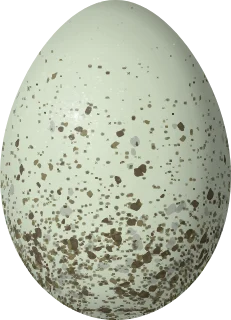
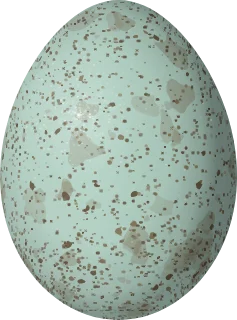


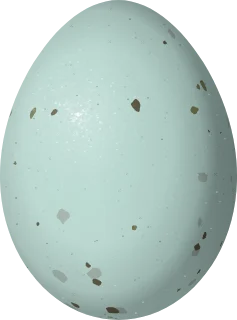


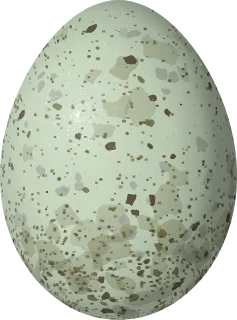


American Crow
Corvus brachyrhynchos
- 41.4 × 29.13 mm
- Clutch: 3–9 eggs
Pale bluish-green to olive green with blotches of brown and gray toward the large end.
Sources of information
- Size
- Average of 292 eggs: Bendire, Life Histories of North American Birds, Vol. 2 (1895), p. 412.
Agrees with: Bent, Life Histories of North American Jays, Crows, and Titmice (U.S. National Museum Bulletin 191, 1946); Cornell Lab of Ornithology, All About Birds: American Crow, Life History. - Description
- Cornell Lab of Ornithology, All About Birds: American Crow, Life History.
Drawing checked against a photo: Wikimedia Commons photo; Bird Eggs of Canada photo (Royal Saskatchewan Museum). - Clutch
- Cornell Lab of Ornithology, All About Birds.
- Shape
- Drawn from the length and width, with the taper estimated from the typical eggs of its group (how these eggs are drawn).
Make a 3D-printable copy of this egg →See posters with this egg →
Black-billed Magpie
Pica hudsonia
- 32.54 × 22.86 mm
- Clutch: 1–9 eggs
Tan or olive-brown with variable amount of dark brown speckles.
Sources of information
- Size
- Average of 201 eggs: Bendire, Life Histories of North American Birds, Vol. 2 (1895), p. 354.
Agrees with: Bent, Life Histories of North American Jays, Crows, and Titmice (U.S. National Museum Bulletin 191, 1946); Cornell Lab of Ornithology, All About Birds: Black-billed Magpie, Life History. - Description
- Cornell Lab of Ornithology, All About Birds: Black-billed Magpie, Life History.
Drawing checked against a photo: Bird Eggs of Canada photo (Royal Saskatchewan Museum). - Clutch
- Cornell Lab of Ornithology, All About Birds.
- Shape
- Drawn from the length and width, with the taper estimated from the typical eggs of its group (how these eggs are drawn).
Make a 3D-printable copy of this egg →See posters with this egg →
Blue Jay
Cyanocitta cristata
- 28.02 × 20.44 mm
- Clutch: 2–7 eggs
Bluish or light brown with brownish spots.
Sources of information
- Size
- Average of 135 eggs: Bendire, Life Histories of North American Birds, Vol. 2 (1895), p. 360.
Agrees with: Bent, Life Histories of North American Jays, Crows, and Titmice (U.S. National Museum Bulletin 191, 1946); Cornell Lab of Ornithology, All About Birds: Blue Jay, Life History. - Description
- Cornell Lab of Ornithology, All About Birds: Blue Jay, Life History.
Drawing checked against a photo: Bird Eggs of Canada photo (Royal Alberta Museum). - Clutch
- Cornell Lab of Ornithology, All About Birds.
- Shape
- Drawn from the length and width, with the taper estimated from the typical eggs of its group (how these eggs are drawn).
Make a 3D-printable copy of this egg →See posters with this egg →
California Scrub-Jay
Aphelocoma californica
- 27.82 × 20.62 mm
- Clutch: 1–5 eggs
Pale green blotched with olive, or pale gray spotted with brown.
Sources of information
- Size
- Average of 76 eggs: Bendire, Life Histories of North American Birds, Vol. 2 (1895), p. 377.
- Description
- Cornell Lab of Ornithology, All About Birds: California Scrub-Jay, Life History.
- Clutch
- Cornell Lab of Ornithology, All About Birds.
- Shape
- Drawn from the length and width, with the taper estimated from the typical eggs of its group (how these eggs are drawn).
Canada Jay
Perisoreus canadensis
- 29.38 × 20.91 mm
- Clutch: 2–5 eggs
Smooth, pale greenish white or gray, flecked with dark olive to rusty dots.
Sources of information
- Size
- Average of 18 eggs: Bendire, Life Histories of North American Birds, Vol. 2 (1895), p. 388.
Agrees with: Cornell Lab of Ornithology, All About Birds: Canada Jay, Life History. - Description
- Cornell Lab of Ornithology, All About Birds: Canada Jay, Life History.
Drawing checked against a photo: Bird Eggs of Canada photo (Royal Saskatchewan Museum). - Clutch
- Cornell Lab of Ornithology, All About Birds.
- Shape
- Drawn from the length and width, with the taper estimated from the typical eggs of its group (how these eggs are drawn).
Make a 3D-printable copy of this egg →See posters with this egg →
Chihuahuan Raven
Corvus cryptoleucus
- 44.2 × 30.22 mm
- Clutch: 1–8 eggs
Green to blue with blotches and streaks of brown.
Sources of information
- Size
- Average of 288 eggs: Bendire, Life Histories of North American Birds, Vol. 2 (1895), p. 405.
Agrees with: Bent, Life Histories of North American Jays, Crows, and Titmice (U.S. National Museum Bulletin 191, 1946); Cornell Lab of Ornithology, All About Birds: Chihuahuan Raven, Life History. - Description
- Cornell Lab of Ornithology, All About Birds: Chihuahuan Raven, Life History.
- Clutch
- Cornell Lab of Ornithology, All About Birds.
- Shape
- Drawn from the length and width, with the taper estimated from the typical eggs of its group (how these eggs are drawn).
Clark's Nutcracker
Nucifraga columbiana
- 32.4 × 23.4 mm
- Clutch: 2–6 eggs
Pale greenish flecked with brown, olive, or gray.
Sources of information
- Size
- Average of 50 eggs: Bent, Life Histories of North American Jays, Crows, and Titmice (U.S. National Museum Bulletin 191, 1946).
Agrees with: Cornell Lab of Ornithology, All About Birds: Clark's Nutcracker, Life History. - Description
- Cornell Lab of Ornithology, All About Birds: Clark's Nutcracker, Life History.
Drawing checked against a photo: Bird Eggs of Canada photo (Royal Alberta Museum). - Clutch
- Cornell Lab of Ornithology, All About Birds.
- Shape
- Drawn from the length and width, with the taper estimated from the typical eggs of its group (how these eggs are drawn).
Make a 3D-printable copy of this egg →See posters with this egg →
Common Raven
Corvus corax
- 49.53 × 34.54 mm
- Clutch: 3–7 eggs
Green, olive, or blue, often mottled with dark greenish, olive, or purplish brown.
Sources of information
- Size
- Average of 39 eggs: Bendire, Life Histories of North American Birds, Vol. 2 (1895), p. 402.
Agrees with: Cornell Lab of Ornithology, All About Birds: Common Raven, Life History. - Description
- Cornell Lab of Ornithology, All About Birds: Common Raven, Life History.
Drawing checked against a photo: Wikimedia Commons photo; Bird Eggs of Canada photo (Royal Saskatchewan Museum). - Clutch
- Cornell Lab of Ornithology, All About Birds.
- Shape
- Drawn from the length and width, with the taper estimated from the typical eggs of its group (how these eggs are drawn).
Make a 3D-printable copy of this egg →See posters with this egg →
Fish Crow
Corvus ossifragus
- 37.17 × 26.97 mm
- Clutch: 2–6 eggs
Pale bluish green with brown markings.
Sources of information
- Size
- Average of 46 eggs: Bent, Life Histories of North American Jays, Crows, and Titmice (U.S. National Museum Bulletin 191, 1946).
Agrees with: Cornell Lab of Ornithology, All About Birds: Fish Crow, Life History. - Description
- Cornell Lab of Ornithology, All About Birds: Fish Crow, Life History.
- Clutch
- Cornell Lab of Ornithology, All About Birds.
- Shape
- Drawn from the length and width, with the taper estimated from the typical eggs of its group (how these eggs are drawn).
Florida Scrub-Jay
Aphelocoma coerulescens
- 27.5 × 20.3 mm
- Clutch: 1–6 eggs
Greenish with brownish spots concentrated near large end.
Sources of information
- Size
- Average of 46 eggs: Bent, Life Histories of North American Jays, Crows, and Titmice (U.S. National Museum Bulletin 191, 1946).
Agrees with: Cornell Lab of Ornithology, All About Birds: Florida Scrub-Jay, Life History. - Description
- Cornell Lab of Ornithology, All About Birds: Florida Scrub-Jay, Life History.
- Clutch
- Cornell Lab of Ornithology, All About Birds.
- Shape
- Drawn from the length and width, with the taper estimated from the typical eggs of its group (how these eggs are drawn).
Green Jay
Cyanocorax yncas
- 27.31 × 20.43 mm
Pale greenish white with dark spots near large end.
Sources of information
- Size
- Average of 70 eggs: Bendire, Life Histories of North American Birds, Vol. 2 (1895), p. 385.
Agrees with: Bent, Life Histories of North American Jays, Crows, and Titmice (U.S. National Museum Bulletin 191, 1946). - Description
- Cornell Lab of Ornithology, All About Birds: Green Jay, Life History.
- Shape
- Drawn from the length and width, with the taper estimated from the typical eggs of its group (how these eggs are drawn).
Island Scrub-Jay
Aphelocoma insularis
- 29.2 × 21.6 mm
- Clutch: 2–5 eggs
Light bluish green, with faint olive spotting.
Sources of information
- Size
- Average of 50 eggs: Bent, Life Histories of North American Jays, Crows, and Titmice (U.S. National Museum Bulletin 191, 1946).
- Description
- Cornell Lab of Ornithology, All About Birds: Island Scrub-Jay, Life History.
- Clutch
- Cornell Lab of Ornithology, All About Birds.
- Shape
- Drawn from the length and width, with the taper estimated from the typical eggs of its group (how these eggs are drawn).
Mexican Jay
Aphelocoma wollweberi
- 30.28 × 22.26 mm
- Clutch: 1–6 eggs
Greenish, with or without dark markings.
Sources of information
- Size
- Average of 136 eggs: Bendire, Life Histories of North American Birds, Vol. 2 (1895), p. 382.
Agrees with: Bent, Life Histories of North American Jays, Crows, and Titmice (U.S. National Museum Bulletin 191, 1946). - Description
- Cornell Lab of Ornithology, All About Birds: Mexican Jay, Life History.
- Clutch
- Cornell Lab of Ornithology, All About Birds.
- Shape
- Drawn from the length and width, with the taper estimated from the typical eggs of its group (how these eggs are drawn).
Pinyon Jay
Gymnorhinus cyanocephalus
- 29.2 × 21.7 mm
- Clutch: 2–5 eggs
Pale blue with dark brown speckles, usually concentrated around large end.
Sources of information
- Size
- Average of 50 eggs: Bent, Life Histories of North American Jays, Crows, and Titmice (U.S. National Museum Bulletin 191, 1946).
Agrees with: Cornell Lab of Ornithology, All About Birds: Pinyon Jay, Life History. - Description
- Cornell Lab of Ornithology, All About Birds: Pinyon Jay, Life History.
- Clutch
- Cornell Lab of Ornithology, All About Birds.
- Shape
- Drawn from the length and width, with the taper estimated from the typical eggs of its group (how these eggs are drawn).
Steller's Jay
Cyanocitta stelleri
- 31.5 × 23.37 mm
- Clutch: 2–6 eggs
Bluish-green spotted dark brown, purplish, or olive.
Sources of information
- Size
- Average of 10 eggs: Bendire, Life Histories of North American Birds, Vol. 2 (1895), p. 364.
Agrees with: Cornell Lab of Ornithology, All About Birds: Steller's Jay, Life History. - Description
- Cornell Lab of Ornithology, All About Birds: Steller's Jay, Life History.
Drawing checked against a photo: Bird Eggs of Canada photo (Royal Ontario Museum). - Clutch
- Cornell Lab of Ornithology, All About Birds.
- Shape
- Drawn from the length and width, with the taper estimated from the typical eggs of its group (how these eggs are drawn).
Make a 3D-printable copy of this egg →See posters with this egg →
Woodhouse's Scrub-Jay
Aphelocoma woodhouseii
- 27.8 × 20.4 mm
- Clutch: 1–5 eggs
Pale green blotched with olive, or pale gray spotted with brown.
Sources of information
- Size
- Average of 50 eggs: Bent, Life Histories of North American Jays, Crows, and Titmice (U.S. National Museum Bulletin 191, 1946).
- Description
- Cornell Lab of Ornithology, All About Birds: Woodhouse's Scrub-Jay, Life History.
- Clutch
- Cornell Lab of Ornithology, All About Birds.
- Shape
- Drawn from the length and width, with the taper estimated from the typical eggs of its group (how these eggs are drawn).
Yellow-billed Magpie
Pica nuttalli
- 30.8 × 22.4 mm
- Clutch: 4–7 eggs
Greenish blue or olive with dark spots and speckles.
Sources of information
- Size
- Average of 195 eggs: Bent, Life Histories of North American Jays, Crows, and Titmice (U.S. National Museum Bulletin 191, 1946).
- Description
- Cornell Lab of Ornithology, All About Birds: Yellow-billed Magpie, Life History.
- Clutch
- Cornell Lab of Ornithology, All About Birds.
- Shape
- Drawn from the length and width, with the taper estimated from the typical eggs of its group (how these eggs are drawn).