
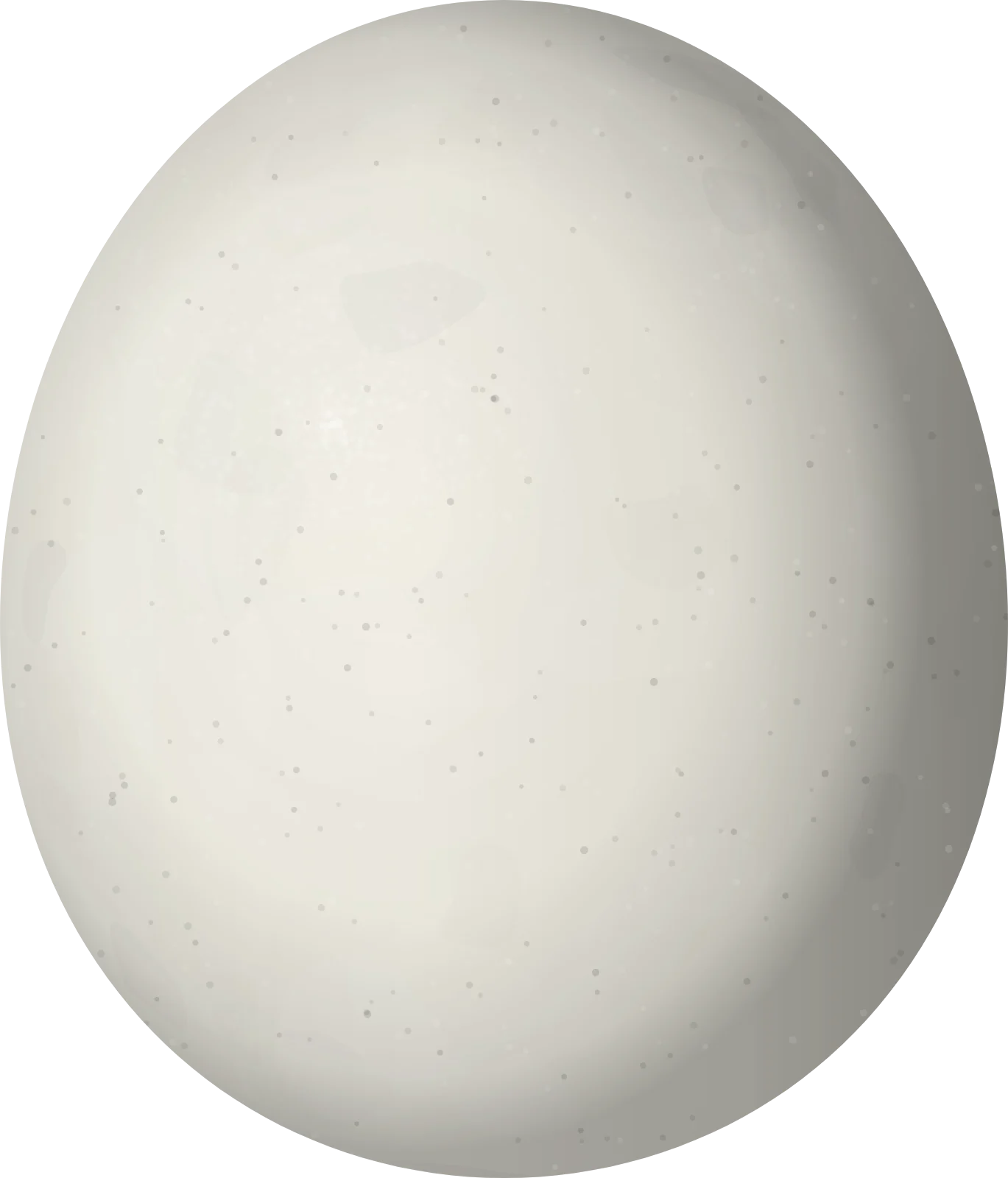
Strix virgata
- 42.2 × 36.1 mm
- Clutch: 2–3 eggs
Breeds in Mexico, Central America (7 countries), Trinidad and Tobago and South America (11 countries)
Central America: Belize, Costa Rica, El Salvador, Guatemala, Honduras, Nicaragua, Panama
The Caribbean: Trinidad and Tobago
South America: Argentina, Bolivia, Brazil, Colombia, Ecuador, French Guiana, Guyana, Paraguay, Peru, Suriname, Venezuela
show all 20
Mexico: MexicoCentral America: Belize, Costa Rica, El Salvador, Guatemala, Honduras, Nicaragua, Panama
The Caribbean: Trinidad and Tobago
South America: Argentina, Bolivia, Brazil, Colombia, Ecuador, French Guiana, Guyana, Paraguay, Peru, Suriname, Venezuela
Off-white, unmarked and non-glossy; elliptical, only slightly longer than broad.
Sources of information
- Size
- Average of 16 eggs: Gerhardt, R. P., N. Bonilla Gonzalez, D. M. Gerhardt & C. J. Flatten. 1994. Breeding biology and home range of two Ciccaba owls. Wilson Bulletin 106: 629-639, p. 631.
- Description
- Gerhardt, R. P., N. Bonilla Gonzalez, D. M. Gerhardt & C. J. Flatten. 1994. Breeding biology and home range of two Ciccaba owls. Wilson Bulletin 106: 629-639, p. 631.
Agrees with: Gerhardt, R. P. 1991. Mottled Owls (Ciccaba virgata): response to calls, breeding biology, home range, and food habits. M.S. thesis, Boise State University (abstract only: 7 cavity nests, mean clutch 2.14). - Shape
- Drawn from the length and width, with the taper estimated from the typical eggs of its group (how these eggs are drawn).
Know something more about this egg, or spotted a mistake? Message us.
Make a 3D-printable copy of this eggSee posters with this egg →
Tell us about this egg
A description, measurements, a photo or a source (a book, paper, museum record or website) all help. We check every message and update the egg.